
Breakfast
Protein yoghurt with porridge oats
- Glenisk Natural Fat Free Protein Yoghurt200g20.0g
- Flahavan's Organic Porridge Oats40g dry4.5g
24.5g
Sláinte Journal · Protein Guide
Published · Updated · Sláinte Editorial
Your protein needs depend mainly on your body weight, activity and goal. Use the calculator below to get a practical daily target in seconds.
Enter your weight and goal. We'll give you a practical daily range.
Your daily protein range
--g
Pick a goal above and your range appears here.
This calculator provides general guidance for healthy adults aged 18+. Individual requirements can vary. If you are pregnant, breastfeeding, under 18, have a medical condition affecting nutrition or protein requirements, or have been advised to follow a specific diet, speak with an appropriate healthcare professional or registered dietitian.
You train. You buy the high-protein yogurt. Maybe you throw in a protein shake after the gym.
But are you actually getting enough protein?
Or are you spending extra money on products labelled “high protein” when you already get plenty?
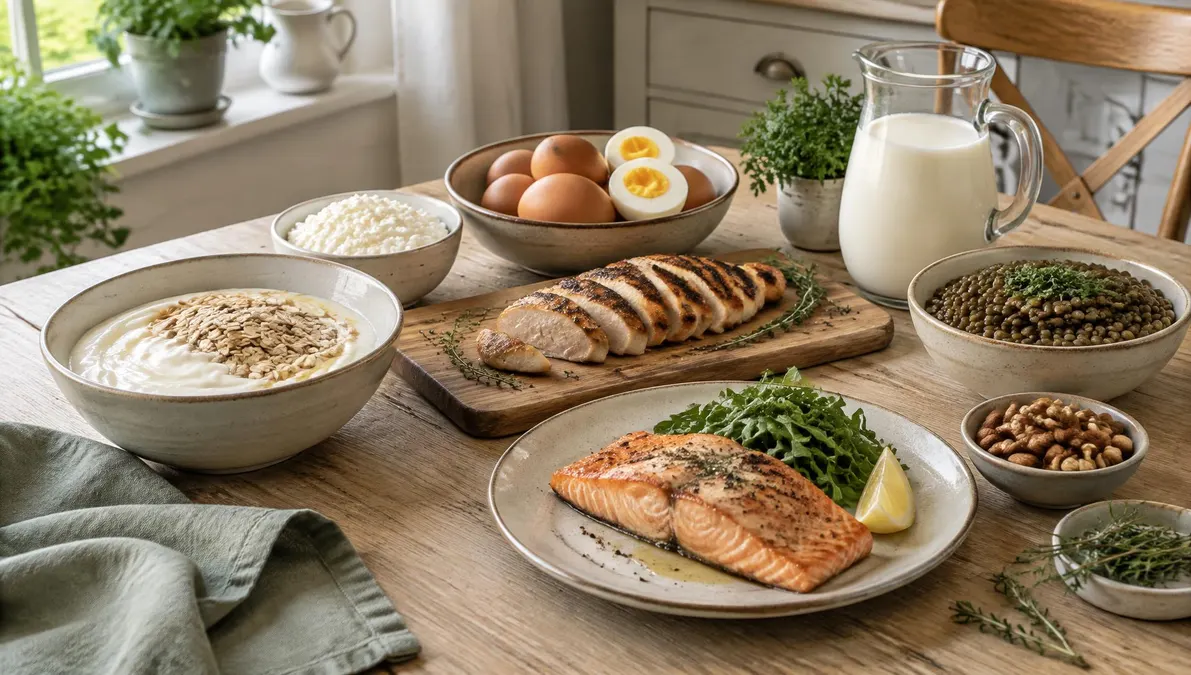
Because there isn't one protein target that makes sense for everybody.
The amount needed to meet the basic protein requirements of a generally healthy adult is different from the amount someone might choose when lifting weights four times a week or trying to hold onto muscle while losing weight.
The European Food Safety Authority sets the adult Population Reference Intake at 0.83g of protein per kilogram of body weight per day.
For a 70kg adult, that's roughly 58g per day.
But that's a population reference intake. It isn't specifically a muscle-building target.
Research looking at resistance training suggests higher protein intakes can support muscle development, with benefits for many people appearing to level off at around 1.6g/kg/day.
That's why context matters. If you want the longer background on EFSA's figure and what it means for Irish shoppers, read how much protein you need per day.
Resistance training provides the stimulus.
Protein gives your body the amino acids required to repair and build tissue.
For someone regularly resistance training, a practical starting range is:
1.6-2.0g/kg/day
| Body weight | Daily range |
|---|---|
| 60kg | 96-120g |
| 70kg | 112-140g |
| 80kg | 128-160g |
| 90kg | 144-180g |
| 100kg | 160-200g |
You don't need to immediately aim for the highest number.
If you're 80kg and currently averaging 80g of protein, consistently moving towards 125 to 130g may matter far more than obsessing over whether you reached exactly 160g.
Protein per meal
One ordinary day, four meals, no shakes. Every figure below comes from the product's own label, worked out for the amount shown.
Breakfast
24.5g
Lunch
45.4g
Snack
25.7g
Dinner
24.3g
Total from the foods listed
119.9g
Protein from Tesco Ireland nutrition listings for each product. Chicken and salmon weights are raw, as sold. Potatoes, greens and anything else on the plate add a little more and aren't counted. Swap in eggs, beans, tofu, lentils or beef to suit how you eat.
When someone says they want to lose weight, what they usually mean is that they want to lose body fat.
They generally don't want to lose the muscle they've worked to build.
During a calorie deficit, resistance training and sufficient protein can help support retention of lean mass.
A practical range for many active adults is:
1.6-2.2g/kg/day
But protein doesn't override energy balance.
Eating more protein does not automatically cause fat loss. If fat loss is the goal, overall calorie intake still matters.
Probably not.
There isn't a tiny window where your workout suddenly becomes pointless because you didn't drink a protein shake within 30 minutes.
For most people, total protein intake across the day matters more than racing towards a shaker immediately after training.
Spreading protein across several meals can still be useful.
These are examples, not targets you have to hit at every meal.
Protein is now everywhere. Protein cereal. Protein bars. Protein puddings. Protein crisps. Protein chocolate. Protein coffee.
Some of these products can be genuinely useful. Others are simply more expensive versions of foods you were already eating.
A large protein number on the front of a packet doesn't tell you everything about the product. You should still consider:
We've compared the labels on supermarket protein puddings, popular protein bars and high-protein yoghurts, and asked whether protein yoghurt is better than normal yoghurt.
That is one of the reasons Sláinte exists. Instead of judging a product based on the loudest claim on the front of the packet, Sláinte helps you look at the product as a whole.
Protein is only one part of the picture.
Scan food with Sláinte to see its score, understand what is actually in it and find better-scoring alternatives.
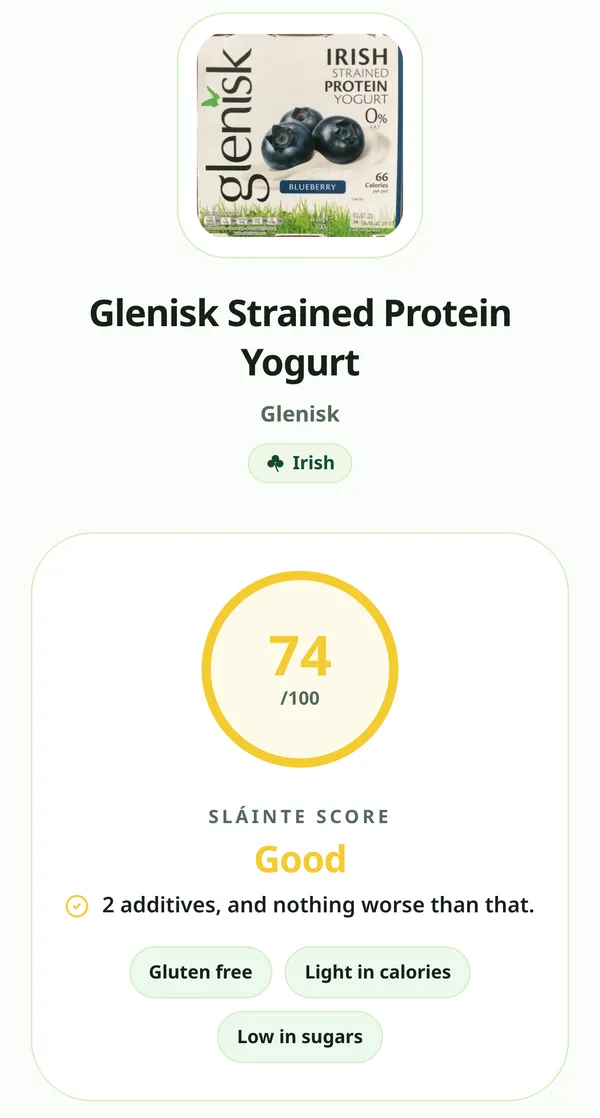
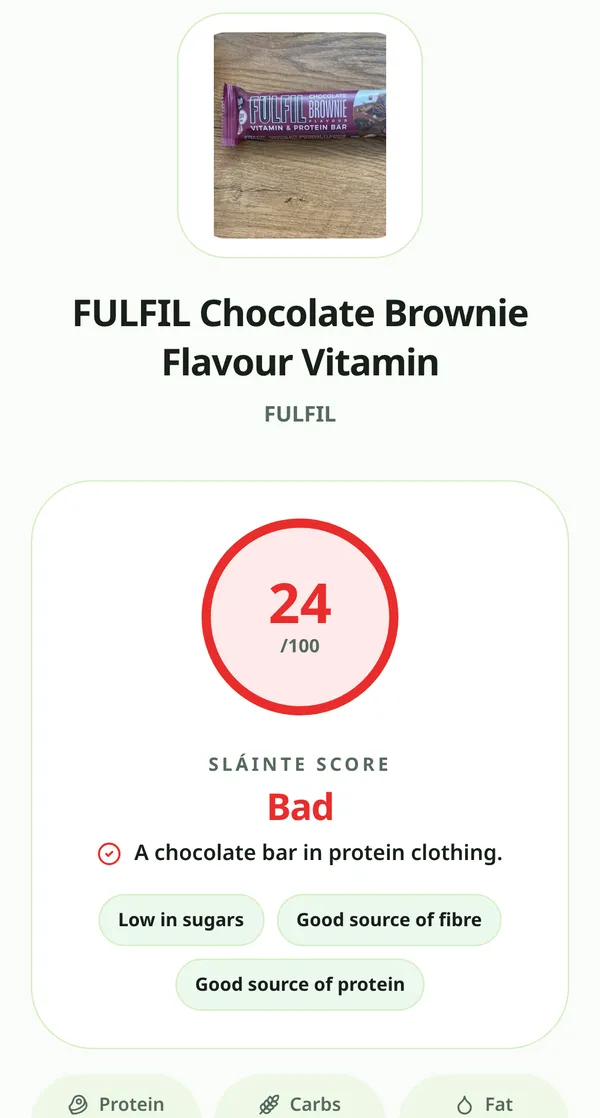
Screenshots from the Sláinte app. Tap either one to open the full breakdown.
No.
Protein is important, but once you're consistently eating enough to support your goal, continuing to push the number higher doesn't automatically create more muscle.
A good diet still needs room for:
If you're trying to eat enormous amounts of protein because somebody on social media told you to, while everything else in your diet suffers, you've probably missed the point.
Your protein target should help structure your diet. It shouldn't turn eating into a maths exam.
0.83-1.2g/kg
1.2-1.6g/kg
1.6-2.0g/kg
1.6-2.2g/kg
These are practical ranges, not precise prescriptions.
Calculate my proteinProtein requirements vary by body weight, activity level and goal. For healthy adults, the EFSA population reference intake is 0.83g/kg/day, while active people often choose higher intakes.
It depends on your body weight and goal. For a 60kg person, 100g is about 1.67g/kg. For a 100kg person, it is 1g/kg.
A practical range for someone resistance training regularly is approximately 1.6 to 2.0g/kg/day.
If you are resistance training while dieting, a higher protein intake can help support muscle retention. A practical range for many active adults is around 1.6 to 2.2g/kg/day.
No. Protein shakes are simply a convenient way of consuming protein. You can meet your target entirely through normal food.
Total daily intake is generally more important than rushing to consume protein immediately after a workout. Spreading protein across the day is a practical approach.
More is not automatically better. Very high protein intakes can also crowd other important foods out of the diet. People with medical conditions affecting their dietary protein requirements should get individual professional advice.
Knowing how much protein you need is useful. Knowing whether the foods you're using to reach it are actually good choices is the next step.
Scan it with Sláinte.
Understand the ingredients, nutrition and additives, see your Sláinte Score and find better alternatives.
Sláinte didn't carry out these studies. This guide summarises published guidance and is written by Sláinte Editorial.
Last updated: