
Is Aldi Brooklea better than Lidl Milbona?
Neither range is automatically better. Formulations, prices and serving sizes vary. Compare the exact flavour and pack size, then use protein per euro and the complete nutrition label.
Published · Updated · Sláinte Editorial
The chilled aisle has changed. A few years ago, shoppers chose between ordinary yoghurt, a couple of flavoured desserts and maybe a protein shake near the till. Now there are whole sections of protein puddings, mousses, yoghurts, drinks and rice puddings.
Aldi's Brooklea range and Lidl's Milbona range are especially visible because they're priced for everyday shopping. A pot can seem like a convenient substitute for dessert, and the large protein number makes it feel like a sensible choice.
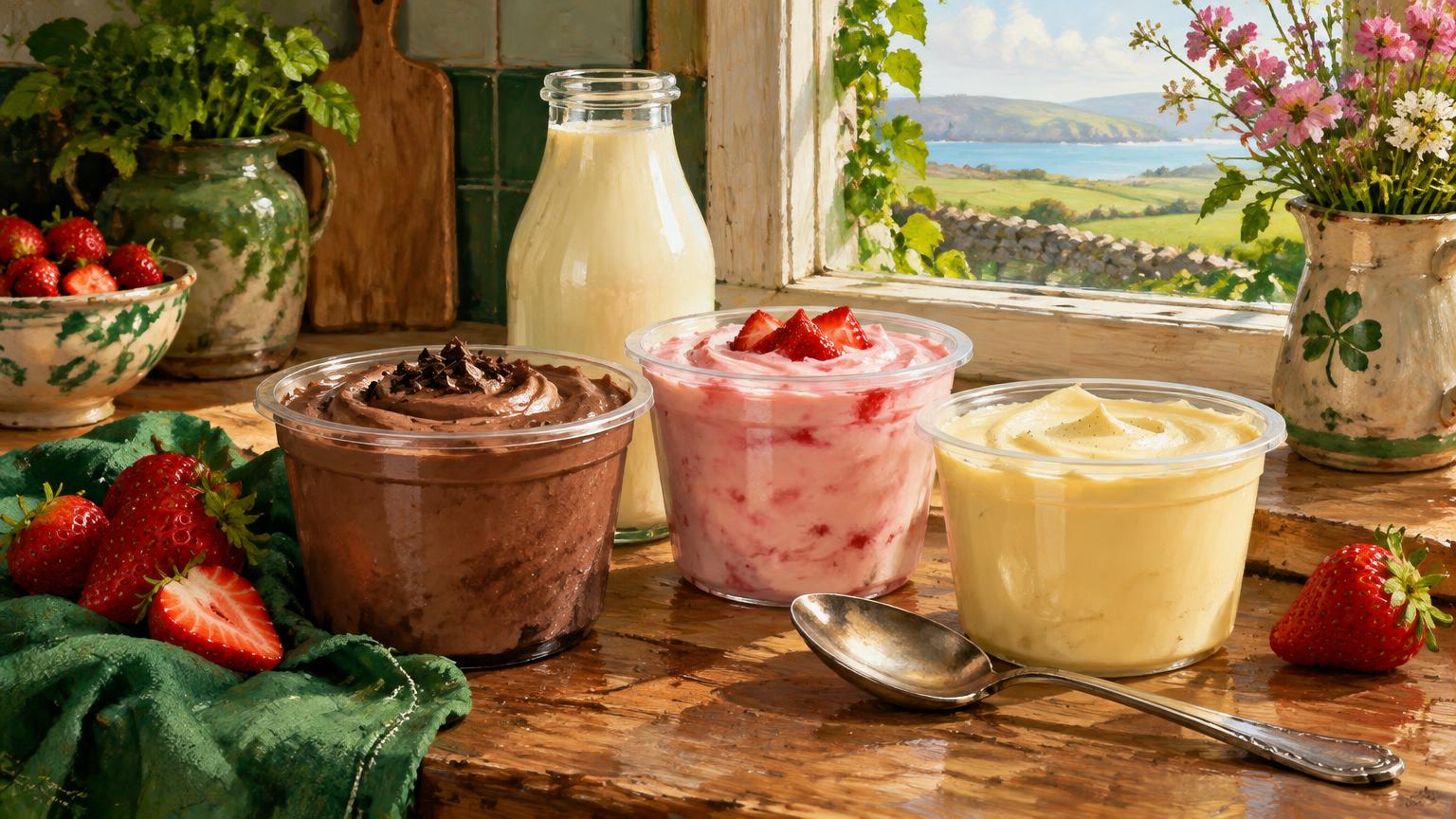
The figures below come from the exact Irish retailer listings linked in the sources. They are not laboratory measurements or a guarantee that every pack on the shelf uses the same recipe. Check your own pack if it differs.
But which supermarket offers better value? And do these products deliver protein without unnecessarily complicated ingredients?
We looked at available Irish listings, including Aldi's Brooklea flavoured protein yoghurts, mousse, protein drink and rice pudding, alongside Lidl's Milbona high-protein pudding and yoghurt options. One important finding: a comparison based only on the big 20g protein claim misses cost per gram, serving size, saturated fat, sugar and sweeteners.
Aldi and Lidl change product ranges, suppliers, flavours and promotional prices. One shop's pudding may be sold in a 200g pot; the other may sell a similar flavour with a topping or in a different size. Both may carry the same broad branding, yet the nutrition and additives can be different.
So comparing Aldi chocolate mousse with Lidl vanilla pudding is not a clean test of identical recipes. It is a test of shopper options: which product offers the better combination of price, protein and other qualities for the portion you're buying?
For a fair comparison, start with the same food type and calculate the actual protein in the full package. Then compare the price for an equivalent protein amount.
A product with 10g protein per 100g gives 20g in a 200g pot. A smaller pot with the same per-100g protein does not provide the same amount.
Brooklea and Milbona offer protein yoghurts, puddings and drinks, with different flavours and pack sizes. Irish availability and prices change. Compare the actual shelf label rather than relying on a price recorded for another flavour or promotion.
Comparison based on the specific examples discussed in this article.
| Irish listing | Pack size | Listed price | Full protein panel available online? |
|---|---|---|---|
| Brooklea Strawberry Protein Yogurt Drink | 300g | €1.89 | Not supplied on the accessed page |
| Brooklea Vanilla Protein Rice Pudding | 180g | €0.79 | Not supplied on the accessed page |
These are the prices displayed on Aldi Ireland's linked product pages, not guaranteed in-store prices. The drink is listed by weight, not as 300ml. Neither page supplies enough nutrition and ingredients for a verified score or a genuine protein-per-euro ranking. The hypothetical calculation below is kept separate from these products.
These are provisional reference values, not confirmed Irish products. The Brooklea chocolate mousse photograph shows a UK 200g pot. The Milbona vanilla pudding photograph shows a non-Irish 200g pot. The flavours and textures differ, so this is not a like-for-like brand ranking. Values below are per 100g, transcribed from those photographs; your Irish pack may differ.
| Estimated reference, not verified Irish recipe | kcal / 100g | Protein g / 100g | Sugars g / 100g | Saturates g / 100g | Salt g / 100g |
|---|---|---|---|---|---|
| Brooklea Chocolate Protein Mousse, UK photo | 77 | 10.1 | 4.2 | 1.0 | 0.24 |
| Milbona Vanilla Protein Pudding, overseas photo | 80 | 10.0 | 4.9 | 1.0 | 0.28 |
For a 200g pot, those per-100g values suggest about 20g protein in either example. Brooklea's photo separately declares 153 kcal and 20.3g protein per pot, while multiplying its rounded per-100g values gives 154 kcal and 20.2g. Small rounding differences are normal. No Irish price-per-protein winner or Sláinte Score is assigned to these provisional examples, and they are not the Aldi drink or rice pudding listed above.
There are two helpful versions of this calculation. Protein grams per euro tells you how much protein you buy for your money. Cost per 20g protein makes different serving sizes easier to compare.
The calculation is:
Protein grams per euro = grams of protein in the whole pack / pack price in euro.
Cost per 20g protein = (pack price / pack protein grams) x 20.
Imagine two hypothetical products. Product A costs €0.90 and provides 20g protein. Product B costs €1.50 and provides 20g. The first costs €0.90 per 20g; the second costs €1.50 per 20g. That difference is real even though the protein number on the front would look the same.
Now add nutrition. The slightly dearer option might contain less saturated fat, have a different flavour or be more filling for you. The cheaper option could suit you perfectly. Protein per euro is useful, but it doesn't become an overall health score.
Illustrative guide, not a score for a whole category.
Many high-protein desserts use dairy ingredients such as skimmed milk and milk protein, with starches or other thickeners to produce their texture. Some add intense sweeteners so the product tastes like a dessert without using as much added sugar.
It is important not to assume every Brooklea or Milbona product has the same formulation. An independent Irish price tracker transcribes a Milbona vanilla pudding recipe containing skimmed milk, milk protein, cream, modified starch, carrageenan, cellulose gum, flavourings, lactase, acesulfame K and sucralose. That is secondary evidence, not a verified current Irish back-of-pot label, so we have not used it for a scored comparison.
A natural yoghurt, meanwhile, may have milk and cultures as its main ingredients. Flavoured protein yoghurts often add fruit preparations and sweetening ingredients. The distinction matters when deciding whether you want a dessert-like product or a simple source of dietary protein.
A longer ingredient list isn't proof of harm. It can indicate a more formulated product, but individual additives are regulated and assessed for specified uses. The relevant question is how the complete product fits into your diet, not whether its ingredients sound industrial.
Sucralose and acesulfame K are high-intensity sweeteners. They can make a product sweet without contributing sugar in the same way table sugar does. They also have established regulatory frameworks and permitted uses in the EU.
That doesn't mean all questions about non-sugar sweeteners are settled. It does mean the presence of sucralose is not adequate evidence that a particular yoghurt causes microbiome damage, addiction to sweetness or weight gain.
If you find a particular pudding gives you bloating or discomfort, investigate the complete formulation, serving size, lactose content and your personal tolerance. Don't diagnose the cause from one additive name.
No. A protein pudding may contain naturally occurring milk sugar even when no sugar has been added. A separate with sweeteners declaration may also be required where sweeteners are used. The total-sugars line is still relevant, but it cannot be treated as a direct measurement of added sugars.
We explain this properly in our no-added-sugar guide.
A protein yoghurt and pudding are different products with different goals. The yoghurt may be chosen for a quick breakfast or snack. The pudding might be bought as a sweet dessert substitute. Neither is nutritionally identical to a full meal.
To compare them, check six things: grams of protein in the pack, price per 20g protein, total sugar, saturated fat, fibre and the ingredient list. For a yoghurt drink, check the entire bottle, not just the per-100ml column.
Someone trying to increase protein intake might find both products useful. Someone looking for a simple everyday yoghurt might prefer a plain, high-protein natural variety. Someone monitoring energy intake may prefer a small pot because its serving size is convenient.
The best choice depends on the actual product and the role it plays in your normal diet. A pot consumed after dinner is different from using a flavoured yoghurt as your only breakfast before a long day.
Both ranges are built largely around dairy. That means they are not suitable for someone with a milk-protein allergy. Lactose levels are not identical across products, and some formulations contain added lactase or are marketed as lactose-free.
A milk allergy and lactose intolerance are different conditions. Lactose-free dairy still contains milk protein and may therefore be unsuitable for people allergic to milk.
If a food causes symptoms, keep track of the exact product and discuss recurring problems with a qualified professional. Changing brands without examining the ingredients may not resolve the issue.
First, work out how much protein you need in your day rather than chasing the largest printed number. Second, compare protein per whole pack, not per 100g alone. Third, calculate protein per euro if price matters. Fourth, look at sugar, saturated fat and ingredients alongside the protein. Finally, decide whether you want a dessert, a yoghurt, a drink or a component of a proper meal.
A low-cost 20g protein pot can be handy. So can ordinary milk, eggs, beans, fish or natural yoghurt. There is no requirement to build your entire diet around chilled protein desserts.
The scored examples use the ingredients and nutrition of the exact products identified below, calculated through the same rules as a Sláinte scan. They are product comparisons, not ratings for an entire brand or an unmeasured meal. A barcode link is shown only where the exact catalogue record is matched.
Scores are not shown for these examples until their exact pack, ingredients and nutrition can be reliably matched. The label comparisons above remain separate from a verified barcode result.
Neither range is automatically better. Formulations, prices and serving sizes vary. Compare the exact flavour and pack size, then use protein per euro and the complete nutrition label.
Prices move between supermarkets and promotions. Compare the current shelf prices for the same product type, pack size and protein amount; we have not established a nationwide cheapest option.
Some pudding formulations contain protein isolates, modified starches, gums or sweeteners and may fit NOVA group 4, but classification should be based on the exact ingredients and the system used. A brand name is not enough.
Some contain added sugars, some use non-sugar sweeteners, and many contain naturally occurring milk sugars. Read the exact nutrition and ingredient declarations.
They answer different questions. Protein per euro is a value measure. Sláinte's score analyses the product's wider nutritional and ingredient profile. Consider both, rather than treating either as the complete answer.
Last reviewed: 3 November 2026