
Back to Journal

Is Supermarket Chicken Pumped With Water? What Irish Labels Really Say

Published · Updated  · Sláinte Editorial

There's a familiar claim about supermarket chicken. Buy a pack of fillets, put them in a pan, watch water appear, and somebody says the chicken has been pumped full of liquid to make it heavier.

It's an understandable suspicion. Chicken does release moisture when heated, and some processed poultry products really do have water, salts and other ingredients added. But those two observations do not prove the same thing.

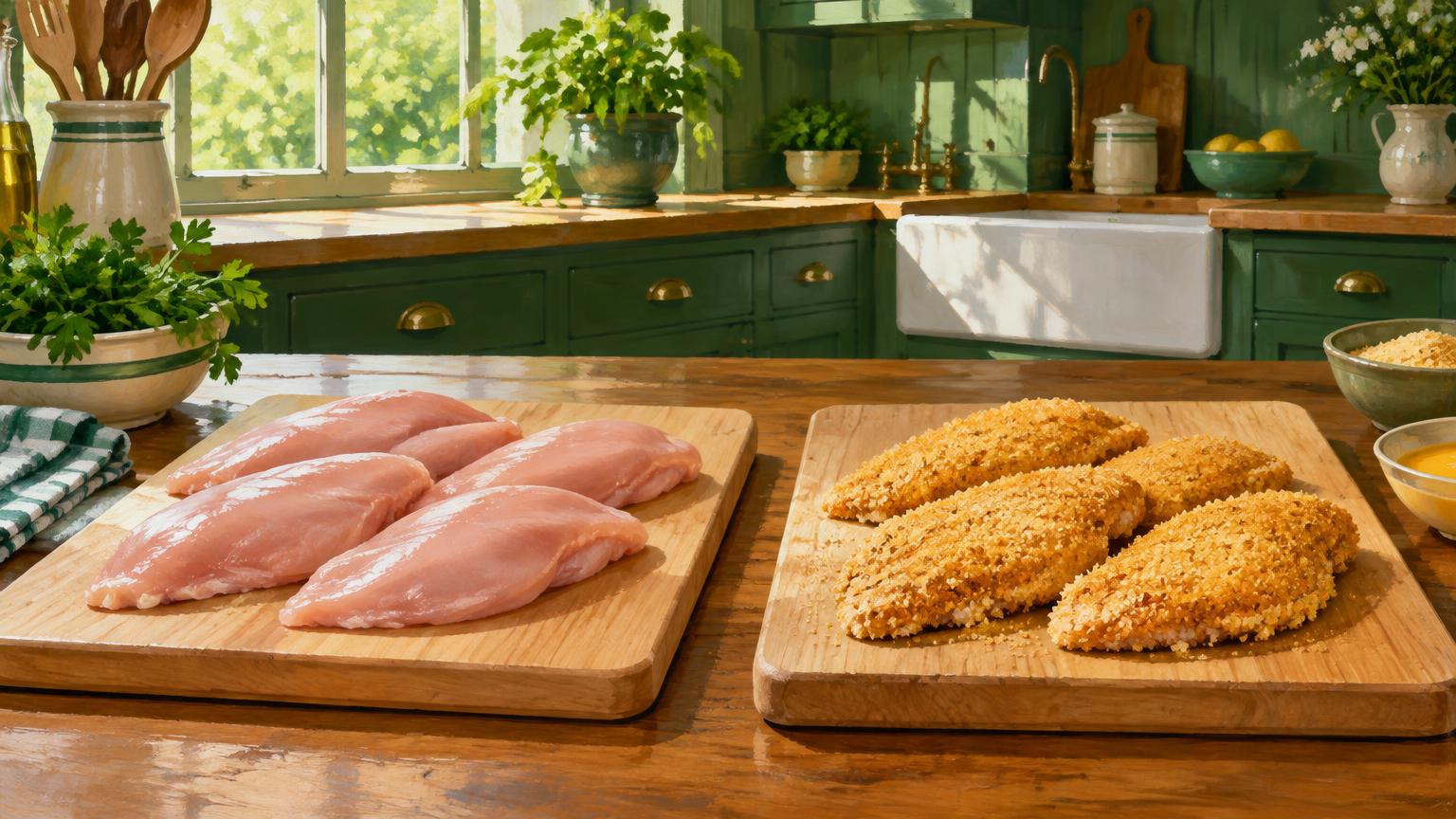
Plain Irish chicken breast and a separate prepared poultry product

The figures below come from the exact Irish retailer listings linked in the sources. They are not laboratory measurements or a guarantee that every pack on the shelf uses the same recipe. Check your own pack if it differs.

We checked Irish supermarket listings for Tesco Irish Chicken Breast Fillets, Dunnes Stores Irish Chicken Breast Fillets and Aldi Butchers Selection Irish Chicken Breast Fillets, then examined the rules governing added water in poultry products.

The most important finding is simple: Tesco's plain fresh chicken breast fillets are labelled as 100% chicken breast. The listing does not support a claim that this particular product contains 15% added water. Dunnes lists its comparable product as fresh Class A Irish chicken, and Aldi advertises a fresh Irish chicken breast range. We have no basis for accusing those raw cuts of undeclared water injection.

The useful question is not whether all supermarket chicken is 'pumped'. It is which chicken products are plain cuts and which are preparations with additional ingredients.

Why chicken releases water in a hot pan

Raw chicken muscle naturally contains substantial water. Meat is not a dry piece of pure protein. Water is part of its structure, and some comes out when the muscle heats and the proteins change shape.

Temperature, pan crowding, whether the meat was previously frozen and thawed, how it was stored, and the cooking method can all affect the liquid you see. If several cold fillets are placed into a relatively cool pan, liquid may accumulate instead of evaporating quickly.

That liquid is not proof of added water, phosphates or a particular manufacturing process. You would need packaging, formulation or laboratory evidence to establish what was introduced during production.

Conversely, the fact that chicken releases natural water does not mean added-water poultry preparations don't exist. They do. They are simply a different product category.

What the Irish supermarket listings actually say

ProductDescription or ingredient evidenceWhat we can conclude
Tesco Irish Chicken Breast Fillets 291gIngredient declaration: Chicken (100%)Listed as plain chicken without added ingredients
Dunnes Stores Irish Chicken Breast Fillets 440gFresh Class A Irish Chicken Breast Fillets; Bord Bia QA originListed as fresh plain chicken, not a formulated marinade
Aldi Butchers Selection Irish Chicken Breast Fillets 500gFresh Irish chicken breast fillets in Aldi's poultry rangeProduct exists, but full pack ingredient verification still required
Breaded, seasoned, reformed or marinated poultry productsMay list water, starches, salt, flavourings or additivesAssess each exact preparation separately

The Tesco product lists 100% chicken breast and has a per-100g nutrition declaration including 24.0g protein and 0.15g salt, declared as sold, on the version viewed. The Dunnes listing gives about 23g protein and 0.1g salt per 100g. Those differences do not prove dilution or deception: source data, raw or cooked basis and label methodology need to be carefully checked before treating the figures as directly comparable.

Plain meat versus preparation
  1. 1Plain chicken: read the declaration
  2. 2Marinated: check added ingredients
  3. 3Cooking liquid is not proof

Comparison based on the specific examples discussed in this article.

What EU law says about added water

Under Regulation (EU) No 1169/2011, meat products and meat preparations that look like a cut, joint, slice or portion of meat must include an indication of added water in the name of the food where that added water exceeds 5% of the finished product's weight.

That rule matters because food that appears to be one piece of meat can otherwise be misunderstood by shoppers. It is not a rule saying every product may secretly contain 5% added water, nor does it establish that all fresh chicken is injected.

The ingredients rules and food information requirements still apply. A product with added ingredients should be assessed based on the complete declaration and applicable legal exemptions.

The EU also has particular labelling provisions for products made of pieces of meat combined to resemble a whole cut. These are not necessarily the same as an intact raw chicken breast.

Added water in the food name
  1. 1Looks like a whole cut or portion
  2. 2Meat product or preparation
  3. 3More than 5% added water

Illustrative guide, not a score for a whole category.

What about phosphates and salt?

Some processed meat and poultry preparations use phosphates for technological reasons, including moisture retention or texture. The permitted uses are regulated. Salt can affect flavour, water holding and preservation, depending on the product.

But you cannot infer phosphate addition merely because meat releases liquid while cooking. The proper evidence is an ingredient declaration or a verified production specification.

Nor does seeing the word phosphate on a packet prove a product is unsafe. Additives are subject to European rules, and how much is present, the permitted category and dietary context are relevant.

The more practical nutritional issue for some preparations may be salt. A seasoned, breaded chicken product can contain significantly more salt than an unseasoned fillet, as well as extra energy from coating and oil. The exact amount must come from the product label.

Why the local butcher comparison needs care

People often assume a butcher's chicken is 'real' and supermarket chicken is processed. That's an unfair blanket comparison.

A butcher can sell plain chicken breast cut from a whole bird, just as a supermarket can. A butcher can also sell marinated skewers, stuffed fillets, breaded pieces and other preparations. Both businesses have food-safety and food-information obligations.

Freshness, sourcing and animal husbandry may vary between suppliers. But there is no scientific basis for assuming that every independent butcher provides healthier chicken simply because the business is independent.

A fair test compares two plain, unseasoned fillets of similar cut, origin and weight. Ask what has been added, whether the product was previously frozen, how it should be stored, and the price per kilogram.

If you want to avoid added ingredients, choose products explicitly sold as plain unseasoned meat. If you want convenience, a pre-seasoned preparation may be appropriate, but you should understand its label and salt content.

A useful example: plain fillet versus marinated preparation

Imagine two labels. The first declares Chicken (100%). The second, a hypothetical marinated chicken preparation, declares chicken, water, seasoning, salt and stabilisers. They should not be treated as the same product just because both look like chicken breasts in a tray.

The second might have a different cooking behaviour, different protein per 100g and a higher salt value. But without a specific verified product, we cannot attach a percentage of added water or an exact nutrition figure.

The editorial rule at Sláinte is to inspect the real barcode and ingredient panel before making those comparisons. The same applies when discussing a frozen coated fillet for a hot chicken roll. A coated product isn't equivalent to an uncoated fresh cut.

Raw versus cooked protein figures

Protein values per 100g can appear higher after cooking because meat loses water and the remaining nutrients become more concentrated by weight. This does not mean cooking creates protein.

For example, 100g cooked chicken is not necessarily the same original amount of meat as 100g raw chicken. Using figures from different conditions without explaining this can make one retailer appear misleadingly superior.

When comparing Tesco, Dunnes, Aldi and a butcher, use figures on the same basis wherever possible, ideally raw, plain, unseasoned products, with product-specific nutrition data.

Why this matters for food safety

Fresh chicken can contain harmful bacteria regardless of retailer. Keep it chilled, prevent raw meat juices contaminating other foods, cook it thoroughly, and follow the packaging instructions. Do not wash raw chicken in the sink, as splashing can spread bacteria around the kitchen.

Date marks and storage conditions matter more for immediate food safety than arguments about whether supermarket chicken is 'natural'.

If a product has an unusual smell, damaged packaging, or clear evidence of spoilage, follow appropriate food-safety advice rather than attempting to judge it from a social-media clip.

Five things to check before buying chicken

First: identify whether it is a whole raw cut or a prepared poultry food. Second: read any ingredients and added-water declaration. Third: compare salt and protein on equivalent raw or cooked bases. Fourth: consider origin, quality assurance, storage and price per kilo. Fifth: handle it safely at home.

You don't need to boycott supermarkets to avoid added-water poultry preparations. You need to distinguish between the products they're selling.

Product scores and label checks

The scored examples use the ingredients and nutrition of the exact products identified below, calculated through the same rules as a Sláinte scan. They are product comparisons, not ratings for an entire brand or an unmeasured meal. A barcode link is shown only where the exact catalogue record is matched.

Actual Sláinte Scores from the checked product labels

These are calculated with the scanner's existing rules. Product labels, not brand-wide assumptions, supply the inputs. Processing groups are editorial classifications based on the declared recipe. Unmatched barcodes are not invented.

Tesco Irish Chicken Breast Fillets 291g

97

/100

Sláinte Score

Excellent

Short list, real food, nothing hiding.

  • Light in calories
  • Low in sugars
  • Low in saturated fat
  • Fits a balanced diet

What's inside (per 100 g)

The Good Stuff

Watch out for

AdditivesNo additives declared on this label0

Ingredients: Chicken (100%).

Scored from the exact linked retailer label. No barcode link is shown because the exact catalogue pack has not been established.

Frequently asked questions

Is Tesco chicken pumped with water?

The Tesco Irish Chicken Breast Fillets 291g listing examined declares Chicken (100%). That is not evidence of added-water injection. Different Tesco poultry preparations may have different ingredients.

Is Dunnes chicken breast 100% chicken?

The Dunnes listing examined describes fresh Class A Irish chicken breast fillets. Check the precise pack and any ingredient declaration for the exact product you buy rather than assuming every prepared Dunnes chicken product has the same composition.

Why does water come out of chicken in the pan?

Chicken naturally contains water. Cooking temperature, crowding and prior freezing can affect how much liquid is released. Water in the pan does not by itself prove manufacturers added water.

Do food manufacturers have to declare added water?

EU rules include a specific name-of-food declaration for certain meat products and meat preparations resembling a whole cut when added water is more than 5% of finished weight. Other applicable ingredient-labelling rules also matter.

Is chicken from a butcher always healthier?

No. A butcher and a supermarket can both sell plain chicken or prepared products. Compare like with like and ask for the relevant product information.

The short version

  • The claim that all Irish supermarket chicken is pumped with water is not supported by the products examined. Plain fillets and prepared poultry foods are different categories. The label, not the liquid in your frying pan, is the reliable starting point.