
Back to Journal

Best High-Protein Yoghurts in Ireland: Six Real Products Compared

Published · Updated  · Sláinte Editorial

The chilled aisle is crowded with promises: high protein, zero fat, Icelandic-style, Greek-style, natural, creamy and no added sugar.

Many of those descriptions are accurate. They are also answering different questions.

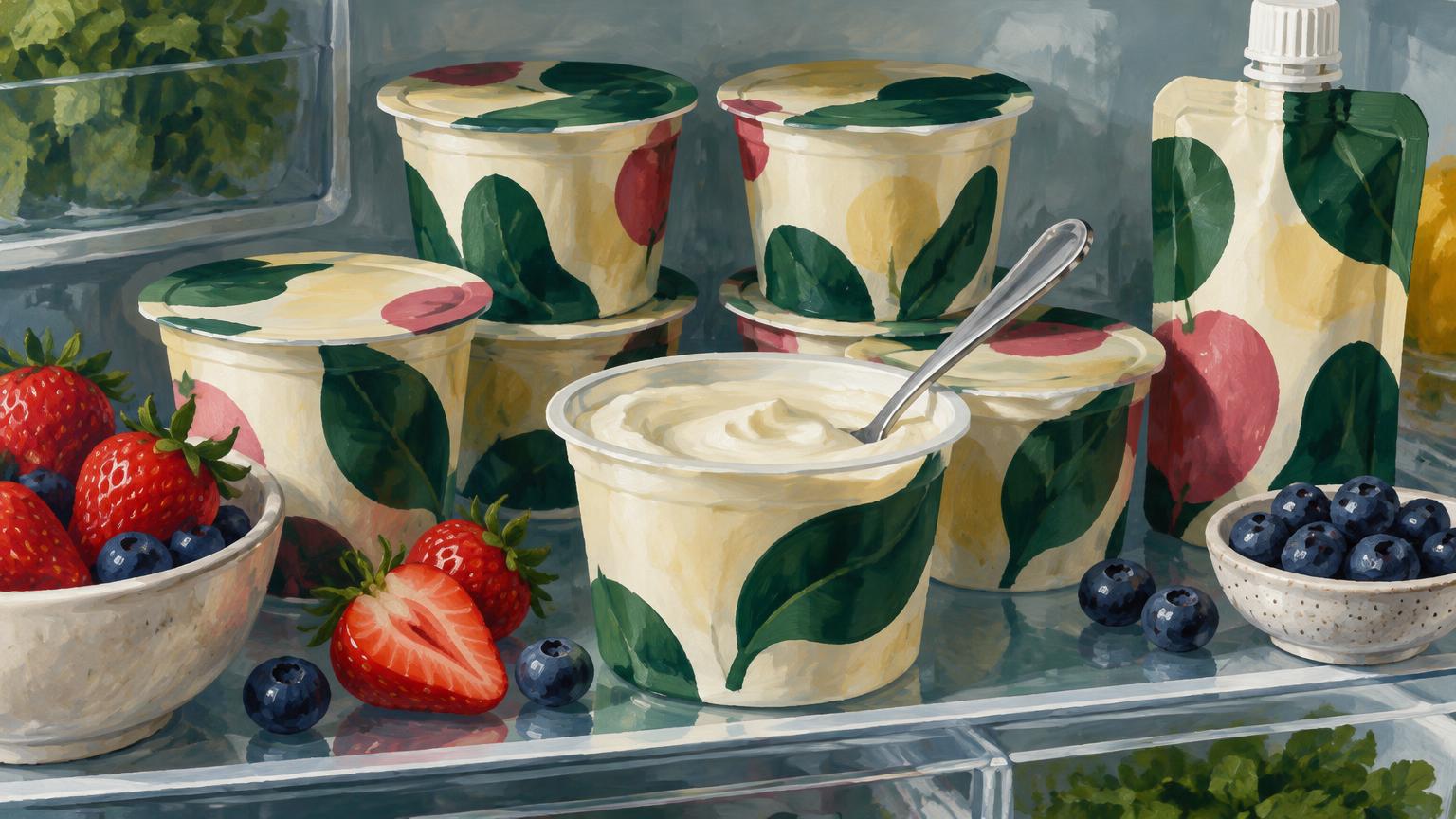
Illustration for Best High-Protein Yoghurts in Ireland: Six Real Products Compared

A yoghurt can be high in protein and contain added sugar. Another can use sweeteners and contain fewer total sugars. A natural yoghurt can have a tiny ingredients list while supplying naturally occurring milk sugars.

Among six products we checked at Tesco Ireland, protein ranges from 8.8g to 10.3g per 100g, while total sugars range from 3.0g to 10g per 100g. That's a substantial sugar difference for products on nearby supermarket shelves.

This is not a ranking of every yoghurt on sale in Ireland. It is a carefully defined comparison of real products, with labels that anyone can check.

The six yoghurts and their label figures

For a fair initial comparison, every value below is per 100g, even where the original package is 150g, 200g, 450g or 500g.

Product (exact variant)kcal/100gProtein/100gSugars/100gSaturated fat/100gSelected ingredient detail
Glenisk Fat Free Protein Yoghurt Natural6010g3.5g0gSkimmed milk and cultures
Glenisk Fat Free Protein Yoghurt Vanilla828.8g10g0gIncludes sugar, pectin, guar gum and vanilla
FAGE Total 0% Greek Recipe Yoghurt5410.3g3.0g0gSkimmed milk and live cultures
Arla Skyr Natural Icelandic Style6010g4.0g<0.1gSkyr yoghurt from skimmed milk
Arla Protein Strawberry Yoghurt Pouch7110g5.3g0.4gStrawberry, grape juice concentrate, steviol glycosides
Lindahls Kvarg Vanilla5410g3.1g0.1gQuark, flavouring, acesulfame K and aspartame

Tesco Ireland nutrition listings reviewed 20 October 2026. Formulations, spelling on packs and allergen details may change. “<0.1g” is a labelled range, not zero.

The protein differences are fairly narrow here. The sugar and ingredient differences are much more noticeable.

This is the first reason not to choose a yoghurt solely because its pot carries a large 15g or 20g protein message.

What does a whole pot actually provide?

The products come in different pack sizes, so we also need to distinguish a serving from the entire tub.

A 500g Glenisk Natural pot lists 10g protein per 100g. That's 50g of protein in the complete pot, but the pack is not necessarily intended to be eaten in one sitting.

A 150g Lindahls Vanilla pot contains 15g protein in the whole pot.

A 200g Arla Strawberry pouch contains 20g protein in the whole pouch.

For a common 150g amount, the comparison looks like this:

ProductProtein per 150gSugars per 150gCalories per 150g
Glenisk Natural15.0g5.3g90 kcal
Glenisk Vanilla13.2g15.0g123 kcal
FAGE Total 0%15.5g4.5g81 kcal
Arla Skyr Natural15.0g6.0g90 kcal
Arla Protein Strawberry15.0g8.0g107 kcal
Lindahls Kvarg Vanilla15.0g4.7g81 kcal

Calculated from the per-100g labels; amounts are rounded. A 150g Arla Strawberry portion is hypothetical because that product is supplied as a 200g pouch. Allergen and ingredient details still refer to the actual products.

A good one and a bad one: real scores

Two pots from the comparison above, run through the same food score you get when you scan a barcode.

The good one

Glenisk Fat Free Protein Yoghurt Natural

91

/100

Sláinte Score

Excellent

Short list, real food, nothing hiding.

  • Light in calories
  • Low in sugars
  • Low in saturated fat
  • Fits a balanced diet

What's inside (per 100 g)

The Good Stuff

Watch out for

Nothing significant.

AdditivesNo additives declared on this label0

Ingredients: Pasteurised skimmed milk, live yoghurt cultures.

View the label source

The bad one

Lindahls Kvarg Vanilla

60

/100

Sláinte Score

Good

  • Light in calories
  • Low in sugars
  • Low in saturated fat

High-concern ingredient warning

The numbers look fine, but one ingredient here is worth avoiding.

Flagged: E1442

  • 5 additives

What's inside (per 100 g)

The Good Stuff

Watch out for

Nothing significant.

Ingredients: Quark (skimmed milk), water, thickener (modified starch), flavouring, acidity regulator (citric acid), sweeteners (acesulfame K, aspartame), colour (carotenes).

Low in sugar on the label, but the sweetness comes from acesulfame K and aspartame.

View the label source

Scored from the published labels with the same rules as a barcode scan. These are examples, not personal scan-history entries. How the food score works

Equal-weight portions make the comparison cleaner. Whole-pot numbers are still useful for understanding how much food you're buying, but they should not be used as though every product comes in an identical serving size.

What makes natural yoghurt different from flavoured yoghurt?

The Glenisk comparison illustrates this particularly clearly because both products come from the same Irish manufacturer.

Glenisk Natural: 3.5g sugars per 100g

Glenisk Fat Free Protein Yoghurt Natural lists skimmed milk and live cultures. Its sugars are naturally present in the milk-based food. The product is labelled no added sugar and contains 10g protein per 100g.

Glenisk Vanilla: 10g sugars per 100g

The Glenisk Vanilla variant contains skimmed milk, sugar, natural flavouring, pectin, guar gum, lemon juice concentrate, vanilla pods and cultures.

It supplies 8.8g protein per 100g and 10g total sugars per 100g.

So the flavoured example has 6.5g more total sugars per 100g than the natural example. For a 150g bowl, that is a difference of about 9.8g total sugar.

Those numbers are a comparison of these two specific formulations, not a claim that every flavoured yoghurt is the same.

The ingredients explain part of the difference: the vanilla product explicitly includes sugar, whereas the natural product does not.

Is the vanilla version automatically unhealthy?

No. It still contains protein and dairy nutrients, and it can fit into a balanced diet. But the difference is valuable information if you're choosing a regular breakfast or snack and aiming to reduce added sugars.

The label gives you the facts without requiring either praise or panic.

How much of the sugar is naturally occurring?

EU nutrition declarations use the line “of which sugars” for total sugars. This includes sugars naturally present in milk, as well as sugars added during manufacture.

Milk naturally contains lactose. That sugar appears on the nutrition panel even when the yoghurt contains only milk and cultures.

By contrast, the WHO free-sugars definition includes sugars added by manufacturers and those in ingredients such as honey, syrups and fruit juice. Naturally occurring lactose within plain milk and yoghurt is not classified as free sugar.

Therefore, comparing a natural yoghurt with a flavoured yoghurt using the sugar number alone does not show the complete story. The ingredients list tells you whether sugar or concentrated juice ingredients have been added.

Read more in How Much Sugar Is Too Much? Reading Irish Food Labels.

FAGE Total 0%: protein without added flavouring

FAGE Total 0% Greek Recipe Yoghurt lists 10.3g protein and 3.0g sugars per 100g in the selected Tesco listing.

Its ingredients are pasteurised skimmed milk and live yoghurt cultures.

That makes it a relatively straightforward example of a high-protein, unflavoured product with a short ingredient list.

A short ingredient list doesn't automatically establish that a food is right for every person's dietary needs. It does, however, make it easier to understand exactly what is in this particular pot.

Greek yoghurt versus Greek-style yoghurt

These phrases can describe different products and processes. Some products achieve thick texture through straining, while others may use milk proteins or different manufacturing methods.

Rather than assuming a specific protein content from Greek-style alone, check the declared protein per 100g and ingredients. The term by itself does not replace the nutrition label.

Arla Skyr Natural: another high-protein plain option

The Arla Skyr Natural product examined provides 10g protein per 100g and 4.0g sugars.

The listed ingredient is skyr yoghurt from skimmed milk.

Skyr is a strained, Icelandic-style cultured dairy food often associated with a thick texture and relatively high protein concentration.

That can make it a useful alternative to other plain protein yoghurts. But the fact that it is marketed as skyr does not make it universally preferable to Greek-style yoghurt, quark or other fermented dairy products.

Taste, texture, price, ingredients and dietary needs also matter.

Arla Protein Strawberry: what a 20g pouch really means

Arla Protein Strawberry Yoghurt Pouch has a clear front-of-pack message: 20g protein per pouch.

That figure is consistent with its 200g pack size and 10g protein per 100g.

The pouch also contains 5.3g sugars per 100g, or approximately 10.6g in the complete 200g pouch.

Its ingredient list includes strawberry, grape juice concentrate, starch, flavouring, steviol glycosides and lactase enzyme alongside the yoghurt and added milk protein.

This is a good example of a product that offers a practical portable format with meaningful protein but has more components than the simplest plain yoghurts.

The presence of an authorised sweetener should not be interpreted as proof that a food is harmful. Nor should the 20g protein claim make the rest of the ingredients irrelevant.

Lindahls Vanilla Kvarg: sweetness with very little declared sugar

The Lindahls Kvarg Vanilla pot lists 15g protein per 150g serving and 3.1g sugars per 100g.

It uses sweeteners, including acesulfame K and aspartame, along with flavouring and other ingredients.

That helps explain how a vanilla-flavoured product can have a lower total-sugars figure than another vanilla product containing added sugar.

A low sugar number is useful. But it is not a statement that the product is unsweetened.

Should you worry about aspartame?

Aspartame is an authorised sweetener subject to safety assessments and use conditions. EFSA has evaluated its safety; separate public-health discussions consider how non-sugar sweeteners fit into long-term dietary patterns.

A safety assessment is not the same as proving that consuming a particular yoghurt improves health.

For most shoppers, the sensible question is whether they prefer a product with sweeteners, one with added sugar or a plain version they can flavour themselves.

People with phenylketonuria (PKU) must avoid or carefully manage aspartame because it is a source of phenylalanine. Relevant products carry mandatory wording to this effect. Always check the label.

Does high protein mean a yoghurt is better for muscle growth?

Protein contributes to the maintenance and growth of muscle mass. The body can obtain protein from yoghurt alongside many other foods.

But there is no special threshold at which a yoghurt becomes a muscle-building shortcut. Training, total protein intake, energy intake and overall diet remain important.

A single pot supplying 15 to 20g protein can be a meaningful contribution for many adults, especially when they have higher protein requirements due to regular exercise.

It is not automatically necessary to buy a product marketed as protein yoghurt. Some ordinary strained yoghurts provide similar amounts.

See How Much Protein Do You Actually Need Per Day? for the difference between general population recommendations and sports-nutrition targets.

Is a yoghurt with added ingredients always worse?

No. Ingredients should be evaluated for their function and the finished product's characteristics.

Pectin can help thicken or stabilise foods. Lactase breaks down lactose. Sweeteners create sweetness with a different sugar profile. Cultures ferment milk.

These ingredients have different purposes. Treating them as though they all indicate the same level of risk is not scientifically defensible.

Equally, natural or no artificial anything on a product front should not replace the full nutrition panel.

A straightforward plain yoghurt may suit someone who wants control over added sweetness. A flavoured pouch may suit someone who values convenience and portability. Another person may need a lactose-free formulation.

There is no single universal priority list.

How do lactose-free and milk-free differ?

Some strained yoghurts are labelled lactose-free because their lactose has been broken down or reduced to a level meeting the applicable product claim.

Lactose-free dairy is still dairy. It can still contain milk proteins and is not suitable for someone with a milk-protein allergy simply because lactose has been removed or broken down.

People with lactose intolerance may tolerate different dairy products differently. Anyone with a diagnosed milk allergy should follow appropriate avoidance guidance and check allergen statements.

This is an especially important distinction when the packaging uses lactose-free alongside high protein or natural.

Which is the best high-protein yoghurt in Ireland?

The answer changes with the question.

For an unflavoured, short-list ingredient option: Glenisk Natural, FAGE Total 0% and Arla Skyr Natural offer straightforward recipes in this selection.

For a portable 20g protein pouch: Arla Strawberry lists 20g per 200g pouch, while also including fruit components and a sweetener.

For a sweetened taste with low declared sugars: Lindahls Vanilla lists 3.1g sugars per 100g, while using authorised sweeteners.

If you're reducing added sugar: the difference between the two Glenisk variants shows why checking for sugar in the ingredients matters.

These are use-case descriptions, not scored rankings. They do not evaluate price, taste, individual tolerability or every yoghurt stocked across Ireland.

Five checks to make in the chilled aisle

1. Compare protein per 100g

That keeps the comparison fair when one package is 150g and another is 500g.

2. Check sugar per 100g and its sources

Look at total sugars, then check whether the ingredient list contains sugar, fruit juice concentrate or sweeteners.

3. Look beyond “zero fat”

Fat content is a useful fact but only one part of the product. Consider the full nutritional profile and how the yoghurt fits into your diet.

4. Check pack size and actual serving

“50g protein per pot” on a large 500g tub should not be confused with 50g in one 150g bowl.

5. Read allergens and storage instructions

All six examples contain milk. Lactose-free does not mean milk-free. Keep chilled products stored according to their packaging, and observe use-by dates.

How Sláinte compares protein yoghurts

Sláinte is intended to consider the full product rather than rewarding a single front-of-pack number.

Under its current published food methodology, nutrition accounts for 55%, ingredients for 30%, and processing and quality signals for 15%, subject to category-specific rules and guardrails.

Protein is considered within nutrition, together with properties such as total sugars, saturated fat, energy, salt and fibre where relevant. Additives are considered within the ingredient component, and processing through the separate quality-signals component.

This makes the comparison more meaningful than declaring a yoghurt excellent merely because it provides 20g protein, or poor merely because it contains a particular authorised stabiliser.

We have not invented Sláinte Scores for these six products. Verified product records and the actual current scoring engine are required to display scores responsibly.

Try Sláinte or read the full scoring methodology.

Frequently asked questions

Which yoghurt has the most protein in this comparison?

FAGE Total 0% lists 10.3g protein per 100g, slightly more than the 10g listed by several of the other selected products. Whole-pot protein amounts differ because packages differ in size.

Is Glenisk protein yoghurt healthy?

Glenisk sells different formulations. The Natural Fat Free product has 10g protein and 3.5g sugars per 100g, while the Vanilla variant examined has 8.8g protein and 10g sugars per 100g. Evaluate the exact product, portion and wider diet.

Is skyr better than Greek yoghurt?

Both may be useful high-protein dairy foods. Specific products vary in protein, fat, total sugars and ingredients. There is no universal nutritional winner based on the category name alone.

Is high-protein yoghurt good for weight loss?

Protein may help with satiety, but no yoghurt guarantees weight loss. Consider energy intake, portions and the rest of your diet rather than assuming every high-protein product has the same effect.

Does natural yoghurt contain sugar?

Yes. Plain dairy yoghurt contains naturally occurring milk sugars that appear as total sugars on the nutrition panel. That does not automatically mean table sugar was added.

Does low-sugar flavoured yoghurt contain sweeteners?

Some do. Lindahls Vanilla includes acesulfame K and aspartame. Other products use sugar or fruit-derived ingredients. Check the individual ingredients declaration.

Does lactose-free yoghurt contain milk?

Often yes. Lactose-free dairy can still contain milk proteins and is not a milk-allergy-safe substitute.

Is 20g protein in a yoghurt enough after exercise?

It can be a useful contribution, but appropriate post-exercise and daily protein amounts depend on body size, training and overall eating pattern. No single yoghurt replaces that context.

Is the whole pot one serving?

Not necessarily. A 500g tub may contain multiple portions; a 150g single pot or a 200g pouch is more likely to be consumed in one sitting. Always check the stated serving size.

Can I compare yoghurt using only the sugar number?

Not reliably. The total sugars figure includes lactose from milk and may include added sugars. The ingredient list reveals important differences in how the product was formulated.

The short version

  • Protein ranged from 8.8g to 10.3g per 100g in six specific products.
  • Total sugars ranged from 3.0g to 10g per 100g.
  • Plain strained yoghurts often achieve high protein without added sugar.
  • A 500g tub's total protein is not the same as protein in a normal serving.
  • Flavoured variants can use sugar, fruit components, sweeteners or combinations of these.
  • Sugar naturally present in milk still appears on the label.
  • Lactose-free dairy is not automatically suitable for milk allergy.
  • Skyr, quark, Greek and Greek-style are useful categories but not complete nutrition verdicts.
  • Compare equal weights, then look at portions and ingredients.
  • There is no justified universal winner based on protein alone.