
01
Less sugar
Replacing some or all of the sugar can significantly reduce the declared sugar content.
Zero sugar. No added sugar. Diet. Low calorie.
Turn the packet around and you might find something else instead: aspartame, sucralose, acesulfame K. Sweeteners are now found in everything from fizzy drinks and chewing gum to protein powders, yoghurts, energy drinks and sauces, and they are some of the most debated ingredients on a food label.
Some people avoid them completely. Others choose sweetened products because they contain less sugar. The reality is more complicated than either "sweeteners are bad" or "sugar-free automatically means healthy". Here is what these ingredients are, why they are used and what to look for on the label.
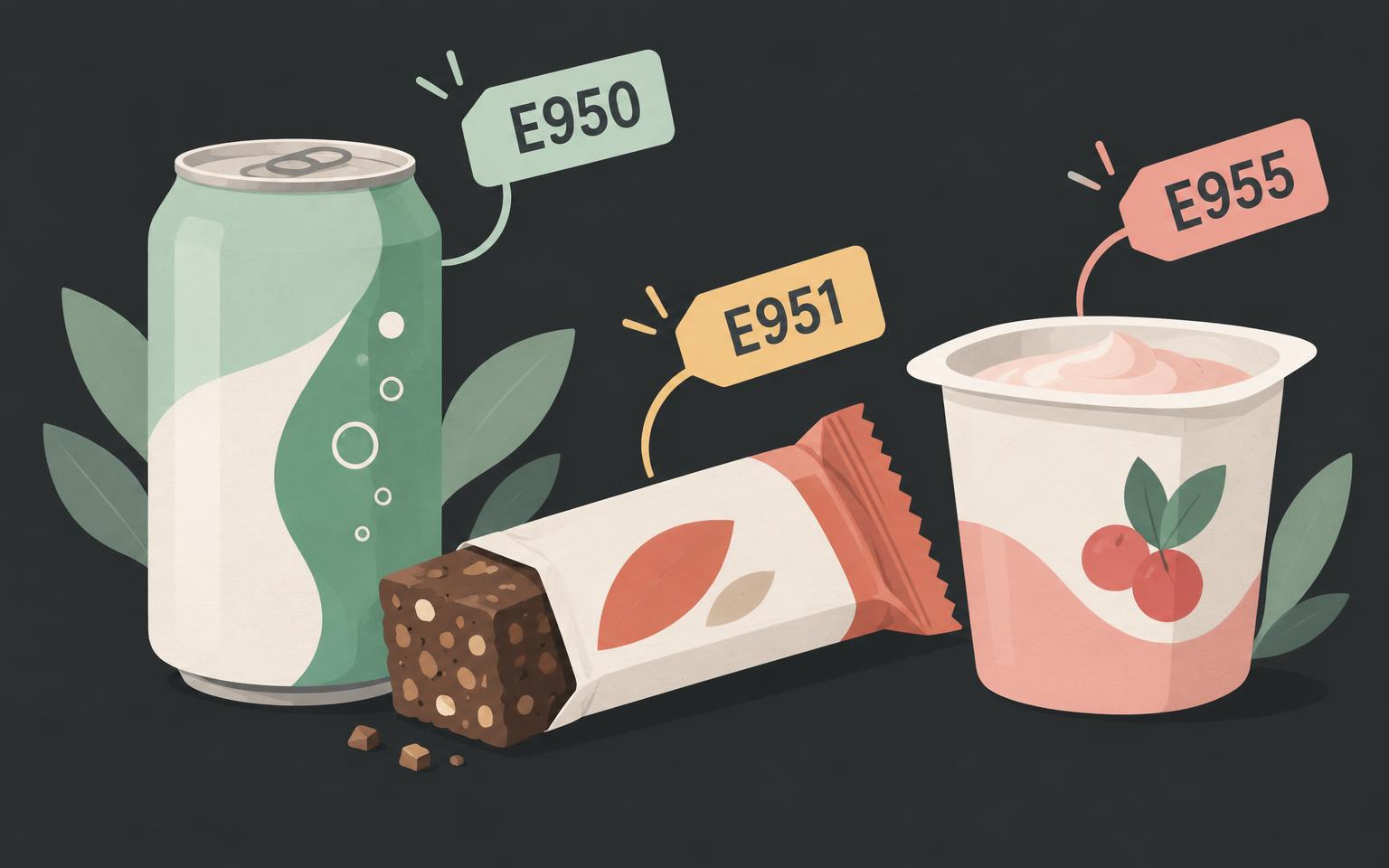
Sweeteners are substances used to give food and drinks a sweet taste without relying entirely on ordinary sugar. Many are far sweeter than sugar, so manufacturers only need relatively small amounts. Three you will commonly encounter are acesulfame K (E950), aspartame (E951) and sucralose (E955).
They are often called artificial sweeteners, although the broader term non-sugar sweeteners also includes sweeteners from other sources, such as steviol glycosides. They are not simply different names for sugar. Each has its own properties, permitted uses and safety assessment.
Sugar
Sweetness plus energy
E950 · E951 · E955
Intense sweetness in tiny amounts
Different ingredients. Same purpose: sweetness.
The obvious answer is to make something sweet without adding as much sugar. But reducing sugar only tells you one thing about the food. It does not automatically tell you whether the whole product is nutritionally strong.
01
Replacing some or all of the sugar can significantly reduce the declared sugar content.
02
Intense sweeteners contribute little or no meaningful energy at the quantities used.
03
Blends such as acesulfame K with sucralose create a particular sweetness profile.
04
Zero sugar, low sugar, diet and reduced calorie products depend on them.
ADI: 15 mg/kg bw/day
EFSA re-evaluated in 2025
ADI: 40 mg/kg bw/day
Must state: contains a source of phenylalanine
ADI: 15 mg/kg bw/day
EFSA re-evaluated in February 2026
Acesulfame potassium, usually shortened to acesulfame K, is an intense sweetener. On an Irish ingredients list you might see "Sweetener: acesulfame K" or "Sweetener: E950". It is often combined with another sweetener rather than used alone.
In 2025, the European Food Safety Authority re-evaluated E950 and established an Acceptable Daily Intake of 15 mg per kg of body weight per day. EFSA's exposure estimates were below this level across the population groups assessed.
That does not make E950 a nutritional benefit. There is an important difference between asking "is this additive authorised at these exposure levels?" and "is this entire product a good choice?" Those are two different questions.
Aspartame is probably the best-known artificial sweetener. It is around 200 times sweeter than sugar, so very little is required. On a label it appears as "Sweetener: aspartame" or "Sweetener: E951".
Products containing it carry an additional labelling requirement: the label must indicate that the product contains a source of phenylalanine. This matters for people with phenylketonuria (PKU), a rare inherited condition in which phenylalanine needs to be carefully controlled.
For everyone else, the European safety assessment uses an Acceptable Daily Intake of 40 mg per kg of body weight per day. That level was reconfirmed by EFSA in September 2026 while evaluating the aspartame-acesulfame salt, E962.
On the label
Ingredients: carbonated water, colour (caramel E150d), acid (phosphoric acid), sweetener (E951), natural flavourings, acidity regulator.
Contains a source of phenylalanine.
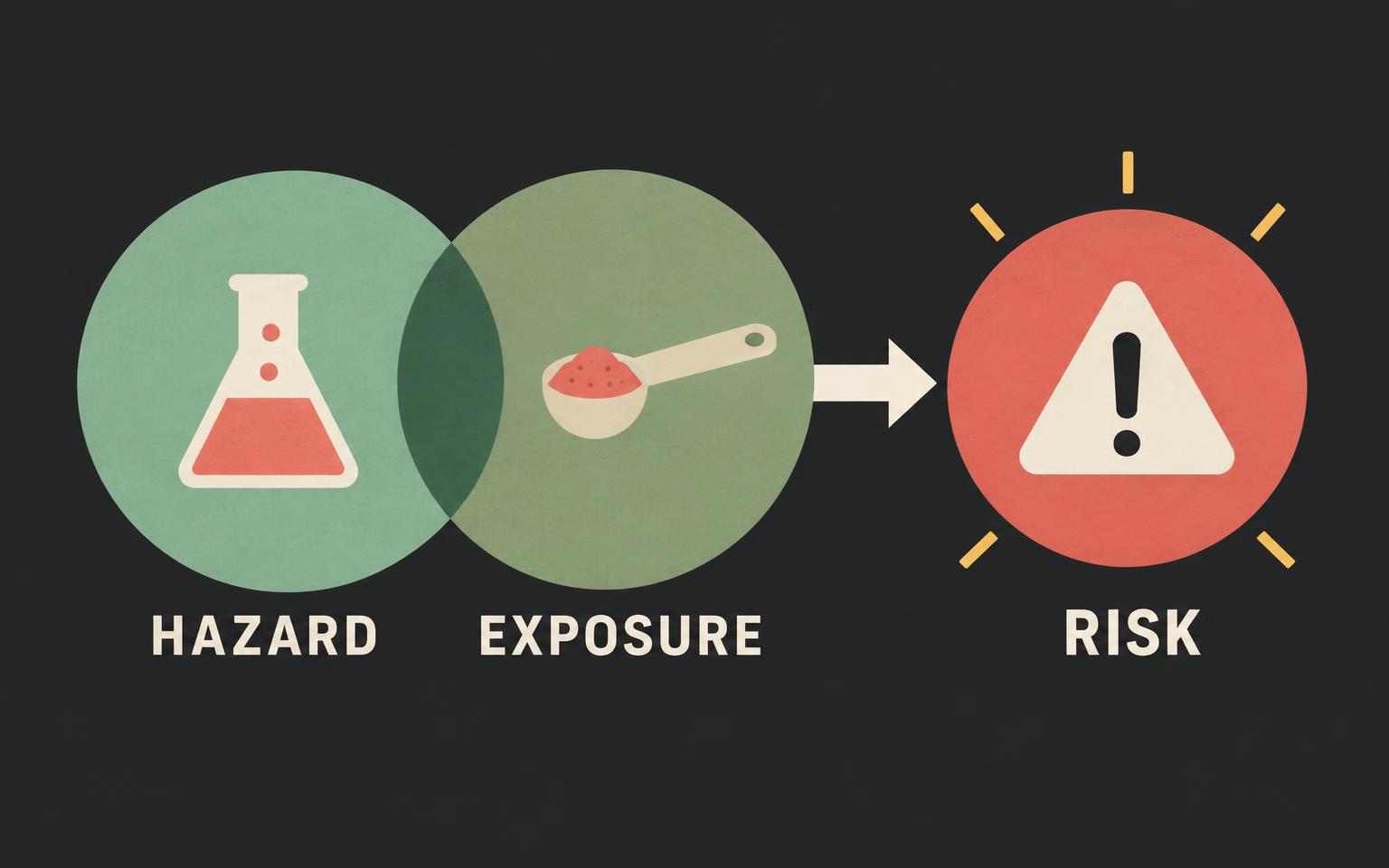
Aspartame has attracted more headlines than any other sweetener. Two questions often get mixed together: can something potentially cause harm under some circumstances, and what level of exposure presents a meaningful risk in normal use? Health authorities assess both hazard and actual exposure when setting safety guidance.
That is why a headline about a substance being studied for a possible effect does not automatically mean ordinary dietary exposure has been declared unsafe. The useful approach is neither to ignore research nor to panic over individual headlines, but to look at:
Sucralose is another intense sweetener used in sugar-free and reduced-sugar products. It appears as "Sweetener: sucralose" or "Sweetener: E955".
EFSA completed a new re-evaluation of sucralose in February 2026 and concluded there was no need to change the existing Acceptable Daily Intake of 15 mg per kg of body weight per day. Estimated dietary exposure was below that level across the assessed population groups.
EFSA did, however, identify uncertainty around a proposed extension of its use in certain baked products under prolonged high-temperature conditions. It is a good example of how food safety is not simply "safe forever" or "dangerous". Evidence gets reviewed, individual uses are assessed, and recommendations can change.
mg / kg / day
An Acceptable Daily Intake is an estimate of how much of a substance can be consumed every day over a lifetime without appreciable health risk, based on the available evidence.
It does not mean you should consume this amount every day.
It does not mean going above it once suddenly causes harm.
It depends what you are asking. Comparing two otherwise similar drinks, replacing sugar with an intense sweetener can dramatically reduce the sugar and calorie content. That is a real difference.
But less sugar does not automatically mean more nutritious. A zero-sugar fizzy drink can still provide almost no fibre, protein, vitamins or minerals. A protein bar might contain little sugar but still be a heavily formulated product.
A better question: what does replacing the sugar change about this particular product?
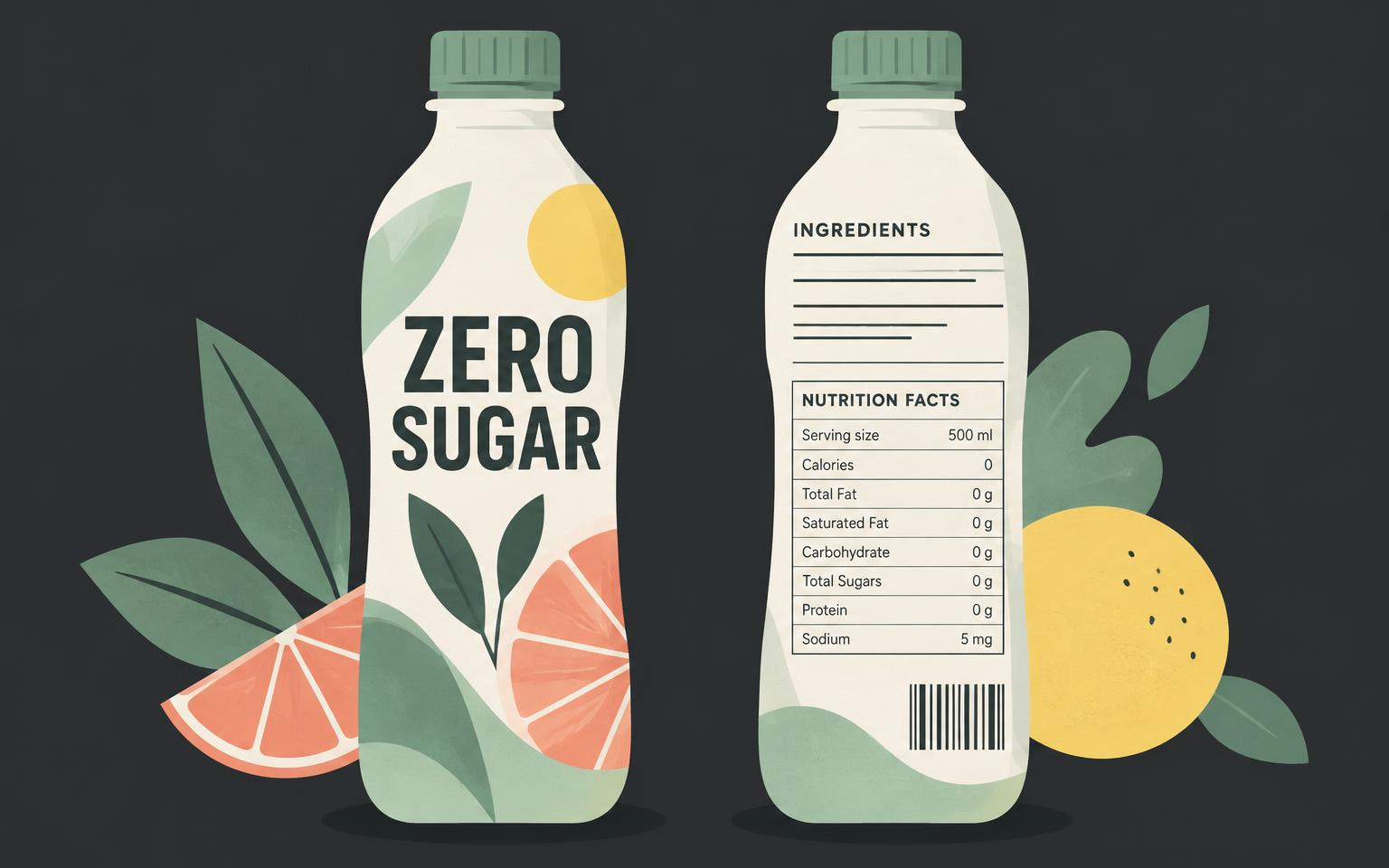
No. "Zero sugar" tells you something very specific: the product contains very little or no sugar under the applicable labelling criteria. It does not tell you:
This is one of the biggest problems with front-of-pack marketing. One positive characteristic can become the entire identity of the product. The back still matters.
Regulators assessing a sweetener's safety answer a different question from health organisations asking whether non-sugar sweeteners are a good long-term strategy for weight control.
In 2023, the World Health Organization recommended that non-sugar sweeteners should not be relied upon to control body weight or reduce the risk of non-communicable diseases over the long term. WHO classified that recommendation as conditional and noted it does not replace toxicological safety assessments or established acceptable intakes for individual sweeteners.
Can it be consumed within established limits?
Is relying on sweeteners a good long-term dietary strategy?
"Approved within safety limits" does not mean "you need this in your diet". Both can be true.
Not every non-sugar sweetener is described as artificial. Steviol glycosides are sweet compounds derived from the leaves of the Stevia rebaudiana plant, identified in the EU within the E960 group. You will increasingly see them in drinks, yoghurts, protein products, snacks and tabletop sweeteners.
The same rule applies. "Natural" does not automatically make a sweetener nutritionally better, and "artificial" does not automatically mean dangerous. Those words can distract from the more useful questions about dose, evidence, nutrition and the overall product.
Natural vs artificial is not a health score.
Polyols, sometimes called sugar alcohols, include erythritol, xylitol, sorbitol and maltitol. They are not the same category as intense sweeteners such as aspartame or sucralose. Polyols can contribute some energy and may affect digestion.
In Ireland and across the EU, foods containing more than 10% added polyols must carry the warning: excessive consumption may produce laxative effects. This is especially relevant to sugar-free sweets, protein bars, low-sugar chocolate and chewing gum. If a product says sugar free, it is worth checking what replaced the sugar.
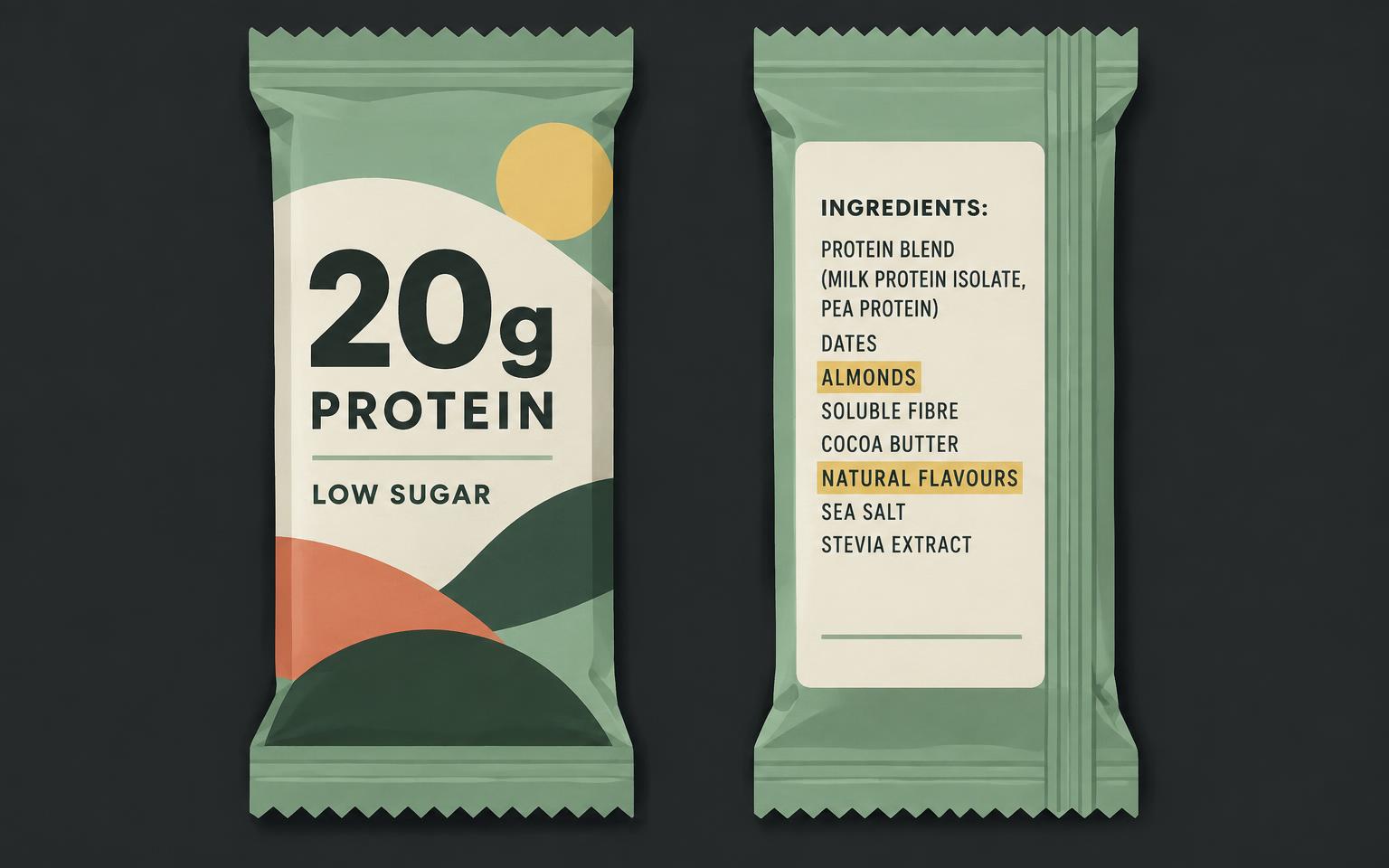
Take a protein shake or bar. The brand wants it to show 20 g protein while also advertising low sugar. But protein ingredients do not necessarily taste like a chocolate brownie, caramel biscuit or vanilla milkshake, so manufacturers often use sweeteners and flavourings to create that taste without large quantities of sugar.
That does not automatically make the product bad. It explains why high protein plus low sugar often comes with a longer ingredient list. The front of the pack tells you the marketing benefit. The back tells you how they achieved it.
Sláinte does not treat artificial sweeteners as though they are sugar, but it does not ignore them either. The food score is built from three parts.
55%
Sugar, salt, saturated fat, fibre and protein
30%
The ingredients and additives used in the product
15%
Processing signals and the completeness of the product information
The first artificial sweetener removes 7 points, each further one removes 5 more, capped at 17 points in total. A sweetened product also cannot reach the Excellent band.
1 sweetener
−7
2 sweeteners
−12
3+ sweeteners
−17
Sláinte should not reward a manufacturer for replacing a large amount of sugar with several intense sweeteners and then treat the product as nutritionally perfect. Equally, a zero-sugar product and a very high-sugar alternative are not nutritionally identical. The whole product still matters.
Foods containing an authorised sweetener generally need the words with sweetener(s) near the name of the food. If a product contains both added sugar and sweeteners, you will generally see with sugar(s) and sweetener(s).
Then check the ingredients for "Sweetener:" followed by E950 or acesulfame K, E951 or aspartame, E955 or sucralose. You do not need to memorise every number. You just need to know where to look.
If replacing sugar dramatically reduces the sugar content of a drink, that is useful context.
Some products contain one sweetener, others several. Look at the actual formulation.
A sweetener tells you almost nothing about protein, fibre, salt, saturated fat, micronutrients or the other ingredients.
Next time you are shopping, compare a regular and zero-sugar version of the same product. Ignore the front of the pack and turn them around. Look at sugar per 100 ml or 100 g, calories, sweeteners and the full ingredients list, then ask: what actually changed?
Sometimes the difference will be substantial. Sometimes the healthier-looking version simply swaps one trade-off for another.
E950
Acesulfame K
E951
Aspartame
E955
Sucralose
Authorised sweeteners in the EU have undergone safety assessment and are subject to conditions of use. That does not mean all sweeteners are identical or that products containing them are automatically nutritious. Individual sweeteners, dietary exposure and the wider food should be considered separately.
Aspartame is authorised for use in the EU. EFSA's current Acceptable Daily Intake is 40 mg per kg of body weight per day. Products containing aspartame also require specific phenylalanine labelling because of the risk to people with PKU.
E950 is acesulfame K, an intense sweetener commonly used in sugar-free drinks and other reduced-sugar products.
E951 is aspartame, an intense low-calorie sweetener used in products including diet drinks, chewing gum and desserts.
E955 is sucralose, an intense non-sugar sweetener found in a range of drinks, foods and tabletop sweeteners.
EFSA re-evaluated sucralose in 2026 and maintained its existing ADI of 15 mg per kg of body weight per day. It also identified uncertainties relating to a proposed extension of use under prolonged high-temperature baking conditions.
A zero-sugar version will generally contain much less sugar and fewer calories, but that alone does not provide a complete assessment of the product's nutritional quality.
Steviol glycosides originate from the stevia plant and are generally described as non-sugar sweeteners rather than artificial sweeteners. Their plant origin does not automatically make a product containing them healthier.
Sweeteners allow manufacturers to make products taste sweet while keeping declared sugar relatively low. Many protein bars therefore use one or several sweeteners alongside protein ingredients and flavourings.