How to Read a Food Label

Everything on the back of the pack, in the order you should read it.

Almost every pre-packed food sold in Ireland carries the same set of information, in the same units, because EU food information law requires it. Once you know which parts are legally defined and which parts are marketing, the back of the pack becomes the most useful thing in the shop.

This guide walks through the label from top to bottom, with real figures taken from products in the Sláinte database, and shows where labels are precise, where they are vague by design, and where two products that look identical are not.

Illustration of a nutrition label being examined under a magnifying glass

What the label must tell you by law

Regulation (EU) No 1169/2011 on the provision of food information to consumers sets the rules that apply in Ireland. For pre-packed food it makes a nutrition declaration mandatory, and it fixes both the nutrients that must appear and the order they appear in. That is why labels from different countries and different brands are comparable at all.

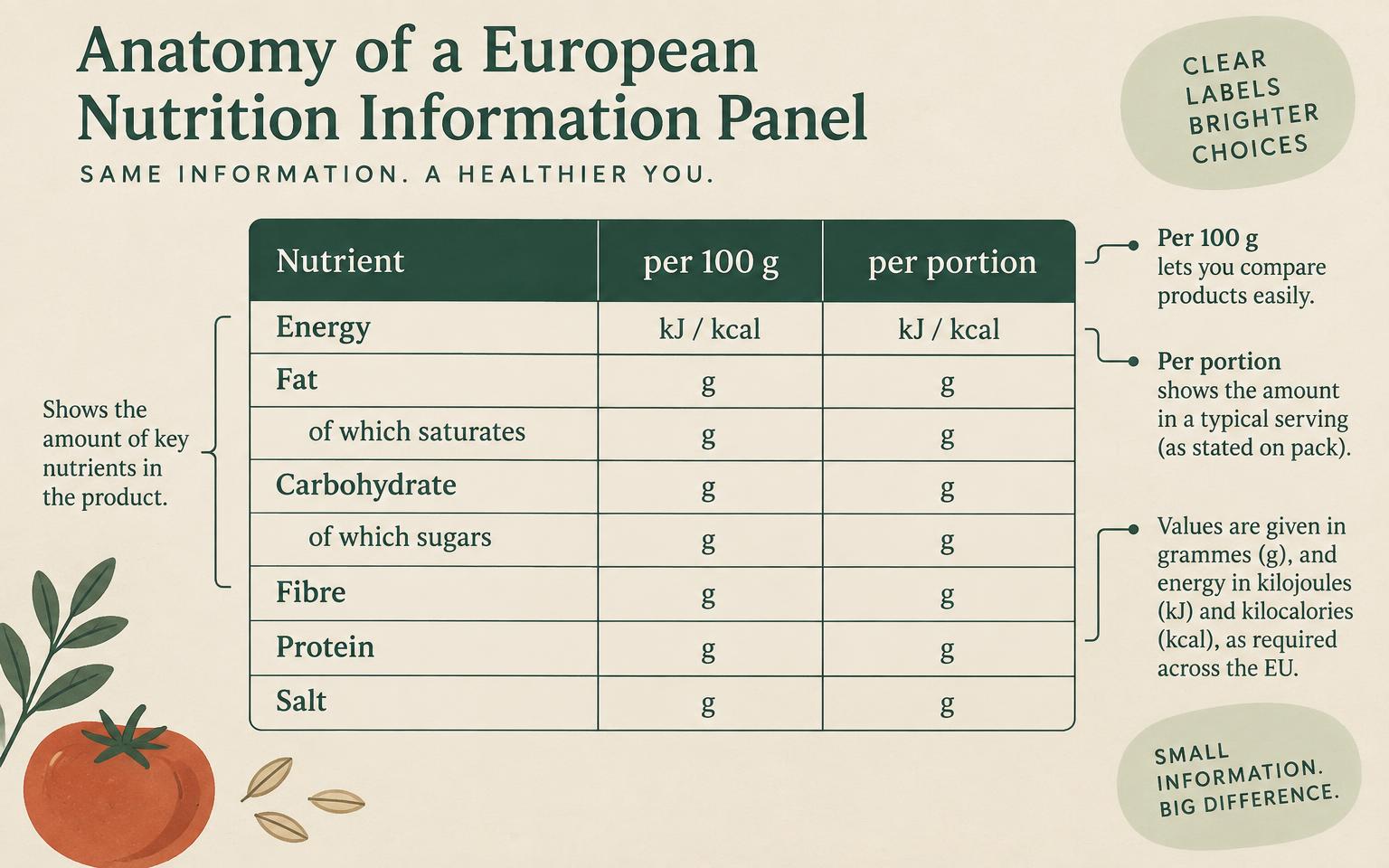
The mandatory declaration is exactly seven lines, always in this order:

  • Energy, expressed in both kilojoules (kJ) and kilocalories (kcal)
  • Fat
  • of which saturates
  • Carbohydrate
  • of which sugars
  • Protein
  • Salt

These figures must be given per 100 g or per 100 ml. Anything else (a per-portion column, fibre, individual vitamins and minerals, mono-unsaturates, polyols, starch) is voluntary. Manufacturers add those lines when they help sell the product, which is a useful signal in itself. Fibre is the clearest example: it is optional, so a product that declares its fibre content usually has fibre worth declaring.

Why the figures are averages

The declared values are averages, not measurements of the pack in your hand. They can come from laboratory analysis, from calculation using known ingredient values, or from generally established data. Tolerances are accepted, which is why two batches of the same product can differ slightly, and why treating a single decimal place as precise is a mistake.

Diagram of a European nutrition information panel with per 100 g and per portion columns
The mandatory declaration is per 100 g or 100 ml. A per-portion column is optional and defined by the manufacturer.

The mandatory nutrition declaration, line by line

LineUnitWhat it actually measures
EnergykJ and kcalTotal energy from fat, carbohydrate, protein, fibre and polyols combined
FatgAll fats, including the ones considered beneficial
of which saturatesgThe fraction most strongly linked to raised LDL cholesterol
CarbohydrategStarch and sugars; in the EU, fibre is counted separately
of which sugarsgAll mono- and disaccharides, added and naturally present, indistinguishable here
ProteingTotal nitrogen × 6.25, not protein quality
SaltgSodium × 2.5, including sodium that was never table salt

Fibre, vitamins, minerals, mono-unsaturates, polyols and starch may be added voluntarily, in a fixed position after salt.

Per 100 g is the only honest comparison

Portion sizes on packs are chosen by the manufacturer, not by law. A cereal portion is typically declared as 30 g or 40 g, a portion of crisps as 25 g or 30 g, a portion of spread as 15 g. None of those numbers describe what people actually pour or spread, and none of them are comparable between brands.

The per 100 g column is fixed, so it is the one to use. Two breakfast cereals from the Sláinte database show what that reveals. Both are eaten from a bowl with milk, both are marketed to families, and both are wheat or rice based.

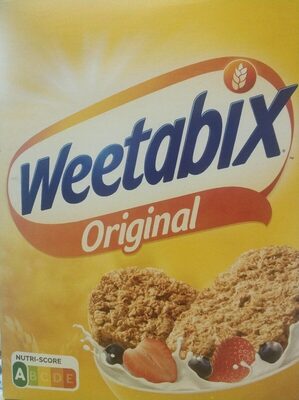
Weetabix Original pack

Weetabix

Original Weetabix

60/ 100Good

  • 368 kcal, 4.2 g sugars, 0.6 g saturates, 10 g fibre, 12 g protein, 0.28 g salt per 100 g
  • Ingredients: wholegrain wheat (95%), malted barley extract, sugar, salt, plus added niacin, iron, riboflavin, thiamin and folic acid
  • No additives with an E number on the list

Wholegrain first at 95%, double-digit fibre and sugars under 5 g per 100 g. Sugar appears third, but in a small enough share that it barely moves the profile.
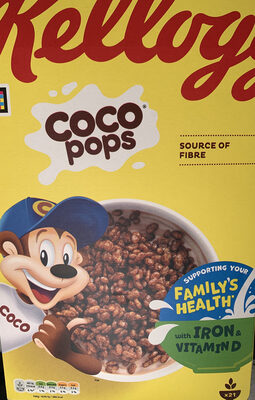
Kellogg's Coco Pops pack

Kellogg's

Coco Pops

47/ 100Poor

  • 387 kcal, 17 g sugars, 0.9 g saturates, 3.8 g fibre, 6.3 g protein, 0.53 g salt per 100 g
  • Ingredients: rice, sugar, glucose syrup, fat-reduced cocoa powder, salt, cocoa mass, barley malt extract, flavourings, then added vitamins and minerals
  • Two separate sugar sources in the first three ingredients

Four times the sugars, roughly a third of the fibre and half the protein of the wholegrain option, with almost the same energy. Same shelf, same aisle, very different label.

Reference intakes are a scale, not a target

Where a pack shows percentages, they are almost always percentages of the EU reference intakes for an average adult. Those values are set in the regulation and are the same on every pack, regardless of who is eating it:

EU reference intakes for an average adult

NutrientReference intakeWhat that means in practice
Energy8 400 kJ / 2 000 kcalA single average figure, not a personal requirement
Total fat70 gIncludes the fats in fish, nuts and olive oil
Saturates20 gReached quickly by pastry, chocolate and processed meat
Carbohydrate260 gStarch plus sugars combined
Sugars90 gHigher than most public-health advice on free sugars
Protein50 gComfortably met by most Irish diets without supplements
Salt6 gThe FSAI advises adults aim for less than this

Sláinte shows reference intakes as context only. They are never used to calculate a score, because they describe an average adult rather than the person holding the pack.

The ingredient list is ranked, and that ranking matters

Ingredients are listed in descending order of weight at the time of manufacture. The list is therefore a rough recipe: whatever is first is the largest single component. It is the fastest read on any pack, and it is often more revealing than the numbers.

Two extra rules make it sharper. First, quantitative ingredient declaration, usually called QUID: when an ingredient is emphasised on the pack, pictured on the front or named in the product name, its percentage must be declared. That is why you see "hazelnuts 13%" rather than a vague promise of hazelnuts. Second, the fourteen allergens listed in Annex II of the regulation must be emphasised inside the list itself, typically in bold or capitals, rather than hidden in a separate sentence.

Compound ingredients

An ingredient made of several ingredients is broken open in brackets. A chocolate chip becomes "sugar, cocoa mass, cocoa butter, emulsifier (soy lecithin), flavouring". This is where sugar frequently appears two or three times on one label under different names (sugar, glucose syrup, invert sugar syrup, dextrose, molasses) each separately ranked, each individually smaller than it would be if combined.

Diagram showing ingredients ordered by descending weight, with a percentage declared on the largest
Descending weight order, plus a declared percentage for any ingredient the pack emphasises.
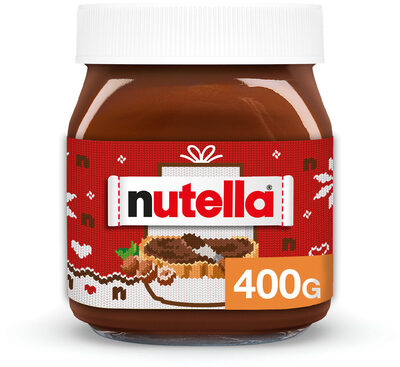
Nutella jar

Nutella

Nutella

26/ 100Poor

  • 539 kcal, 56.3 g sugars, 10.6 g saturates, 6.3 g protein, 0.11 g salt per 100 g
  • Ingredients in order: sugar, palm oil, hazelnuts (13%), skimmed milk powder (8.7%), fat-reduced cocoa (7.4%), emulsifier: lecithins (soya), vanillin
  • Additives: E322 lecithins

The front of the jar sells hazelnuts and milk. The list ranks sugar first and palm oil second, and the QUID rule forces the hazelnut share into print: 13%. More than half the jar by weight is sugars.

Salt, sodium and the multiplier

EU labels declare salt, not sodium, and the salt figure is calculated as sodium multiplied by 2.5. Sodium from any source counts, including sodium bicarbonate in a raising agent or sodium nitrite in cured meat, so a product can declare salt without a grain of table salt in the recipe.

Crisps are the category where this bites hardest, because the salt sits on the surface and the numbers move a lot between flavours of the same brand.

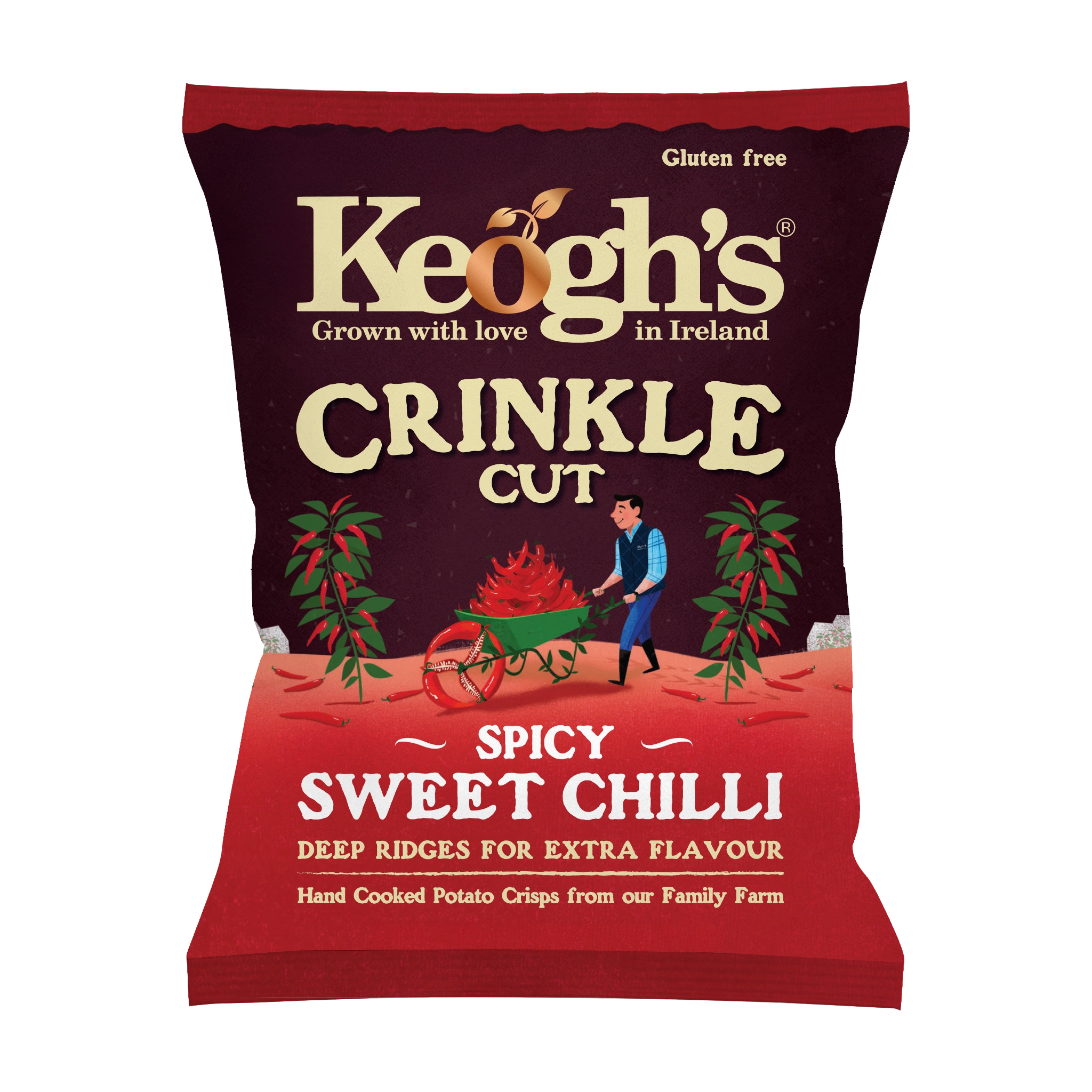
Keogh's Spicy Sweet Chilli crisps bag

Keogh's

Crinkle Cut Spicy Sweet Chilli Crisps

49/ 100Poor

  • 518 kcal, 6.1 g sugars, 2.6 g saturates, 4.1 g fibre, 6.1 g protein, 1.26 g salt per 100 g
  • Fibre and protein come from the potato itself, not from fortification

Real potatoes and a short list still cannot get a fried crisp past the energy and salt density of the category. The score reflects the product, not the provenance.

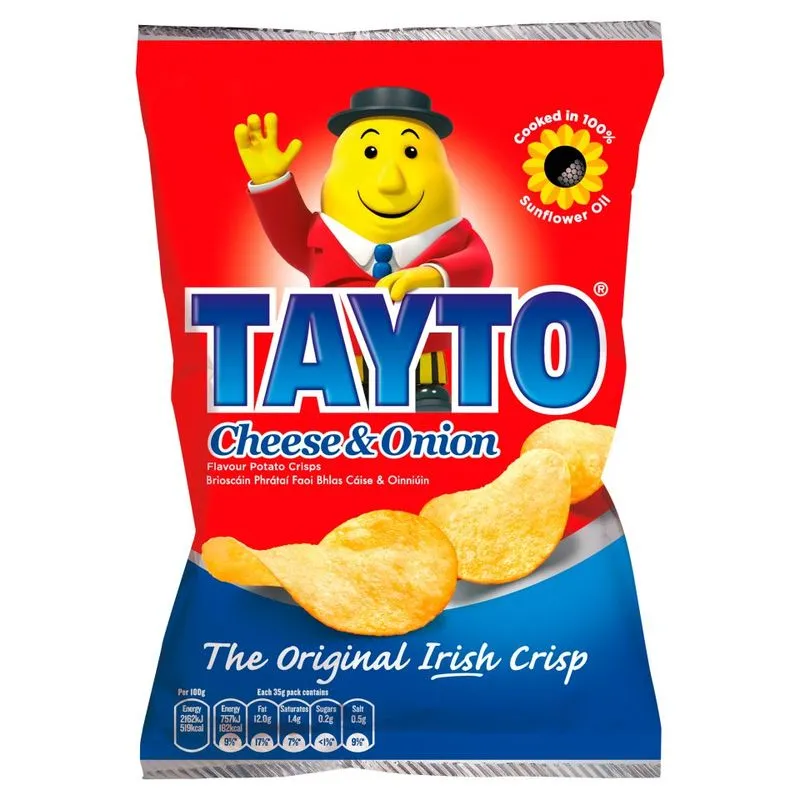
Tayto Cheese & Onion crisps bag

Tayto

Cheese & Onion Flavour Potato Crisps

21/ 100Bad

  • Ingredients: potato, vegetable oil, then a flavour compound containing onion powder, yeast powder, natural flavourings, salt, dextrose, starch, cheese powder, sugar, yeast extract, colours and an antioxidant
  • Additives declared: E100 curcumin, E160c paprika extract, E392 rosemary extract

A good illustration of a compound ingredient: one bracket on the label contains eleven separate things, including two sugars and three additives, all of which sit inside a single ranked entry.

Claims have legal definitions, and they are narrower than they sound

Nutrition and health claims are governed by Regulation (EC) No 1924/2006. A claim can only be used when the product meets a fixed numerical condition, so the wording is not arbitrary. Knowing the thresholds turns a marketing phrase back into a number.

What common claims legally require

Claim on the packLegal conditionWhat it does not tell you
Low fat3 g or less per 100 g (1.5 g per 100 ml)Nothing about sugars, salt or energy
Fat free0.5 g or less per 100 gOften a high-sugar sweet or drink
Low sugars5 g or less per 100 g (2.5 g per 100 ml)Nothing about sweeteners used instead
No added sugarsNo added sugars or sweetening ingredientsNaturally present sugars can still be high
Low salt0.3 g salt or less per 100 gNothing about how much of it you eat
Source of fibreAt least 3 g per 100 gFibre can be added rather than intrinsic
High fibreAt least 6 g per 100 gSame again: added fibre also qualifies
Source of proteinAt least 12% of energy from proteinNothing about saturates or sugar alongside it
High proteinAt least 20% of energy from proteinThe most over-read claim in the shop
Light or liteAt least 30% less of a nutrient than the reference productThe reference product may itself be poor

A short list is not automatically a good product, and a long one is not automatically bad

The most common shortcut in food writing is that fewer ingredients means better food. It is often true and easily disproved. Butter, sugar and cream have one-word labels. Fortified wholegrain cereal has a long one because the vitamins and minerals each have to be named.

The most useful version of the rule is narrower: a short list makes a product easy to verify. When the whole label is one ingredient, there is nothing to argue about.

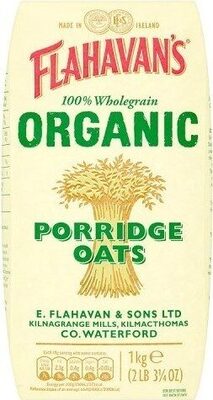
Flahavan's Organic Porridge Oats pack

Flahavan's

Organic Porridge Oats

82/ 100Excellent

  • 370 kcal, 1 g sugars, 1 g saturates, 8.25 g fibre, 11.25 g protein, 0.125 g salt per 100 g
  • Ingredients: 100% organic wholegrain rolled oats
  • No additives, no fortification, no compound ingredients

The label is one line long, so every number on it is attributable to a single whole grain. High fibre by the legal definition, low sugars, low salt, all three earned by the ingredient rather than by reformulation.

How to read a label in about twenty seconds

The order matters more than the effort. On a pack you have never bought before:

  • Read the first three ingredients. That is most of the product by weight. If a sugar or a fat is in there, the numbers will confirm it.
  • Ignore the per-portion column. Cover it with your thumb and work from per 100 g so the comparison is fair.
  • Check sugars and saturates together. Products rarely score badly on one alone; it is usually both, or one of them plus salt.
  • Look for fibre and protein. Fibre is voluntary, so its presence on the label is meaningful.
  • Count how many times sugar appears under different names. Two or three entries is common and each one is ranked separately.
  • Read the front of the pack last. By then you already know whether the claim is doing any work.

The short version

  • The seven-line nutrition declaration is mandatory and always in the same order, so per 100 g figures are comparable across every pre-packed food in the EU.
  • Portion sizes are set by manufacturers and are not comparable between brands.
  • Ingredients are ranked by weight, and any ingredient the pack emphasises must carry a declared percentage.
  • Salt on an EU label is sodium × 2.5, so it includes sodium that never came from table salt.
  • Every nutrition claim has a fixed numerical condition behind it, and meeting one condition says nothing about the rest of the label.