Ingredients Explained

What the technical names on the back of the pack are actually doing.

An ingredient list is a functional document. Every entry is there to do a job: hold an emulsion together, stop a fat going rancid, keep a cream free of bacteria, carry a flavour, thicken a sauce. Almost nothing is on a label by accident.

This guide explains how the two ingredient systems you meet every day work: E numbers on food, INCI names on cosmetics, and what the main families of additives do, and how Sláinte decides whether an ingredient counts against a product.

Illustration of laboratory flasks and droppers beside a food jar

An E number is an approval, not a warning

The E in an E number simply means the additive is approved for use in the European Union. Approval follows a safety assessment by the European Food Safety Authority, which sets an acceptable daily intake where one is needed and defines the foods the additive may be used in and the maximum amount permitted. The full list is published in Regulation (EC) No 1333/2008 and its annexes.

The numbering is not random either. Additives are grouped by function, which means the first digit tells you roughly what an unfamiliar number is doing before you look it up.

How E numbers are grouped

RangeFamilyJob on the label
E100–E199ColoursRestore or add colour lost in processing
E200–E299PreservativesPrevent mould, yeast and bacterial spoilage
E300–E399Antioxidants and acidity regulatorsStop fats oxidising; control pH and tartness
E400–E499Thickeners, stabilisers, emulsifiersControl texture and stop separation
E500–E599Anti-caking agents and raising agentsKeep powders loose; make baked goods rise
E600–E699Flavour enhancersIncrease savoury intensity, such as glutamates
E900–E999Glazing agents and sweetenersCoatings, foaming control, intense sweeteners
E1000–E1599Modified starches and additional additivesTexture, stability, carriers for flavours
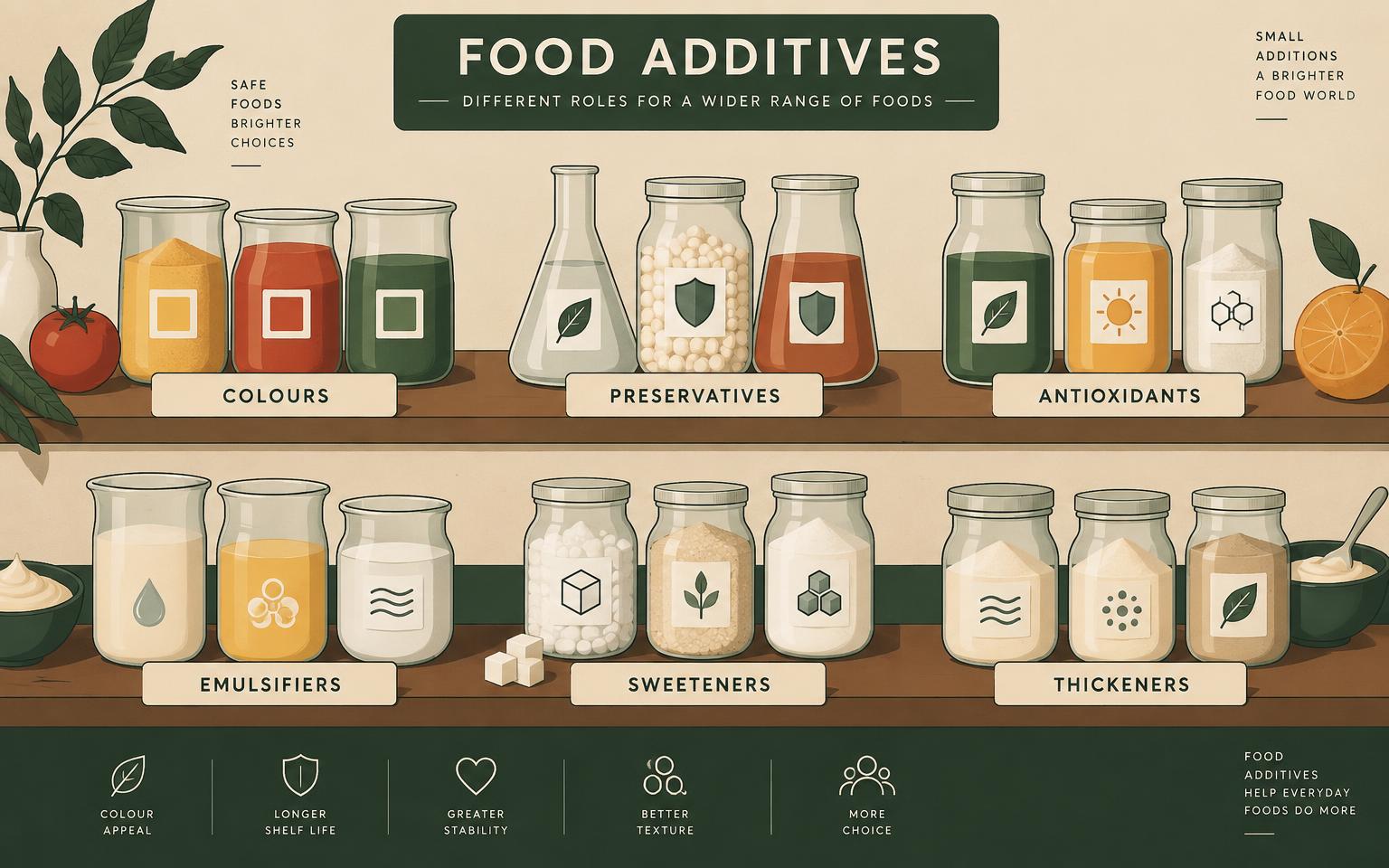
Illustration of additive families grouped as jars: colours, preservatives, antioxidants, emulsifiers, sweeteners and thickeners
Additive families are defined by the job they do, not by how natural the name sounds.

The families you meet most often

Emulsifiers

Fat and water separate. Emulsifiers keep them mixed. Lecithins (E322) are the most common example and are usually derived from soya or sunflower, which is why they carry an allergen emphasis on many labels. Mono- and diglycerides of fatty acids (E471) do the same job in baked goods and spreads. Emulsifiers are not a nutritional problem in themselves; they are a signal that the product is an engineered mixture rather than a simple food.

Preservatives

Sorbates (E200–E203), benzoates (E210–E213) and sulphites (E220–E228) suppress microbial growth. Sulphites matter for a specific reason: above 10 mg/kg they must be declared as an allergen because they trigger reactions in some people with asthma. Nitrites (E249–E250) in cured meat have their own literature, and processed meat is treated differently from other categories for that reason.

Antioxidants

Fats go rancid on contact with air. Ascorbic acid (E300) and tocopherols (E306–E309) slow that down and are simply vitamin C and vitamin E doing chemistry. Rosemary extract (E392) does the same job from a plant. Synthetic phenolics such as BHA (E320) and BHT (E321) are more restricted, and BHT in particular is where cosmetics and food overlap.

Sweeteners

Intense sweeteners such as sucralose (E955), acesulfame K (E950), aspartame (E951) and steviol glycosides (E960) provide sweetness at a fraction of the weight of sugar. They are approved with an acceptable daily intake, and swapping sugar for them changes the sugar figure on the label without changing the fact that the product is a sweet one.

Flavour enhancers and flavourings

"Flavouring" and "natural flavouring" are legally defined but deliberately unspecific: the composition is not published. This is the one place where an ingredient list stops being informative, and no scoring system can see through it.

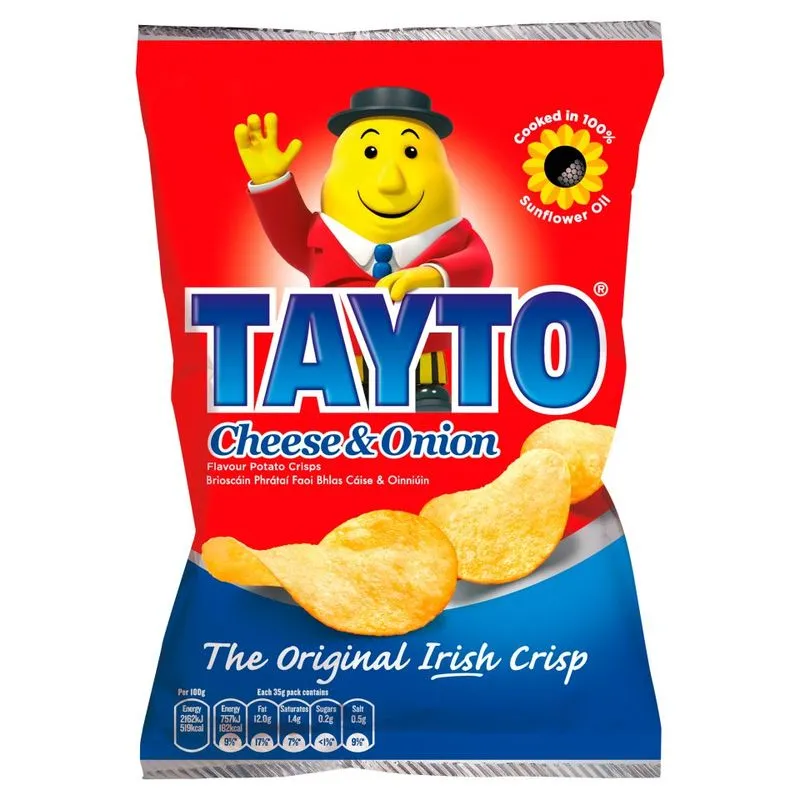
Tayto Cheese & Onion crisps bag

Tayto

Cheese & Onion Flavour Potato Crisps

  • Additives declared: E100 curcumin (colour, from turmeric), E160c paprika extract (colour), E392 rosemary extract (antioxidant)
  • Also inside the flavour bracket: onion powder, yeast powder, natural flavourings, dextrose, starch, cheese powder and yeast extract

All three additives here are plant-derived, and none of them are what limits the product. The energy density and salt of a fried crisp do that. Additives and nutrition are separate questions, and confusing them is the most common mistake in ingredient scoring.
Palm oil, lecithin and vanillin: reading a real list

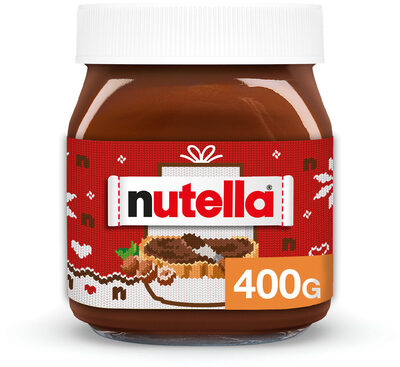
A short list can still tell you a lot when you know what each entry is for. Nutella declares seven ingredients, and each one has a job: sugar for sweetness and bulk, palm oil for a solid-at-room-temperature texture that does not separate, hazelnuts and cocoa for flavour, milk powder for creaminess, lecithin to hold the whole thing together, and vanillin, a single flavour compound rather than vanilla extract, for aroma.

Nutella jar

Nutella

Nutella

26/ 100Poor

  • Sugar, palm oil, hazelnuts (13%), skimmed milk powder (8.7%), fat-reduced cocoa (7.4%), emulsifier: lecithins (soya), vanillin
  • 56.3 g sugars and 10.6 g saturates per 100 g

Only one additive on the list, and it is a benign one. The score is driven almost entirely by the first two ingredients, which is usually how it works.

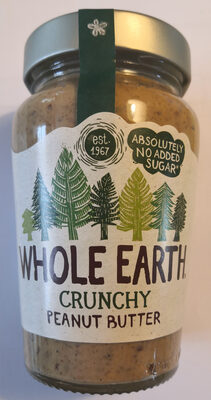
Whole Earth Crunchy Peanut Butter jar

Whole Earth

Crunchy Peanut Butter

73/ 100Good

  • Roasted peanuts (97%), sustainable palm oil, sea salt
  • 643 kcal, 3.8 g sugars, 7.9 g saturates, 6.7 g fibre, 27.7 g protein, 1.08 g salt per 100 g

Energy-dense and still a good score, because the energy comes with protein and fibre from the nut itself. Density and quality are not the same measurement, which is why a single-nutrient rule cannot rank food.

Cosmetics use a different system: INCI

Cosmetic ingredients are listed under the International Nomenclature of Cosmetic Ingredients, required across the EU by Regulation (EC) No 1223/2009. The conventions are different from food, and they change how the list should be read:

  • Ingredients are listed in descending order of weight, but only down to 1%. Below that threshold they may appear in any order.
  • Water is Aqua, and in most rinse-off products it is the first and largest ingredient by a wide margin.
  • Plants are given in Latin binomials, so sunflower oil appears as Helianthus annuus seed oil and almond oil as Prunus amygdalus dulcis oil.
  • Colourants sit at the end under CI numbers, outside the weight order entirely.
  • Parfum is a single word covering a mixture that is not disclosed. The twenty-six fragrance allergens that must be named individually: limonene, linalool, citronellol, geraniol, coumarin, hexyl cinnamal and the rest are the only part of a fragrance you get to see.
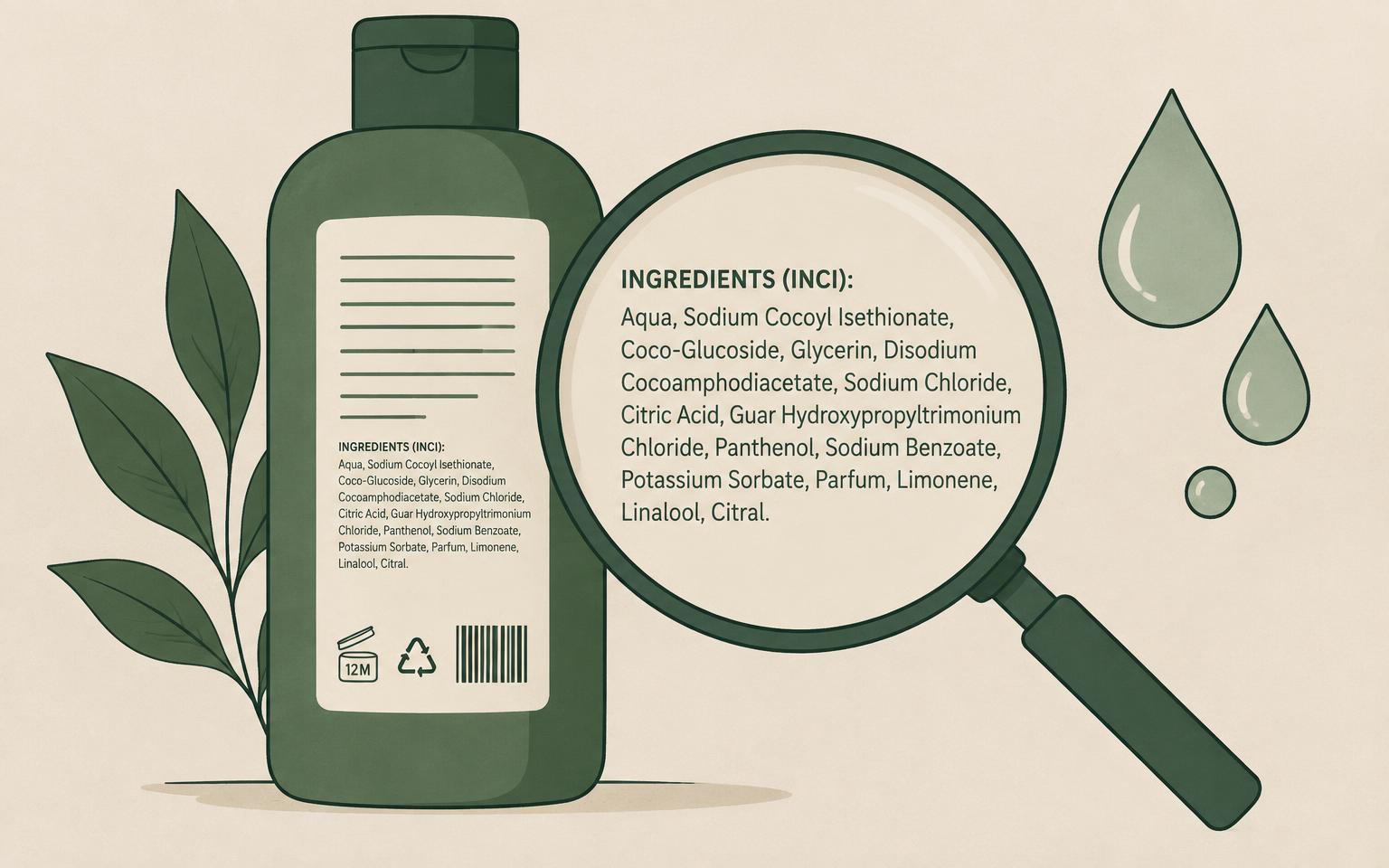
Illustration of an INCI ingredient list on a shampoo bottle viewed through a magnifying glass
INCI lists are ordered by weight only down to 1%. Everything below that can appear in any order.

Common INCI names and what they do

INCI nameFunctionWorth knowing
AquaSolventUsually the largest ingredient in a wash or shampoo
Sodium laureth sulfateCleansing surfactantEffective foaming cleanser; can be drying at high levels
Cocamidopropyl betaineSecondary surfactantMilder co-surfactant, a recognised contact allergen for some
GlycerinHumectantDraws water into the skin; very widely used
PhenoxyethanolPreservativeRestricted to 1% in the EU; among the better-tolerated options
MethylisothiazolinonePreservativeRestricted and banned in leave-on cosmetics in the EU
DMDM hydantoinPreservativeReleases formaldehyde in use; restricted and must be labelled
ParfumFragranceUndisclosed mixture; only named allergens are visible
Limonene / LinaloolFragrance componentsDeclared because they are recognised contact allergens
BHTAntioxidantStabilises fats and fragrance; restricted by concentration
Salicylic acidExfoliant / preservativeActive at low percentages; restricted in the EU
CI 77891Colourant (titanium dioxide)Pigment or opacifier, listed outside the weight order
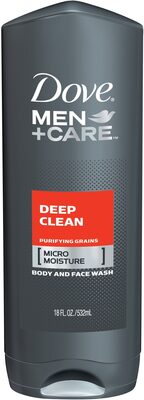
Dove body wash bottle

Dove

Deep Clean Body Wash

15/ 100Bad

  • Aqua, sodium laureth sulfate, petrolatum, acrylates copolymer, parfum, cocamide MEA, hydrated silica, ammonium chloride, cera microcristallina, DMDM hydantoin, tetrasodium EDTA, methylisothiazolinone, and four CI colourants
  • Two restricted preservatives on one list: DMDM hydantoin and methylisothiazolinone

This is a formulation question, not a marketing one. Methylisothiazolinone is a well-documented contact sensitiser and is no longer permitted in leave-on cosmetics in the EU; DMDM hydantoin releases formaldehyde in use. Both are what cap this score, and both are visible on the label if you read to the end.

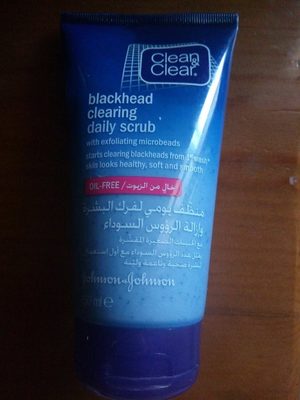
Clean & Clear Blackhead Clearing Daily Scrub tube

Clean & Clear

Blackhead Clearing Daily Scrub

45/ 100Poor

  • Aqua, cetyl alcohol, PPG-15 stearyl ether, cellulose, glycerin, polysorbate 60, salicylic acid, steareth-21, cera microcristallina, menthyl lactate, potassium cetyl phosphate, xanthan gum, disodium EDTA, BHT, parfum, CI 77510
  • One declared active, salicylic acid, plus a mild abrasive (cellulose) and an antioxidant (BHT)

A middling score for an understandable reason: nothing here is severe, but undisclosed parfum and a restricted antioxidant sit alongside an active that some skin tolerates poorly. The list is short enough to assess almost completely, which is more than most cosmetics allow.

How Sláinte assesses an ingredient

Every ingredient assessment in Sláinte answers the same six questions, in the same order, and the answer is written down before it can affect a score:

  • What it is: chemical or botanical identity, and its E number or INCI name.
  • Why it is used: the technical function it performs in that product.
  • Where it appears: the categories it is typically found in.
  • What the evidence says: regulatory status, restrictions, and documented effects.
  • What is uncertain: the limits of the evidence, stated plainly.
  • How it affects the assessment: none, minor, moderate or high concern.

Three rules that keep it honest

An unfamiliar name is not evidence. Tocopherol is vitamin E. Ascorbic acid is vitamin C. Sodium chloride is salt. Length and complexity of a name carry no information about risk.

Regulatory restriction is evidence. When a regulator restricts an ingredient to a maximum concentration, bans it in leave-on products, or requires it to be declared as an allergen, that is a documented position rather than an opinion, and it is what the assessment leans on.

No assessment is better than a guess. When Sláinte has no verified position on an ingredient, the app says so instead of inventing a rating. Some products therefore show ingredients marked as not yet assessed, and that is the intended behaviour.

The short version

  • An E number means an additive is approved in the EU, and the first digit tells you which job family it belongs to.
  • Additives and nutrition are separate questions; most poor scores are driven by the first few ingredients, not by the additives at the end.
  • INCI lists are ordered by weight only down to 1%, so everything after that point is unordered.
  • Parfum hides its composition; only the twenty-six declarable fragrance allergens are visible.
  • Restrictions set by regulators are the strongest evidence on a label, and unfamiliar chemical names are no evidence at all.