Nutrition Questions, Answered

The questions Irish shoppers actually ask, answered at length and without scare tactics.

Most nutrition confusion comes from a small number of genuinely tricky ideas: that the sugars line cannot separate an apple from a biscuit, that salt on a label is really sodium arithmetic, that a claim is a threshold rather than a verdict, and that processing describes how a food was made rather than what is in it.

These answers are longer than usual on purpose, with the Irish context included where it changes the advice: vitamin D through the winter, salt targets, and the staples that make up most of a weekly shop here.

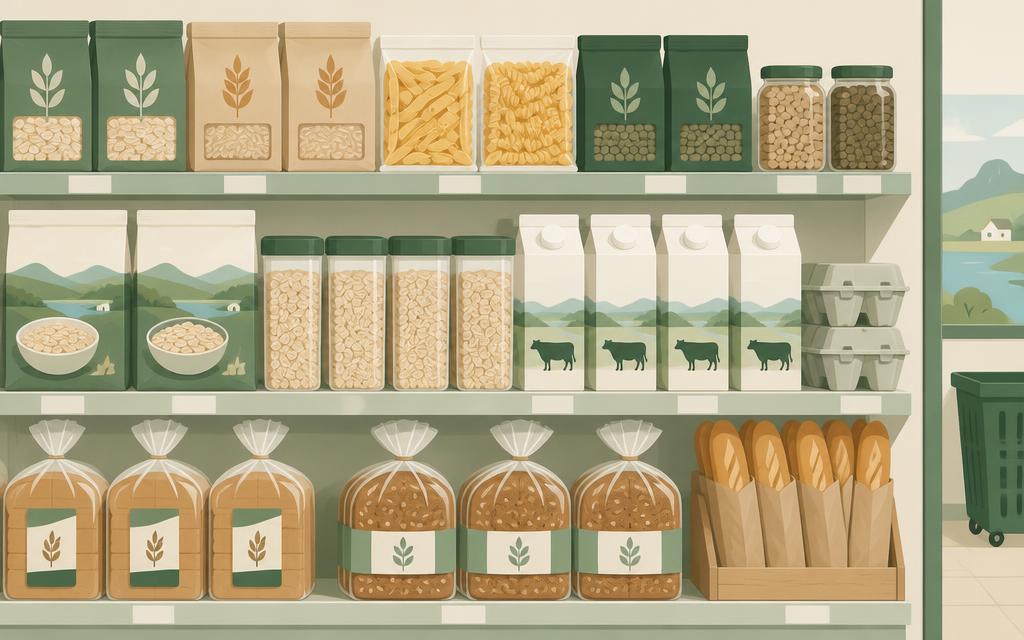
Illustration of a supermarket shelf of grocery staples

The three ideas that explain most labels

One: per 100 g is the only fair basis

Portion sizes are chosen by manufacturers and differ between brands, so a per-portion comparison is comparing two decisions rather than two products. The per 100 g column is fixed by law, appears on every pre-packed food in the EU, and is what any honest comparison uses.

Two: the ingredient order is the recipe

Ingredients are ranked by weight at the time of manufacture, so the first few entries are most of what you are buying. Where a pack emphasises an ingredient in its name or picture, its percentage must be declared, which is why you see hazelnuts at 13% or wholegrain wheat at 95% rather than an unquantified promise.

Three: a claim is a threshold, not a verdict

Low fat means 3 g or less per 100 g. High fibre means at least 6 g per 100 g. High protein means at least 20% of energy from protein. Each is a single condition on a single nutrient, and meeting one says nothing at all about the rest of the label.

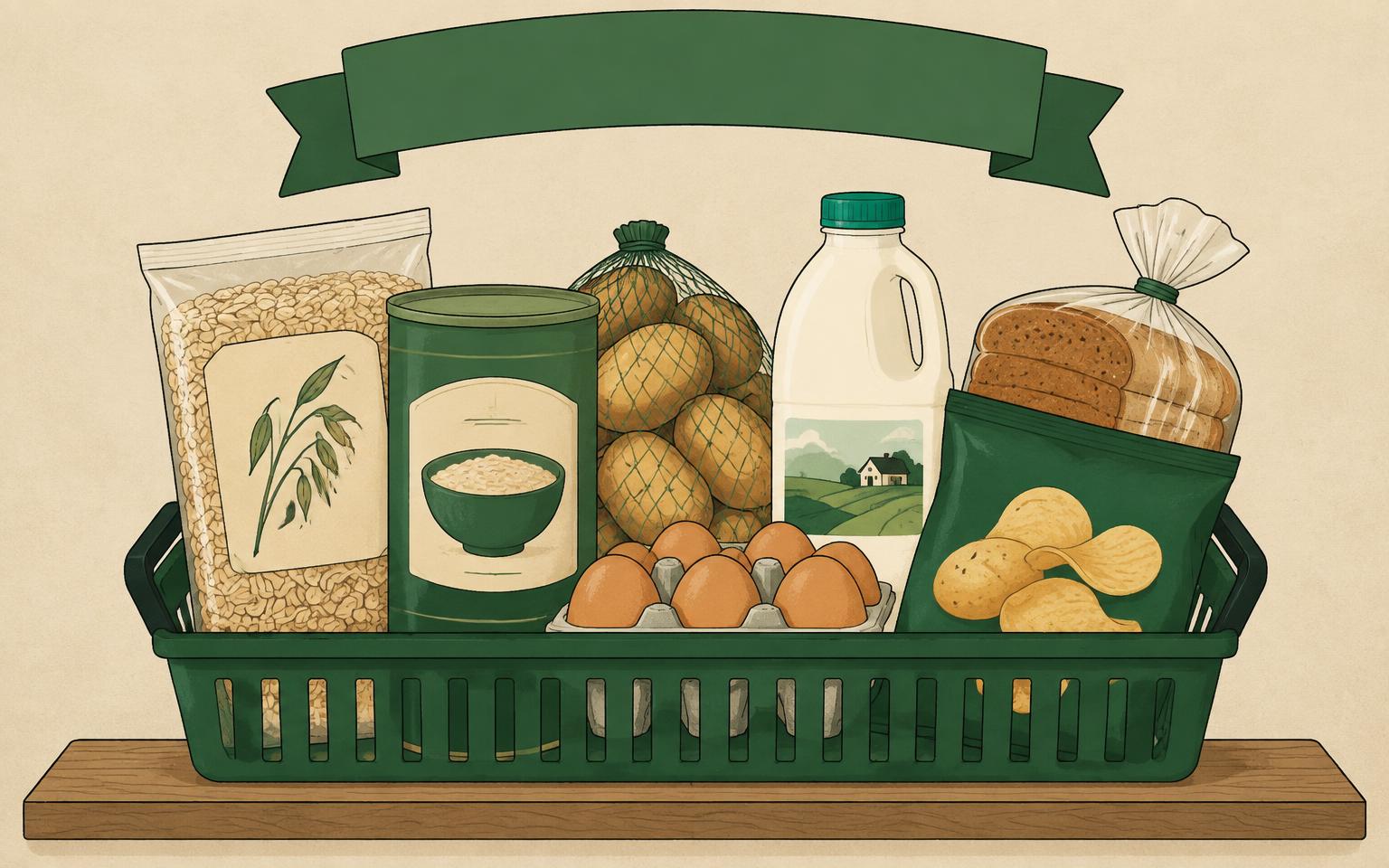
Illustration of a basket of Irish grocery staples including oats, potatoes, milk, bread, eggs and crisps
Most of an Irish weekly shop is made of a small number of staples, which is where label reading pays off fastest.

What should I look at first on a food label?

Read the first three ingredients, then the per 100 g column of the nutrition declaration. Ingredients are listed in descending order of weight, so the first three are most of the product. The per 100 g figures are the only ones fixed by law, which makes them the only ones comparable between brands. The front-of-pack claim is worth reading last, once you already know what the pack contains.
Is sugar always bad?

No, and the label cannot tell the two kinds apart. The sugars line combines sugars naturally present in fruit, milk and vegetables with sugars added during manufacturing. A litre of milk and a litre of cola can show similar sugars figures for very different reasons. What public-health advice targets is free sugars: those added by the manufacturer, cook or consumer, plus the sugars in honey, syrups and fruit juice. The ingredient list is how you tell: added sugars appear by name, often more than once, as sugar, glucose syrup, invert sugar syrup, dextrose, fructose or molasses.

How much salt should I be eating?

Irish public-health advice for adults is to keep salt below 6 g a day, which is about a level teaspoon. Most of it does not come from the salt cellar; it comes from bread, processed meat, cheese, sauces, soups and snacks. On an EU label, salt is calculated as sodium multiplied by 2.5, so any sodium-containing additive contributes. A useful rule of thumb: 1.5 g of salt or more per 100 g is a high-salt food, and 0.3 g or less per 100 g legally counts as low.

Is a high-protein product automatically healthy?

No. High protein is a legally defined claim, met when at least 20% of a product's energy comes from protein. A chocolate-coated bar can meet that condition while also carrying substantial sugar and saturated fat. Protein is one input into a score, alongside sugars, saturates, salt, fibre and energy density, which is why a protein bar and a bowl of oats can end up in very different bands despite similar protein figures.

Are ingredients with complicated names bad?

No. Ingredient names are technical because the law requires precision. Tocopherol is vitamin E. Ascorbic acid is vitamin C. Sodium chloride is salt. Pyridoxine hydrochloride is vitamin B6. The length or unfamiliarity of a name carries no information about risk. What does carry information is regulatory status: whether an ingredient is restricted to a maximum level, banned in certain product types, or required to be declared as an allergen.

What does ultra-processed actually mean?

It comes from the NOVA classification, which sorts foods into four groups by the degree and purpose of processing, from unprocessed foods through to formulations containing ingredients you would not use at home, such as modified starches, protein isolates, emulsifiers and intense sweeteners. It is a useful research tool rather than a legal category, and it says nothing about the amount of any nutrient. Tinned tomatoes are processed and excellent. A low-sugar dessert can be ultra-processed and still a poor choice. Sláinte treats processing as one factor among several rather than as a verdict.

Are E numbers dangerous?

The E means the additive has been assessed and approved for use in the EU, with defined permitted foods and maximum levels. Approval is not a promise that every additive is equally desirable, and some are restricted much more tightly than others, but an E number on a label is a sign of documentation rather than a warning sign. Most poor scores come from the nutrition figures and the first few ingredients, not from the additives at the end of the list.

Is organic food more nutritious?

Organic certification is about how food is produced: restrictions on synthetic pesticides, fertilisers and certain additives, with rules for animal welfare and feed. It is not a nutritional standard, and organic sugar, organic crisps and organic biscuits exist. Some organic products do score well, but when they do it is usually because of what is in them, not because of the certification. On a label, organic status changes provenance; the per 100 g figures still decide the profile.

Do I need a vitamin D supplement in Ireland?

Ireland's northern latitude means skin synthesis of vitamin D from sunlight is effectively negligible through the winter months. Irish public-health advice recommends a daily 15 µg vitamin D supplement for adults aged 65 and over, and a daily 5 µg supplement for infants under one year, with wider winter supplementation advised for people who cover their skin, have darker skin, or spend little time outdoors. Food sources are limited, mainly oily fish, eggs and fortified products. If in doubt, ask a pharmacist or GP rather than guessing at a dose.

What about folic acid?

Irish advice is that women who could become pregnant take a 400 µg folic acid supplement daily, because the neural tube closes in the first weeks of pregnancy, often before a pregnancy is confirmed. This is one of the few supplement recommendations that applies broadly to a whole group rather than depending on individual diet.

Are supplements necessary for most people?

Not usually. A varied diet meets most nutrient requirements for most people, and the specific exceptions in Ireland are well defined: vitamin D in winter and for older adults, folic acid for women who could become pregnant, B12 for people eating no animal products, and iron where a deficiency has been diagnosed. Protein powders are food rather than medicine; they are a convenient way to reach a protein target, not a requirement.

Why do two packs of the same product show different figures?

Declared values are averages produced by analysis, calculation or established data tables, and tolerances are permitted. Recipes are also reformulated, pack sizes change, and the same brand often sells slightly different formulations in different countries. That is why Sláinte scores a specific barcode rather than a product name, and why a score can move when a manufacturer changes a recipe.

Is a shorter ingredient list always better?

It is easier to verify, which is not the same thing. Butter, cream and sugar have very short lists. A fortified wholegrain cereal has a long one because every added vitamin and mineral has to be named individually. The useful version of the rule is that a short list leaves less room for anything to hide, so a one-line label is easy to trust.

Does a score tell me what I should eat?

No. A score compares products within the reality of a shop: this pack against that pack, on the same shelf, on the same basis. It knows nothing about your medical history, your budget, your training, your religion or your appetite, and it is not a medical tool. It is most useful as a swap engine, the same purchase made better, rather than as instruction.

What the answers look like on real Irish shelves

Three products from the Sláinte database show the ideas above working in practice. All three figures below are the declared per 100 g values, and the scores are the ones the Sláinte engine produces for those exact barcodes.

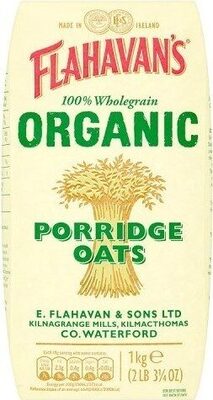
Flahavan's Organic Porridge Oats pack

Flahavan's

Organic Porridge Oats

82/ 100Excellent

  • 370 kcal, 1 g sugars, 1 g saturates, 8.25 g fibre, 11.25 g protein, 0.125 g salt per 100 g
  • Ingredients: 100% organic wholegrain rolled oats

High fibre and low sugars by the legal definitions, with a one-line ingredient list. Note that the strong score comes from the oats, not from the organic certification.

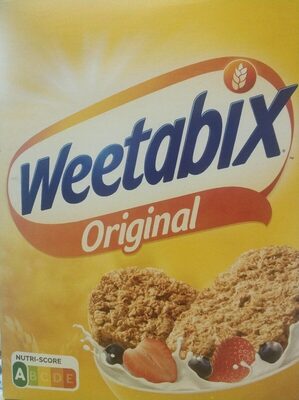
Weetabix Original pack

Weetabix

Original Weetabix

60/ 100Good

  • 368 kcal, 4.2 g sugars, 0.6 g saturates, 10 g fibre, 12 g protein, 0.28 g salt per 100 g
  • Ingredients: wholegrain wheat (95%), malted barley extract, sugar, salt, niacin, iron, riboflavin, thiamin, folic acid

A longer ingredient list than the oats, and a good score anyway. Five of those entries are added vitamins and minerals, which is exactly why list length is a poor proxy for quality.

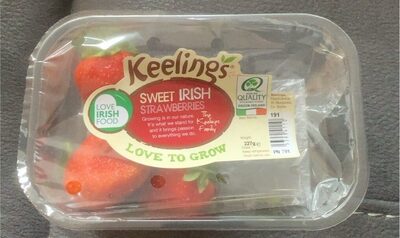
Keelings strawberries punnet

Keelings

Strawberries

  • Fresh fruit carries naturally present sugars and no added ones
  • No ingredient list is required, because the product is the ingredient

The clearest illustration of the sugars problem: the sugars line on a label cannot distinguish these from the sugar in a biscuit. Only the ingredient list can, which is why both belong in any honest reading.

Rules of thumb for a fast read, per 100 g

NutrientLowHigh
Sugars5 g or lessMore than 22.5 g
Fat3 g or lessMore than 17.5 g
Saturates1.5 g or lessMore than 5 g
Salt0.3 g or lessMore than 1.5 g
FibreUnder 3 g6 g or more is high by law

The low thresholds are the legal conditions for a low claim. The high thresholds are the widely used front-of-pack traffic-light cut-offs for solid foods; drinks use lower ones.

The short version

  • The sugars line cannot separate added sugars from natural ones; the ingredient list can.
  • Salt on an EU label is sodium × 2.5, and 6 g a day is the Irish adult target.
  • High protein is a 20%-of-energy threshold, not a health verdict.
  • Ultra-processed describes how a food was made, not how much of any nutrient it holds.
  • In Ireland, vitamin D through the winter and folic acid before pregnancy are the supplement cases with the clearest public-health advice behind them.