
Back to Journal

Are Cereal Bars Actually Healthier Than Chocolate Bars?

Published · Updated  · Sláinte Editorial

There's a familiar moment at the supermarket checkout. One hand reaches towards a chocolate bar, the other towards an oat bar in a wrapper covered with golden grains and countryside imagery. The cereal bar feels like the sensible decision.

Sometimes it is. But the label may tell a more complicated story.

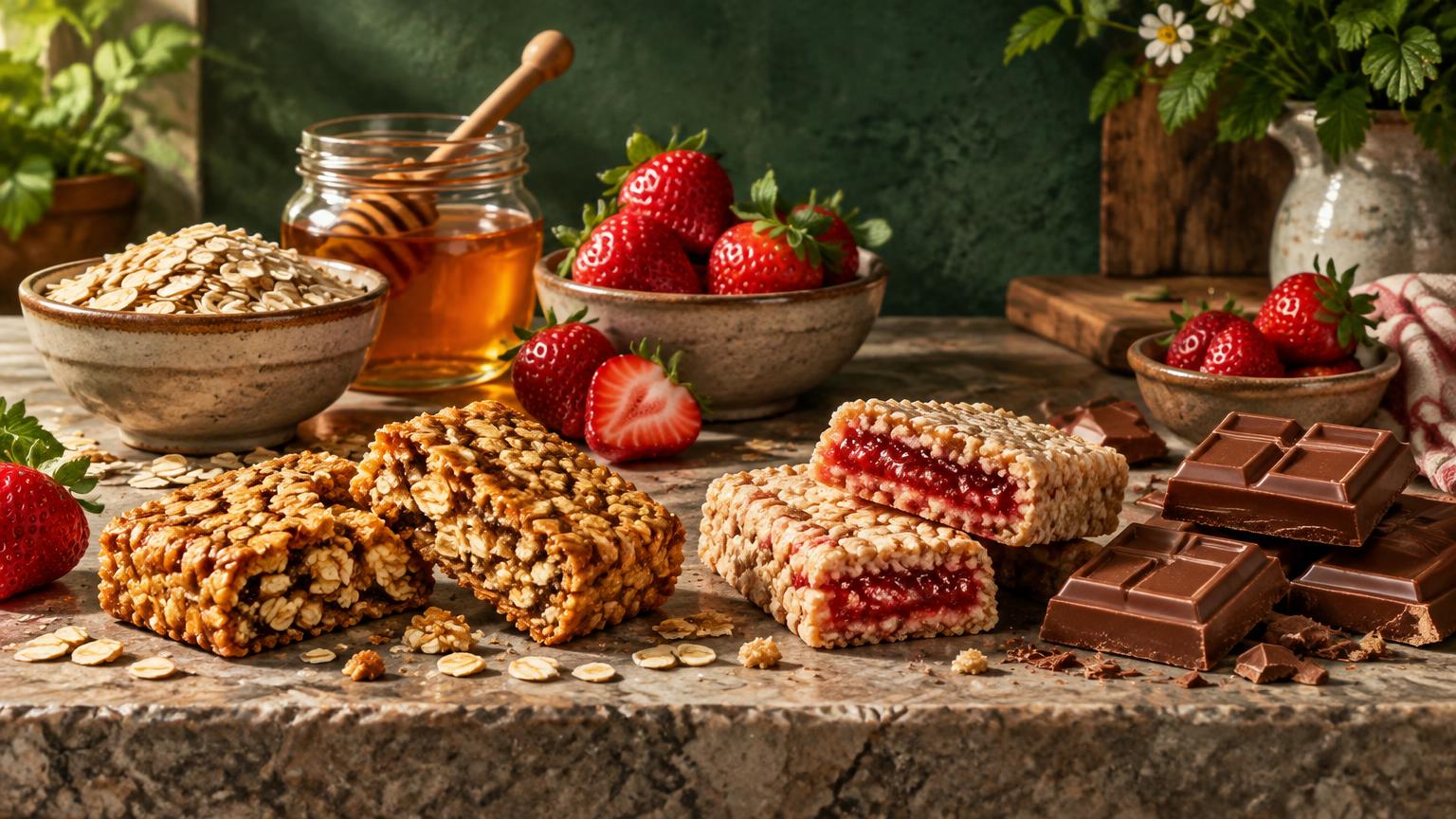
Illustration for Are Cereal Bars Actually Healthier Than Chocolate Bars?

We looked at Irish supermarket listings for Nature Valley Oats & Honey, Kellogg's Nutri-Grain Strawberry and Cadbury Dairy Milk. The most revealing detail is not that cereal bars contain sugar. It is how much variation there is between products, and how quickly the comparison changes when you consider portion size, fibre and saturated fat.

For example, Tesco Ireland's label for Nutri-Grain Strawberry lists 12g of total sugars in a 37g bar. Nature Valley Oats & Honey lists 11.3g in its 42g two-bar wrapper. A 26.5g half portion of Cadbury Dairy Milk lists approximately 15g. Those are different weights and different foods, so the numbers cannot by themselves decide which snack is best.

The useful question is: what are you actually getting from the snack, beyond its image?

The real numbers on Irish supermarket shelves

Here is what the retailer's published label says for three named products.

ProductLabelled comparison portionEnergyTotal sugarsContext
Nature Valley Crunchy Oats & Honey2 bars, 42g196 kcal11.3gIncludes 60% wholegrain rolled oats; added sugar and honey
Kellogg's Nutri-Grain Strawberry1 bar, 37g136 kcal12gFruit filling plus added sugars and vitamin/mineral fortification
Cadbury Dairy Milk26.5g, half of a 53g bar142 kcal15gHigher saturated fat; conventional chocolate treat

Sources: Tesco Ireland product listings. Figures are from the specified serving sizes, not an equal-weight controlled comparison. Labels may change.

If we instead compare per 100g, Nutri-Grain contains 33g total sugars, Cadbury Dairy Milk 55g, and Nature Valley's 42g serving works out at roughly 26.9g per 100g. The percentage differences are real, but they do not mean a cereal bar is a complete breakfast or that chocolate is nutritionally equivalent to wholegrain cereal.

There is another distinction worth keeping. Nature Valley provides substantial oats, while Nutri-Grain provides a soft baked product with a fruit filling and fortification. Cadbury provides a different balance of sugar and saturated fat. Those are not interchangeable formulations.

A closer look at Nature Valley Oats & Honey

The front of the packet draws attention to oats and honey. The ingredient list is more informative:

Wholegrain rolled oats (60%), sugar, vegetable oils, honey (3%), salt, molasses, lecithins and sodium bicarbonate.

This is not a fraudulent description. It really does contain a high proportion of wholegrain oats. The oats contribute fibre and other nutrients. But honey is only 3% of the recipe, and sugar appears separately. The sweetness does not come exclusively from a modest amount of honey.

That matters because consumers sometimes interpret “oats and honey” to mean an unsweetened oat-based snack. The actual recipe is a sweetened cereal bar.

The 42g wrapper also contains two crunchy bars. You might eat one, both or several wrappers over a busy day. Per-portion numbers are only useful when the portion matches what you eat.

For someone who wants an oat snack, Nature Valley can be convenient. If you're specifically trying to reduce added sugars, plain oatcakes or porridge oats may be a more suitable starting point. That is not a judgement about morality or whether a biscuit-like snack is allowed in a healthy diet.

Why Nutri-Grain is a different kind of bar

Nutri-Grain Strawberry looks more like a small cake than a crunchy oat bar. It has a strawberry filling and a soft baked exterior.

Its Irish retailer listing says the filling is 45% of the product and includes apple purée, glucose syrup, glycerol and strawberry purée. The cereal flour blend, making up 32%, contains wholewheat, oat and wheat. Sugar, palm and sunflower oils, invert sugar syrup, dextrose and fructose are also declared.

The label shows 33g of total sugars per 100g, or 12g per 37g bar, with about 1.4g fibre per bar. It is fortified with several B vitamins and minerals.

Fortification is not meaningless. Those nutrients can contribute to dietary intake. But the presence of added vitamins does not eliminate the sugars or determine whether the bar will be satisfying enough for a particular person's breakfast.

That is the important distinction with a highly marketed convenience food: a true statement on the front of the pack can coexist with characteristics that deserve attention on the back.

And what does chocolate actually provide?

The Cadbury Dairy Milk 53g bar contains approximately 535 kcal, 55g total sugars and 17g saturated fat per 100g on the Tesco listing.

The manufacturer declares milk, sugar, cocoa butter, cocoa mass, palm and shea fats, emulsifiers and flavourings. The nutrition profile is very different from a wholegrain cereal bar, particularly in saturated fat.

So it would be misleading to use the overlap in sugar content to declare that chocolate and cereal bars are equally healthy. A sensible comparison looks at sugar, saturated fat, fibre, energy and what else the snack contributes.

It is also perfectly reasonable to choose chocolate because you want chocolate. The problem arises when a differently packaged sweet snack is given a health advantage that its full label does not support.

Why a short ingredient list isn't enough

Cereal bars can contain oats, nuts, fruit, chocolate, sugar, oil, syrups, flavourings and stabilisers. Some have long lists, others short lists.

Ingredient number alone is not a health measure. A bar made from dates and nuts may contain several recognisable ingredients and considerable energy. A fortified cereal bar may have a longer label because vitamins have been added.

Start instead with three practical checks.

First, compare total sugars per 100g. This removes the distraction of one bar weighing 19g and another 42g.

Second, check fibre and protein per portion. A snack containing more wholegrain fibre and some protein may suit a particular appetite or routine better, although fullness depends on many factors.

Third, check the actual ingredients. If several different sweetening sources appear, note them. If oats are 60% of the recipe, that is useful information too.

The point is to understand the mix, rather than reward or penalise every ingredient separately.

What if a cereal bar says “no added sugar” or “zero added sugar”?

This is worth its own section because the terms are frequently misunderstood.

Under EU nutrition-claim rules, no added sugars does not mean “contains no sugars”. A product may naturally contain sugars from fruit, milk or other ingredients. It may also use permitted non-sugar sweetening ingredients, depending on its formulation.

A date-and-nut bar may contain no added table sugar and still show a significant number under “of which sugars”. Those figures describe different things.

A separate claim, low sugars, has a legal threshold of no more than 5g per 100g for solid food. You cannot infer low sugar just from the phrase no added sugar.

So if a cereal bar advertises zero added sugar, read its ingredients and the actual total sugars. Then ask how much you would eat. See Sláinte's full explanation of no added sugar for the legal distinction.

Is a cereal bar a good breakfast?

It can be part of breakfast, but the word cereal does not make a bar nutritionally equal to a bowl of porridge.

A breakfast might be more substantial when it combines a wholegrain food with protein, fruit or other nutritious ingredients. A cereal bar on its own might be convenient on a journey or before an early meeting, but it may not provide the amount of food or fibre someone needs in the morning.

If you already enjoy a particular bar, try pairing it with something like plain yoghurt or fruit rather than assuming the bar has to do everything.

It is also worth thinking about cost per serving. Single bars marketed for convenience can cost considerably more per 100g than a packet of oats or a homemade snack. Prices change often, so compare the live shelf price rather than relying on a promotional price in an old article.

What should you choose in Tesco, Dunnes or SuperValu?

If your priority is fibre, compare the wholegrain content and labelled fibre. If your priority is reducing sugars, look at total sugars and the actual sources. If you're choosing a treat, the comparison may be about portion size and preference, not pretending you are making a medical decision.

Four practical options are worth considering:

  • A crunchy wholegrain bar when you want something portable and enjoy the texture.
  • A less-sweetened oatcake with nut butter when you want control over toppings.
  • A piece of fruit and plain yoghurt when you want a different balance of fibre and protein.
  • A small chocolate portion when chocolate is what you actually want.

No single option suits every appetite, budget or dietary need.

What would Sláinte score?

The Sláinte Score uses nutrition, ingredients and processing signals, together with category-specific rules. It is not just a sugar counter.

The Sláinte Score helps explain a product, but no score can tell you whether you should eat a particular snack on a particular day.

These label comparisons do not yet have a complete independently verified ingredient and nutrition record for every exact bar. We show the declared figures above without inventing a numerical score.

Frequently asked questions

Are cereal bars healthier than chocolate bars?

Sometimes, but not automatically. Some cereal bars contain wholegrains and fibre, while also containing added sugars. Chocolate usually has a different fat and saturated-fat profile. Compare actual brands, equal weights and realistic serving sizes.

Is Nature Valley Oats & Honey high in sugar?

The Tesco Ireland listing reports 11.3g of total sugars per two-bar 42g wrapper, approximately 26.9g per 100g. It includes both oats and added sweetening ingredients.

Is Nutri-Grain Strawberry a healthy breakfast?

It is a fortified convenience cereal bar, but one 37g bar provides approximately 12g total sugars and 1.4g fibre on the listed formulation. Whether it makes a suitable breakfast depends on what else is eaten and individual needs.

Does no added sugar mean a cereal bar is low in sugar?

No. “No added sugars” and “low sugars” are different regulated claims. A bar with no sugar added can still contain naturally occurring sugars and may not qualify as low sugar.

Is it healthier to eat a small chocolate bar instead?

Not necessarily. That comparison depends on portion weight, total sugars, saturated fat, energy, fibre and what you want from a snack. A chocolate bar is not nutritionally equivalent to a wholegrain oat bar.

The short version

  • Cereal bars are convenient, but the health halo is not always justified. Nature Valley contains genuine wholegrain oats and added sweeteners. Nutri-Grain provides added vitamins and minerals but also appreciable sugar in a small serving. Chocolate tends to be higher in saturated fat. The useful habit is to compare the complete product, not the colour or promise on the front.