
Back to Journal

Are Rice Cakes Healthy? Kallo, Snack a Jacks and Kelkin Compared

Published · Updated  · Sláinte Editorial

Few foods look as much like a diet snack as a plain rice cake. It is light, dry, crunchy and usually sold beside crackers, oatcakes and other foods promising a quick bite between meals.

A packet can make it seem that the main virtue of a snack is how few calories one piece contains. In the case of Kallo Lightly Salted Wholegrain Rice Cakes, Tesco Ireland lists 27 calories per cake. That sounds like an easy choice.

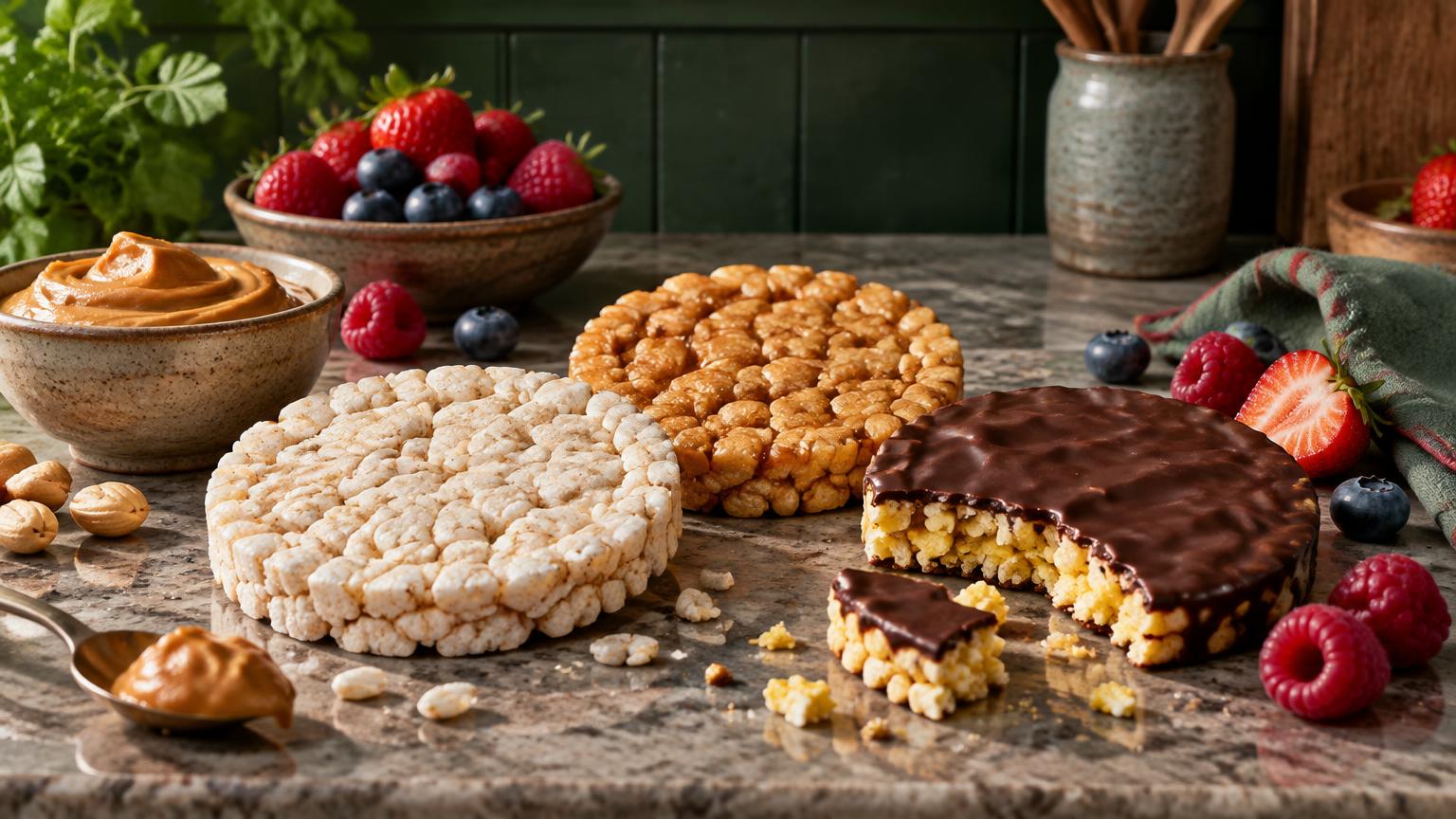
Illustration for Are Rice Cakes Healthy? Kallo, Snack a Jacks and Kelkin Compared

But a low calorie count is only one characteristic. A rice cake is mostly starch. It may supply relatively little protein or fibre per piece, and puffed rice can have a high glycaemic index. Once caramel flavouring, chocolate or other coatings are involved, its composition changes again.

That does not mean rice cakes are unhealthy or that eating one will cause a dangerous rise in blood glucose. It means that the label and the way you eat them deserve more attention than a headline calorie figure.

For this article we checked Kallo Lightly Salted Wholegrain Rice Cakes, Snack a Jacks Caramel Jumbo Rice Cakes and Kelkin Dark Chocolate Corn Cakes, all listed for Irish shoppers.

Three real Irish supermarket snacks compared

These three products are not nutritionally identical, and their serving sizes vary.

ProductDeclared pieceCalories per pieceSugars per pieceProtein per piece
Kallo Lightly Salted Wholegrain Rice Cake~6.8g27 kcalTrace0.6g
Snack a Jacks Caramel Jumbo Rice Cake13g50 kcal2.4g0.8g
Kelkin Dark Chocolate Corn Cake~15.8g76 kcal4.1g0.9g

Tesco Ireland declared serving data. Different weights are shown intentionally; compare per 100g as well if you are choosing between similar products.

The plain Kallo cake contains 99.8% wholegrain rice and sea salt. The ingredient list is short, with no added sugar listed.

Snack a Jacks Caramel is made with rice and maize, but it also contains sugar, oligofructose, caramel flavouring, sunflower oil, soya lecithin and a colour. It provides 1.5g fibre per 13g cake, according to the current listing.

The Kelkin product contains a layer of dark chocolate. Its listed ingredients include 57% chocolate and 42.9% corn. A single cake contains 4.1g sugars and 2.1g saturated fat. It is better understood as a chocolate-covered snack than as plain puffed grain.

This is not about declaring one of them unacceptable. These are different snacks for different occasions. A person who wants something sweet may genuinely prefer the chocolate option, while someone putting cheese or hummus on a cake may prefer the plain version.

What makes a rice cake so light?

Rice cakes are often made by applying heat and pressure to grains so that the starch expands. The result is a crunchy, airy product with relatively little mass per piece.

That lightness explains much of the low per-cake calorie figure. It doesn't mean rice itself contains virtually no calories.

Kallo's listed nutrition is 394 kcal per 100g, while its individual cake provides 27 kcal because each cake is only a few grams. Snack a Jacks Caramel contains 387 kcal per 100g, even though the front of the packet emphasises 50 calories per snack.

The distinction matters if you habitually eat four or five pieces rather than one. It also matters if you're comparing a large rice cake with a smaller biscuit or oatcake: the portion weight changes the result.

Air is not a nutrient. It's what makes the product look larger for its weight.

Do rice cakes spike blood sugar?

Rice cakes are often described as high-glycaemic-index foods. There is evidence behind that description, but it needs context.

The glycaemic index, or GI, measures how quickly the carbohydrate in a food raises blood glucose under standard test conditions. The British Dietetic Association explains that GI does not tell you everything about portion size or the total carbohydrate eaten.

Published GI databases include puffed rice cake results that vary by rice type and formulation. Some plain rice cakes have been measured in the high-GI range, while certain high-amylose puffed rice cakes have measured lower.

But the test protocol typically uses a standard amount of available carbohydrate. A single real-world rice cake may contain only 5.6g carbohydrate, as Kallo's label shows. The total carbohydrate dose is quite different from an experimental meal designed around a much larger standard amount.

That means the claim "every rice cake causes a sugar spike" is too simplistic. Your response depends on the product, quantity, the rest of the meal and your individual physiology.

What is glycaemic load?

Glycaemic load combines two relevant ideas: how rapidly carbohydrate is digested and how much carbohydrate you actually eat.

A food can have a high GI and still deliver a fairly small glycaemic load in one modest portion, simply because there is not much carbohydrate in that portion. Several cakes eaten together deliver more.

Fat, protein and fibre in a mixed meal may also slow carbohydrate absorption. That is why plain rice cakes eaten alone and rice cakes eaten with peanut butter or cottage cheese can produce different overall meal responses.

If you live with diabetes or another condition affecting blood glucose, food choices should be guided by the total carbohydrate intake and advice appropriate to your treatment. A general blog should not pretend to predict your glucose readings from a packet label.

Is there much fibre or protein in them?

A single Kallo rice cake provides 0.6g protein. Snack a Jacks Caramel provides 0.8g, and Kelkin Dark Chocolate Corn Cakes provide 0.9g. Those are relatively small protein amounts per cake.

The fibre story is less obvious. Snack a Jacks Caramel is declared high in fibre, with 11g fibre per 100g on the current Irish retailer listing. Its added oligofructose helps explain the fibre figure.

It would therefore be wrong to claim that all flavoured rice cakes have "zero fibre" or that any added ingredient automatically worsens the product. Label data can challenge our assumptions in both directions.

However, a 13g cake still supplies only 1.5g fibre. The serving size remains important.

For somebody trying to make a more sustaining snack, it may be useful to add protein, fibre or a greater food volume, rather than relying only on multiple plain cakes.

Are chocolate and caramel rice cakes healthier than biscuits?

There is no universal answer. A chocolate-covered rice cake might contain fewer calories per individual piece than a particular biscuit or chocolate bar. But it can still contain sugar and saturated fat.

Kelkin Dark Chocolate Corn Cakes provide 76 calories per cake, along with 4.1g total sugars and 2.1g saturated fat. Whether that makes them preferable to another snack depends on the actual comparison.

A claim such as gluten-free, a rustic grain appearance or a light texture doesn't establish that a product is low in sugar or saturated fat.

Likewise, the presence of chocolate does not automatically make a food a poor choice for everyone. It simply changes the product's nutrition and likely eating occasion.

The sensible approach is to compare similar serving sizes and ask what you want from the snack: sweetness, convenience, protein, fibre, energy or something to accompany a topping.

What does “no added sugar” tell you about rice cakes?

Plain rice cakes often have very little total sugar, particularly when the ingredients are just rice and salt. That's a more straightforward case than a fruit pouch or smoothie, where naturally occurring sugars can remain substantial.

But a product labelled no added sugar is not automatically sugar-free. In the EU, the terms have different legal conditions. The nutrition table still needs to be checked.

For Kallo Lightly Salted, the current listing shows 0.5g total sugars per 100g, with only trace sugars per cake. By contrast, Snack a Jacks Caramel declares 19g total sugars per 100g and specifically lists sugar among its ingredients.

That is a useful product-specific distinction rather than a reason to repeat the full legal definition here. For the regulation and more real examples, read what “no added sugar” actually means.

Four ways to build a better snack from rice cakes

1. Add a protein source. Plain rice cakes topped with cottage cheese, hummus or another suitable food may be more filling than the cakes alone.

2. Include fruit or vegetables. Tomato, cucumber or berries can add flavour, texture and additional nutrients.

3. Use nut butter thoughtfully. Peanut butter contributes protein and unsaturated fats, although it is energy-dense. Use the amount that suits your needs.

4. Count what you actually eat. Two small cakes with toppings can be a different snack from a whole sleeve of flavoured cakes.

None of these options needs to be described as a magical alternative. They simply make the overall snack more substantial or varied.

How Sláinte can help compare them

Sláinte looks beyond the front-of-pack calorie claim. The food scanner can compare nutrition, ingredients and relevant processing signals, subject to the specific category rules in its current methodology.

That matters for this category. Plain rice cakes may be low in sugar but contain relatively little protein or fibre per portion. Flavoured cakes may contain additional ingredients and more sugar but may also have a declared fibre contribution.

Two verified labels, scored with the scanner rules

Kallo's manufacturer declaration and this specific Irish Snack a Jacks listing have enough data to calculate a score. Kelkin remains a label discussion above, not a guessed score.

Kallo

Kallo Lightly Salted Wholegrain Rice Cakes

75

/100

Sláinte Score

Excellent

Short list, real food, nothing hiding.

  • Low in sugars
  • Low in saturated fat
  • Low in salt
  • Fits a balanced diet

What's inside (per 100 g)

The Good Stuff

Watch out for

AdditivesNo additives declared on this label0

Ingredients: Wholegrain brown rice (99.8%), sea salt..

Manufacturer label verified. Dietary fibre per 100g not declared in cited source, so omitted rather than inferred. Serving cake weight not established.

View the label source

Snack a Jacks

Snack a Jacks Caramel Jumbo Rice Cakes 159g

24

/100

Sláinte Score

Bad

Sugar is the main thing holding this back.

  • Low in saturated fat
  • Good source of fibre
  • 2 additives

What's inside (per 100 g)

The Good Stuff

Watch out for

Ingredients: Wholegrain Rice (35%), Maize (with germ removed), Sugar, Oligofructose, Caramel Flavouring [Caramelized Sugar, Flavourings], Salt, Sunflower Oil, Emulsifier (Soya Lecithin), Colour (Annatto Norbixin).

Tesco Ireland listing, complete per-100g nutrition and ingredients. Retailer page may represent a current formulation.

View the label source

Scored from the published labels with the same rules as a barcode scan. These are examples, not personal scan-history entries. How the food score works

Frequently asked questions

Are rice cakes healthy for weight loss?

They can fit into a weight-management eating pattern, and plain versions are low in calories per piece. They are not automatically more satisfying or nutritionally balanced than other snacks. The portion, topping and overall diet matter.

Do rice cakes have a high glycaemic index?

Many rice cake products have been measured in the high-GI range, but results vary. GI also doesn't tell you the effect of the actual portion you eat. Total carbohydrate and mixed-meal composition matter.

Are rice cakes healthier than bread?

Not inherently. Some wholegrain breads provide more fibre and protein per serving than a plain rice cake. Other breads and coated cakes differ. Compare the actual products, quantities and intended meal.

Are Snack a Jacks Caramel rice cakes sugar-free?

No. The Irish retailer listing declares 2.4g total sugars per 13g cake and sugar in the ingredients list.

Are Kelkin corn cakes gluten-free?

The reviewed Kelkin Dark Chocolate Corn Cakes are labelled gluten and wheat free. Anyone with coeliac disease should still check the exact current pack and cross-contact statement before eating.

The short version

  • Rice cakes are light, convenient and often low in calories per piece. That doesn't make them nutritionally empty or automatically healthier than another snack.
  • Some have a high glycaemic index, but GI alone doesn't predict your response to a small real-world portion. Plain, caramel and chocolate-coated products can have very different sugar, saturated fat and fibre values.
  • Use the full label, consider what you eat with the cake and choose the snack that fits your needs.