
Fix the basket
Write the products and quantities first. Swapping a 500 g pack for 400 g can create a saving that disappears at home.
Who owns them, how their ranges differ, and what is actually useful when you compare a weekly shop.
Ireland's grocery market is led by five large supermarket groups: Dunnes Stores, Tesco, SuperValu, Lidl and Aldi. Alongside them, Centra, SPAR, EUROSPAR, Mace, Londis and Costcutter shape the convenience-store market found in towns and neighbourhoods across the country.
Their shelves may look different, but every pre-packed food must follow the same core Irish and EU labelling rules. The useful differences are in range, format, own-label structure, local sourcing and how each retailer presents price.
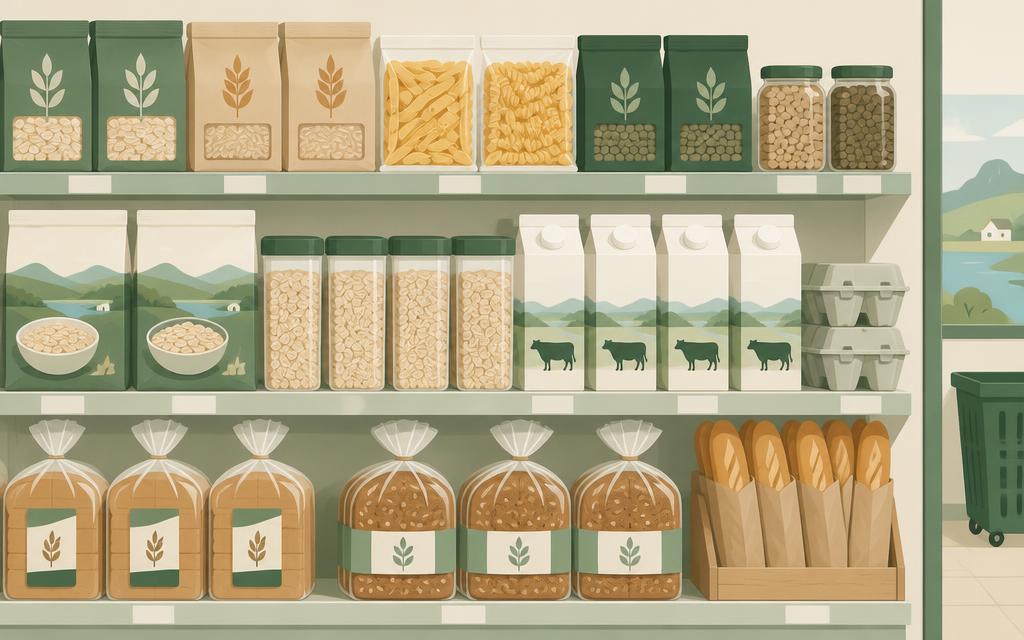
Dunnes Stores is Irish-owned and combines groceries with clothing and homeware in many of its larger shops. Its grocery shelves stretch from entry-price staples to the Simply Better premium range, with national brands in between. That wide ladder matters when comparing products: a basic tin of tomatoes and a premium pasta sauce are different propositions even when they sit under the same retailer's name.
SuperValu is part of the Irish-owned Musgrave group and operates through independently owned stores. Shops vary in size and range because they serve different local markets. SuperValu carries national brands alongside its own-label tiers, including Signature Tastes at the premium end. A locally sourced product may appear in one shop without being distributed nationally, so the pack remains the reliable place to verify origin.
Tesco Ireland belongs to the UK-headquartered Tesco group and runs a broad, full-range supermarket model. Its own labels cover basic, standard, health-positioned and premium products, including Tesco Finest. Clubcard prices can change the amount paid, but they do not change the product's unit price, ingredients or nutrition. Compare the final price available to you, then compare the packs on the same per 100 g basis.
Lidl is a German-headquartered discount retailer that has traded in Ireland since 2000. Most categories are led by Lidl's own labels, with selected national brands and rotating promotions. Deluxe identifies a premium range, not a nutrition standard. Because the range is own-label heavy, similar-looking products can change supplier or recipe over time. The barcode and current pack are more dependable than memory.
Aldi is also a German-headquartered discount retailer with an own-label-led range. Specially Selected is its premium tier, while other names are used for everyday staples and category-specific ranges. As with Lidl, an unfamiliar brand name may be a retailer label rather than an independent manufacturer. That does not make it better or worse; it simply means the comparison starts with the back of the pack.
| Retail name | Group | Typical format | Useful thing to know |
|---|---|---|---|
| Dunnes Stores | Irish-owned Dunnes Stores | Full supermarket, often with clothing and homeware | Broad own-label ladder, including Simply Better |
| SuperValu | Irish-owned Musgrave | Full supermarket, independently operated | Ranges and local products can vary by store |
| Tesco Ireland | Tesco plc | Full supermarket and smaller formats | Loyalty prices can alter the checkout comparison |
| Lidl | Schwarz Group | Discount supermarket | Own-label-led range with rotating lines |
| Aldi | Aldi Süd | Discount supermarket | Own-label-led range with category-specific names |
| Centra | Irish-owned Musgrave | Convenience store, independently operated | Strong food-to-go range and locally varied shops |
Retail formats and ranges differ by location. The table describes the general model, not every individual shop.
A large part of Irish grocery shopping happens outside full supermarkets. Centra is a Musgrave brand operated by local independent retailers. SPAR, EUROSPAR, Mace and Londis are supplied through BWG Foods, while Costcutter is another familiar symbol-group name. In a symbol group, the sign over the door connects an independently operated shop to a wider buying, distribution and branding network.
Convenience shops naturally devote more space to food-to-go, drinks, snacks and smaller pack sizes. That can make the shelf price look lower while the unit price is higher. Compare the price per kilogram, litre or item when deciding between a convenience pack and the larger supermarket version.
Deli food is harder to compare because it is assembled in store and may not display a full nutrition declaration. Allergen information must still be available. Ask for it if the menu board or cabinet label does not make it clear.
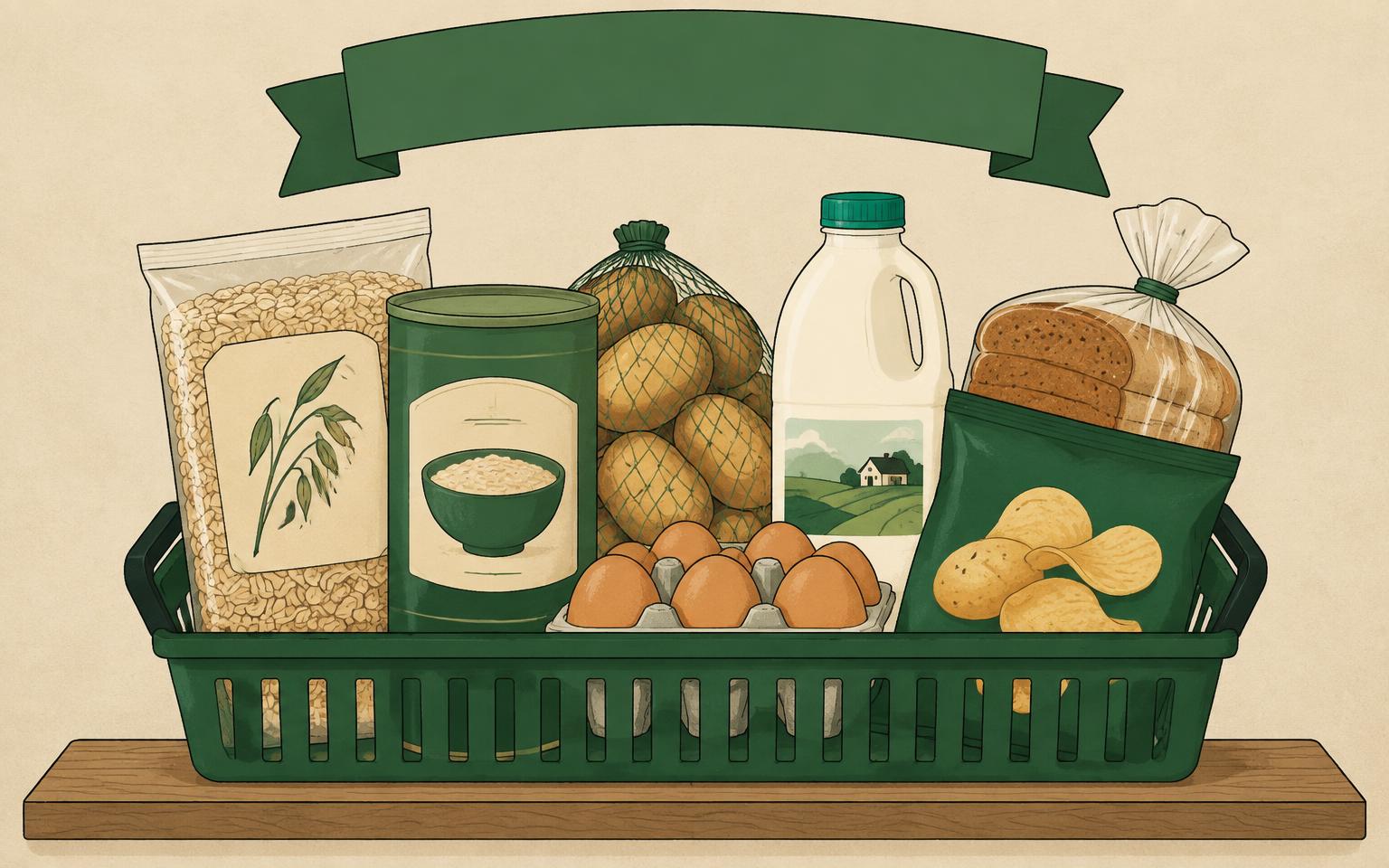
Write the products and quantities first. Swapping a 500 g pack for 400 g can create a saving that disappears at home.
Compare the shelf label per kilogram, litre or item. This removes most pack-size tricks immediately.
Use the price you can genuinely pay, including a loyalty price or voucher only when it applies to your shop.
Compare similar products and quality levels. Premium, organic and basic ranges are not direct substitutes in every category.
The cheapest large pack is not cheaper if part of it is thrown away. Frozen, tinned or smaller packs can win on usable food.
Recipes, suppliers and sizes change. Scan the barcode or check the label instead of relying on an old comparison.
An Irish-owned supermarket can sell imported food, and an international supermarket can sell food produced in Ireland. These are separate questions. If origin matters, read the origin statement for that specific pack rather than judging the shop name.
The Bord Bia Quality Mark indicates that a product has been produced under a relevant quality-assurance scheme with defined standards and traceability. The wording around the mark matters. On meat carrying the Origin Ireland version, the origin criteria cover where the animal was born, reared and slaughtered. A generic Irish design without that information does not provide the same assurance.
EU rules can require the origin of a food's primary ingredient to be stated when the product presents a different origin and omission could mislead. This is why a product described as made in Ireland may also explain that its main ingredient comes from elsewhere. "Made in Ireland" describes production; it does not always describe every ingredient.
Own label is not a single quality level. The same supermarket may carry an entry-price porridge oat, an organic version and a premium version with added seeds. They can share a retailer name while having different recipes, suppliers, pack sizes and prices.
Retailers also change manufacturers without changing the product's shelf position. A recipe update may alter salt, sugar, allergens or serving size. For that reason, Sláinte treats the barcode and current label as the product identity. A familiar front panel is not enough when the information on the back has changed.
Premium labels such as Simply Better, Finest, Deluxe, Specially Selected and Signature Tastes indicate a retailer's premium range. They can signal particular ingredients, provenance or recipe positioning, but they are not health claims and do not guarantee a better nutrition profile.
Dunnes Stores is an Irish family-owned retailer. SuperValu and Centra are Musgrave brands, and their stores are operated through networks of independent retailers. Tesco, Lidl and Aldi are international groups with substantial Irish operations. Ownership does not, by itself, tell you where an individual food was produced, so check the origin statement on the pack.
Usually not. Retailers generally commission food manufacturers to make products to their specifications. The responsible retailer is named on the label, but the factory may also produce similar products for other chains or brands. Recipes can still differ, so compare the ingredient list and nutrition declaration rather than assuming two similar packs are identical.
Not necessarily. A flag, an Irish-sounding name or green packaging is not the same as a precise origin statement. Look for wording such as 'origin: Ireland', the origin of the primary ingredient where declared, and recognised assurance marks. On meat, the places of birth, rearing and slaughter provide much more useful information than the front design.
No retailer is cheapest for every basket every week. Discounters build much of their range around own labels, while full-range supermarkets carry more branded alternatives and may use loyalty or voucher pricing. Compare the unit price on the shelf label and the final cost of the basket you actually buy.
Premium describes positioning, not nutrition. A premium ready meal may use a higher proportion of meat or named cheese, but it may also contain more salt, cream or butter. Read the pack exactly as you would any other product: ingredients first, then nutrition per 100 g, then the serving information.