
Does sugar-free mean caffeine-free?
No.
Published · Updated · Sláinte Editorial
When an energy drink says sugar-free, one thing has clearly changed.
The sugar.
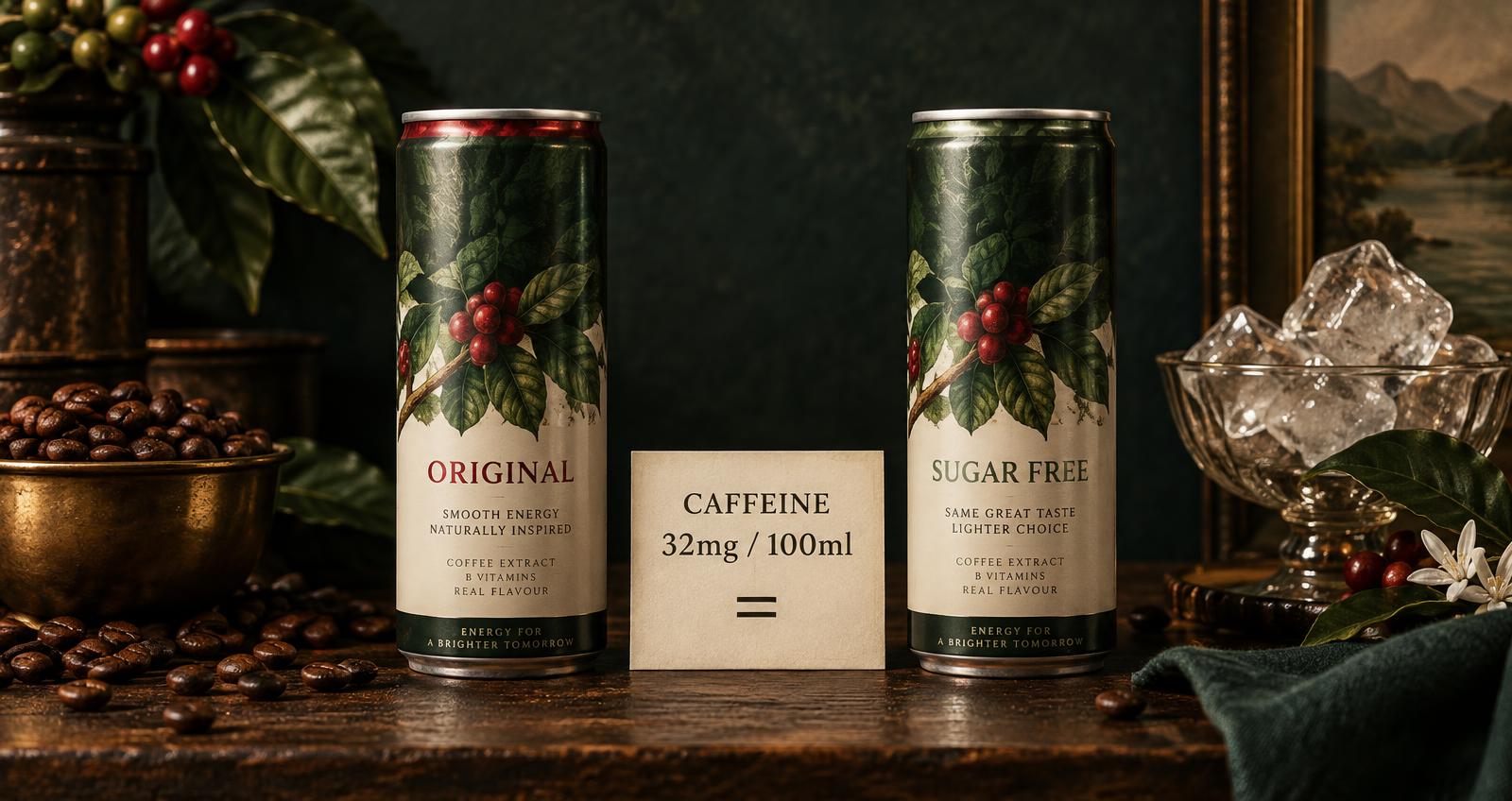
That does not mean the caffeine disappeared with it.
A useful energy-drink comparison needs to keep those two questions separate.
The Red Bull Original information listed 80mg caffeine per 250ml can and 27g sugar per 250ml can.
The Ireland-specific Red Bull Pink Sugarfree page also listed 80mg caffeine per 250ml and named sucralose and acesulfame K.
These are not the same flavour, so do not frame this as a laboratory-style matched formulation test.
Sugar contributes carbohydrate and energy.
Caffeine is a stimulant.
Removing sugar does not require removing caffeine.
That is why someone choosing an energy drink purely because it says ZERO SUGAR may still be consuming essentially the same caffeine amount.
In a sugar-free product, manufacturers may use non-sugar sweeteners to maintain sweetness.
The exact sweeteners depend on the formulation.
The Pink Sugarfree example lists sucralose and acesulfame K.
Those ingredients should be interpreted separately from the caffeine.
Nutrition information may be shown per 100ml.
But consumers often drink the whole can.
If a hypothetical drink contains 32mg caffeine per 100ml, then a 500ml can contains 160mg caffeine.
That arithmetic is useful.
Do not attach the hypothetical example to a real product unless the actual label confirms it.
Two drinks can contain the same caffeine concentration per 100ml but deliver very different total caffeine if their can sizes differ.
That is why a whole-can view is valuable.
Some energy drinks contain added B vitamins.
Their presence does not mean they cancel out caffeine.
Treat the vitamin composition and caffeine exposure as different pieces of information.
EFSA has published a scientific opinion on caffeine safety.
Any numerical guidance quoted from it must state the population it applies to, whether the figure refers to a single dose or daily intake, and that total caffeine from all sources matters.
These groups require specific context.
A general Sláinte product score should never be presented as a personalised caffeine-safety recommendation.
This is the main practical takeaway.
The front of the can may highlight sugar.
Turn it around and check caffeine separately.
A useful product result should make both characteristics visible.
Reducing sugar can be meaningful without making the caffeine question disappear.
No.
The manufacturer pages listed 80mg per 250ml. Reverify at publication.
Yes.
No such conclusion should be made.
No.
Last reviewed: 5 October 2026