
Back to Journal

Bottled Smoothies: Do They Really Have More Sugar Than Coca-Cola?

Published · Updated  · Sláinte Editorial

In the chilled drinks aisle of an Irish supermarket, a bottle filled with blended fruit and vegetables looks like an easy way to do something good for yourself. The packaging may mention vitamins, pressed fruit, greens or the absence of added sugar.

Then you turn the bottle around.

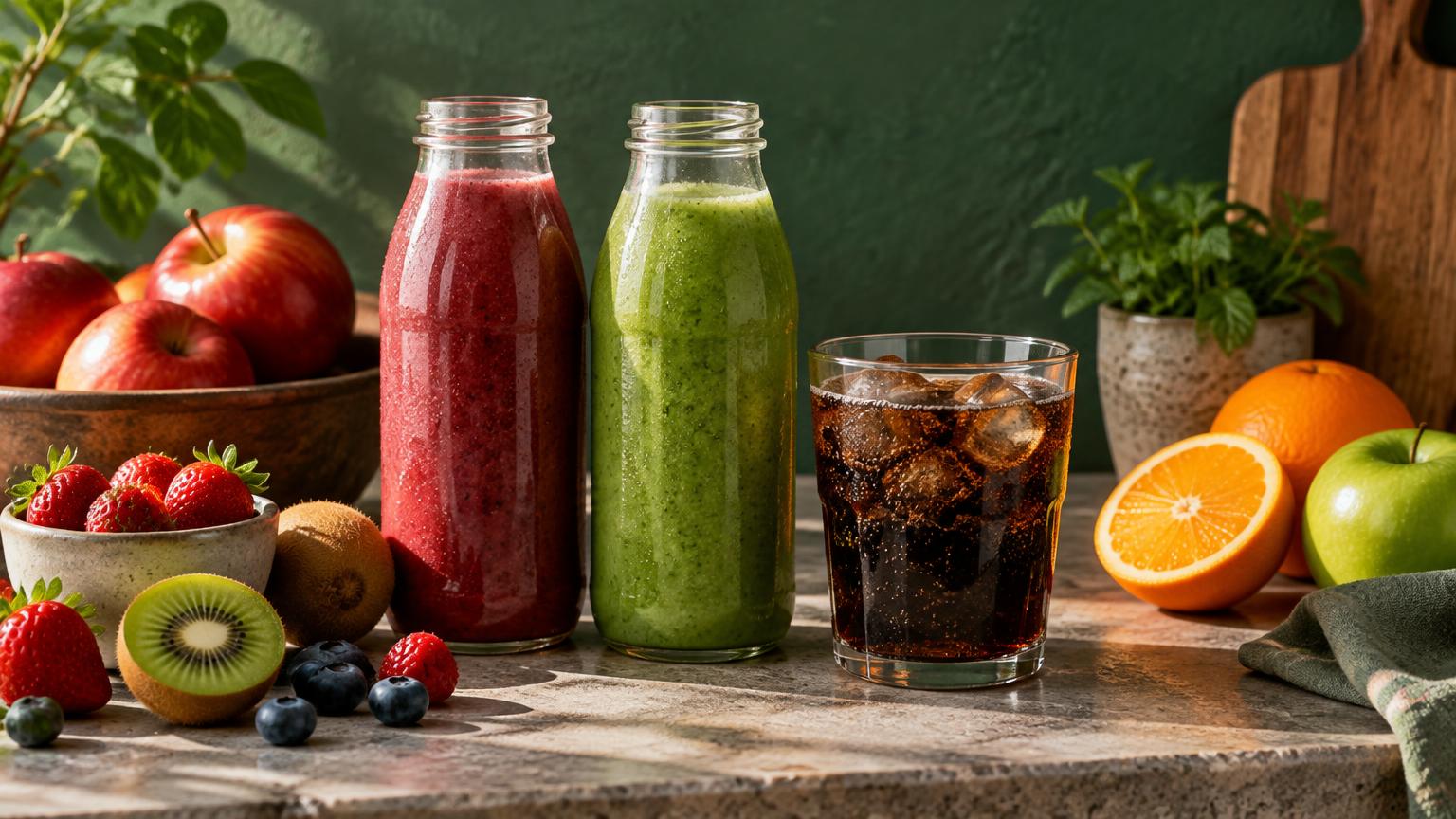
Illustration for Bottled Smoothies: Do They Really Have More Sugar Than Coca-Cola?

Tesco Ireland's listing for Innocent Super Smoothie Invigorate declares 11g total sugars per 100ml, or approximately 33g in its 300ml bottle. Regular Coca-Cola declares 10.6g per 100ml, equivalent to 31.8g in 300ml.

That comparison is mathematically real, but it needs care. Coca-Cola contains added sugar. The smoothie contains sugars from fruit and vegetables, alongside vitamins and some fibre. Two drinks can contain similar amounts of sugar without having the same nutritional composition.

So are bottled smoothies healthy? The useful answer is that they can contribute fruit-derived nutrients and be a convenient occasional option, but they are not equivalent to eating whole fruit, and their serving size matters.

We compared two Innocent smoothies, Naked Green Machine and regular Coca-Cola using Irish product labels to understand what is actually inside these drinks.

Four familiar drinks, compared fairly

To avoid mixing different pack sizes, the first comparison uses the same 300ml volume for each drink.

DrinkTotal sugars per 100mlTotal sugars in 300mlFibre per 100mlEnergy per 100ml
Innocent Super Smoothie Invigorate11g33g0.93g53 kcal
Innocent Super Smoothie Energise10g30g1.4g53 kcal
Naked Green Machine8.8g26.4g0g41 kcal
Coca-Cola Original Taste10.6g31.8g0g42 kcal

Based on Tesco Ireland declarations for the named variants. The Naked figures are for the currently listed 300ml/750ml formulation, not the separate 450ml listing with a different label. Coca-Cola is shown at 300ml for equal-volume comparison, not as a typical can size.

Three observations stand out.

First, one of the smoothie products has slightly more total sugars per 100ml than regular Coca-Cola. Another has somewhat less. So a headline declaring that all smoothies contain more sugar than Coke would be inaccurate.

Second, the smoothies contain nutritional components the cola does not, including various vitamins and, in the Innocent examples, some fibre. These distinctions matter when deciding whether two drinks are nutritionally interchangeable.

Third, a small-looking bottle can contain two manufacturer-labelled portions. Innocent's 300ml Super Smoothie listings use a 150ml serving. Drinking the entire bottle doubles the labelled serving figures.

Why do smoothies contain so much sugar when nothing was added?

Fruit contains naturally occurring sugars. When multiple fruits are pressed, crushed or blended into a bottle, those sugars remain in the drink.

A 300ml smoothie can be made using the equivalent of several pieces of fruit. That may make it more convenient to drink a substantial sugar-containing portion in a few minutes than it would be to eat the corresponding whole fruit.

The EU nutrition declaration shows total sugars. It doesn't distinguish the naturally occurring sugars in fruit from sugars added by a manufacturer in the mandatory "of which sugars" line.

That explains why a label can truthfully say "no added sugar" while the nutrition table still shows 30g or more sugars in a bottle.

For example, Innocent Super Smoothie Energise is described on its Irish listing as having no sugar added, yet its labelled sugars are 10g per 100ml. Those are not contradictory statements.

If you want the legal difference between no-added-sugar, low-sugar and sugars-free claims, read Sláinte's guide to no added sugar.

Does blending fruit make its sugar “free sugar”?

Public-health guidance distinguishes sugars contained within the structure of intact fruit from those present in juices and many processed fruit drinks.

The World Health Organization defines free sugars to include added sugars and sugars naturally present in honey, syrups, fruit juices and fruit juice concentrates. NHS dietary guidance also advises counting sugars in smoothies and purées among free sugars because blending and puréeing can disrupt the structure of the fruit.

The distinction is important, but it should not be reduced to the claim that a blender somehow creates sugar that wasn't there. Blending doesn't manufacture extra sugar from nothing. It changes how the food is presented and how accessible its sugars may be, depending on the recipe and the degree of processing.

A whole orange contains intact fruit structure, considerable water and fibre. A pressed orange drink retains the sugars but much less of the original fruit structure. A blended whole-fruit smoothie may retain more fibre than clear juice, but it is still something a person can drink quickly.

There are differences between pure juice, smoothies made largely from juice, and thicker blends of intact fruit. Check the exact ingredients rather than treating all bottled drinks as identical.

What is actually inside Innocent Super Smoothies?

Innocent Super Smoothie Invigorate

The Tesco Ireland listing describes a kiwi and cucumber smoothie with vitamins. It declares 11g sugars and 0.93g fibre per 100ml, alongside vitamin C and several B vitamins.

Its 300ml bottle therefore contains approximately 33g total sugars, with fibre amounting to approximately 2.8g.

A manufacturer may legitimately highlight vitamins that contribute to normal bodily functions where the product meets the legal criteria. But the existence of a nutrient claim should not distract from the total sugars or serving size.

Innocent Super Smoothie Energise

The Energise formulation lists pressed apples and grapes, mashed banana, strawberries, cherries and blackcurrants, plus other ingredients including flax seeds, chicory root extract, added vitamins and a small amount of guarana infusion.

Its listing declares 10g sugars and 1.4g fibre per 100ml. A whole 300ml bottle therefore contributes 30g sugars and approximately 4.2g fibre.

This is a useful reminder that not every blended drink has zero fibre. Fruit and plant ingredients can provide some. However, fibre content does not erase the sugars or make the drink identical to whole fruit.

A claim such as "source of fibre" describes a regulated nutritional characteristic. It is not an overall health score.

And what is Naked Green Machine made from?

The Naked Green Machine listing on SuperValu Ireland describes a fruit-forward smoothie marketed with a green identity. The listed nutrition for the 300ml version includes 8.8g sugars per 100ml and 0g fibre.

A 300ml bottle therefore provides approximately 26.4g total sugars.

The product also declares several added or supplied vitamins, including vitamin C, B vitamins and vitamin E. That means it can be inaccurate to dismiss the entire bottle as nutritionally indistinguishable from cola.

But if you pick it up believing you're drinking a serving of leafy vegetables with little sugar, the ingredients and label deserve a closer look. The green colour and blend of botanical ingredients do not by themselves reveal how much of the product is juice or purée from sweeter fruits.

Important formulation note: Another Tesco Ireland listing for a 450ml Naked Green Machine variant shows 11g sugars and 1.3g fibre per 100ml. Do not blend those figures into the 300ml product or treat both pack sizes as the same formulation without verifying barcodes and labels.

Smoothie versus cola: what does the comparison really prove?

It proves that the number beside "of which sugars" can be surprisingly similar in two very different drinks.

It does not prove that a fruit smoothie is nutritionally identical to a fizzy soft drink. A smoothie may supply fibre, vitamins and plant compounds depending on its ingredients. Cola supplies a different set of ingredients and added sugars.

Equally, those differences do not justify unlimited consumption of smoothies. The sugar content in a large bottle is worth considering, particularly when the rest of the day already includes sweetened drinks, juice, fruit-flavoured products or desserts.

For someone who enjoys smoothies, a 150ml portion alongside a meal may be a more practical choice than habitually finishing a large bottle. Fresh whole fruit is also an easy option when available.

The goal is informed choice rather than finding one category to demonise.

What about sugar spikes and insulin?

A blanket claim that bottled smoothies cause a dangerous "insulin spike" in everybody is not supported by the product label alone.

The blood-glucose response depends on the quantity of available carbohydrate, the composition of the drink, other foods eaten and individual circumstances.

A smoothie may contain rapidly available carbohydrate, particularly when much of the recipe is fruit juice. A thicker blend retaining some fibre may behave differently. The label is not a continuous glucose monitor.

People managing diabetes should consider total carbohydrate per serving and individual clinical guidance. Replacing a smoothie with a whole piece of fruit may suit some people better, but the precise response is personal.

What the label does allow us to say confidently is that 30g of sugars in a 300ml bottle is not a trivial amount, even where those sugars were not added as table sugar.

Four sensible choices for Irish shoppers

1. Read the serving count. If a 300ml bottle is labelled as two 150ml servings, don't compare one manufacturer's portion with another product's whole bottle.

2. Compare the actual sugar figures. Use per 100ml to compare products, then calculate the amount you're going to drink.

3. Look for fibre and ingredients. Whole-fruit purées, fruit juices and fortified drinks can differ markedly. Understand which product you're buying.

4. Keep whole fruit in the picture. A smoothie can be convenient, but it should not automatically displace eating varied whole fruit and vegetables.

There is no requirement to ban smoothies from a balanced diet. A small portion enjoyed occasionally is a different choice from relying on several large bottles every day.

How Sláinte helps compare the bottles

Sláinte helps make the nutrition information, ingredients and relevant product characteristics easier to compare.

Where Sláinte proposes a swap, the explanation should reflect the user's likely goal. Water removes drink sugars. A smaller smoothie portion preserves the chosen taste with less total sugar. Whole fruit provides a different eating experience and food structure.

The Innocent figures in the table are the specified Irish retailer snapshots. A separate UK Energise listing reports 12g sugars per 100ml, so we have not mixed its ingredients or score into the Irish 10g comparison. Check the exact bottle rather than treating every listing as one recipe.

The Irish Naked bottle and regular Coca-Cola

These scores use the exact label records below. The smoothie and cola have different ingredients, even though both contain substantial drink sugars.

Naked Green Machine

Naked Green Machine Super Smoothie 300ml

59

/100

Sláinte Score

Good

Mostly good for you.

  • Light in calories
  • Low in sugars
  • Low in saturated fat
  • 1 additive

What's inside (per 100 g)

The Good Stuff

Watch out for

Ingredients: Apple juice from concentrate (50%), water, banana puree, kiwi puree (7%), peach puree (5%), apple puree from concentrate (5%), pineapple juice from concentrate (4.5%), mango puree from concentrate, spirulina powder (0.2%), natural flavourings, spinach powder, vitamins C, E, B6, thiamine, riboflavin, chlorella powder..

This is the Irish 300ml recipe. It is not the 450ml variant. The full bottle contains 26.4g total sugars.

View the label source

Coca-Cola Original Taste

Coca-Cola Original Taste

24

/100

Sláinte Score

Bad

About 9 teaspoons of sugar in a can, and nothing else in there to show for it.

  • Light in calories
  • Low in saturated fat
  • Low in salt
  • 2 additives

What's inside (per 100 g)

The Good Stuff

Watch out for

Ingredients: Carbonated Water, Sugar, Colour (Caramel E150d), Acid (Phosphoric Acid), Natural Flavourings including Caffeine.

This card shows the 330ml can: 34.98g total sugars. The table above uses 300ml for an equal-volume comparison.

View the label source

Scored from the published labels with the same rules as a barcode scan. These are examples, not personal scan-history entries. How the food score works

Frequently asked questions

Can a smoothie have 30g sugar and still say no added sugar?

Yes. The statement means sugar wasn't added in ways prohibited by the legal claim conditions. The nutrition declaration still includes naturally occurring sugars from the fruit ingredients.

Are Innocent smoothies healthier than Coca-Cola?

They can offer vitamins and some fibre that regular cola does not, but some products have similarly high total sugars per 100ml. Compare the exact formulation, portion and overall diet rather than assuming all smoothies or all fizzy drinks are nutritionally identical.

Does blended fruit count as free sugar?

WHO explicitly includes fruit juice and juice concentrates in its definition of free sugars. NHS guidance also advises treating sugars in smoothies and fruit purées as free sugars. The exact processing and proportion of juice versus whole fruit can differ between products.

Is Naked Green Machine low in sugar?

The reviewed Irish 300ml version lists 8.8g sugars per 100ml, or about 26.4g in the bottle. Under EU nutrition-claims rules, "low sugars" for drinks has a much lower threshold, so this is not a low-sugar product.

Is it better to eat fruit or drink a smoothie?

Whole fruit generally retains its intact food structure and is eaten more slowly. A smoothie can contribute fruit-derived nutrients, but it is easier to drink a relatively large amount quickly. Both may have a place in a varied diet.

The short version

  • Some bottled smoothies contain as much or slightly more total sugar per 100ml than regular cola. But their vitamins, fibre and ingredients vary, so comparing sugar alone does not give the whole nutritional picture.
  • "No added sugar" may be entirely accurate even when a 300ml bottle contains around 30g of naturally occurring sugars.
  • Read the full label, check the actual serving, and don't let either a green bottle or a sugar comparison headline do all the thinking for you.