
Does Sláinte work with SuperValu products?
Supported products can be scanned, but do not imply complete SuperValu coverage or any retailer partnership.
Published · Updated · Sláinte Editorial
Scanning food in Ireland creates a problem that a generic global food database does not always solve.
The product on an Irish supermarket shelf may look almost identical to one sold elsewhere. But that does not guarantee the formulation, pack size or nutrition information is identical.
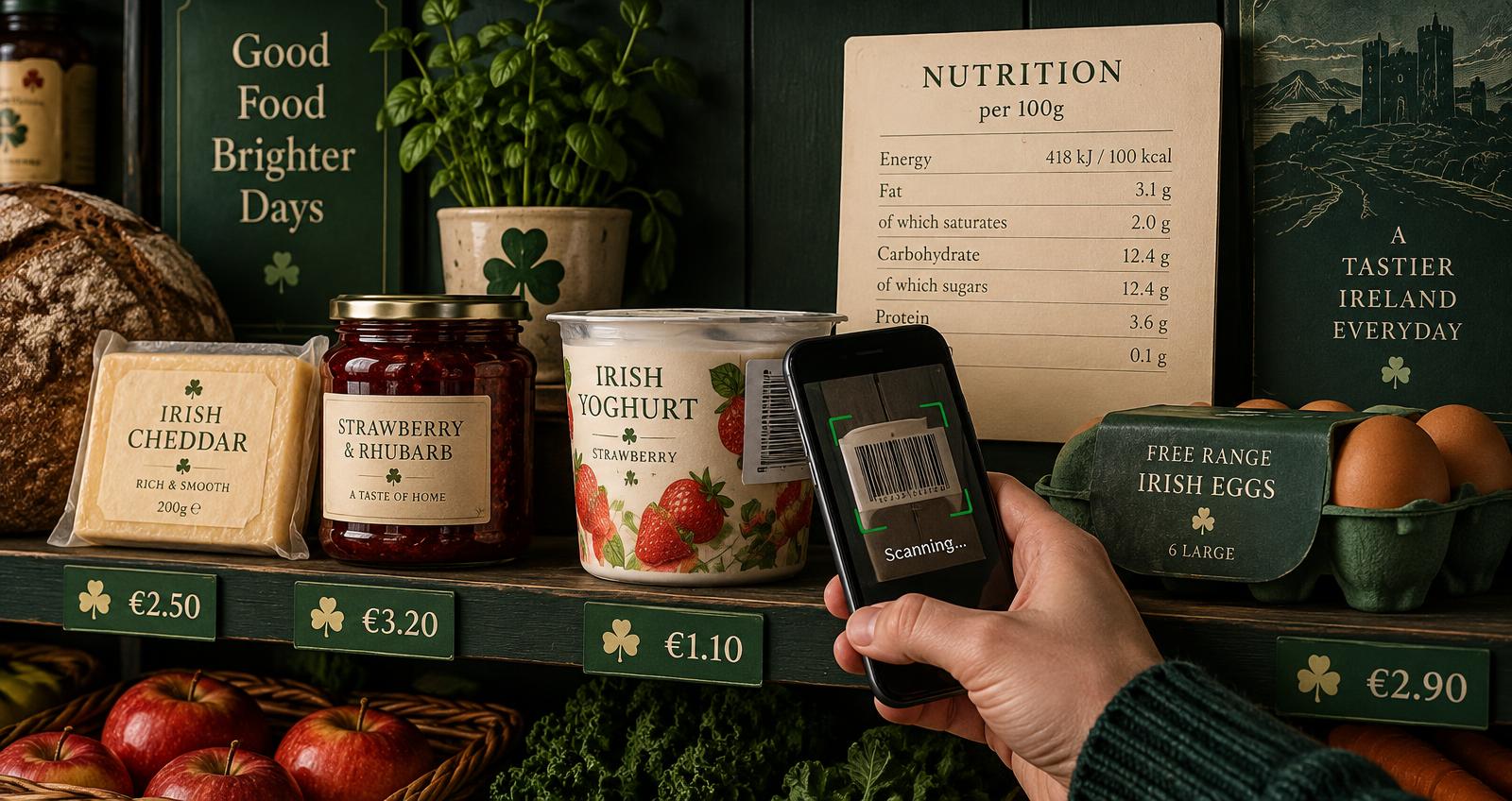
Supermarket own labels create another challenge because product information may be spread across packaging, retailer listings and databases.
The most useful food scanner for an Irish shopper is therefore not simply the one with the biggest global number. It is the one that correctly understands the product in front of you.
A product being sold in Ireland does not mean it was made in Ireland.
Likewise, a product sold in Ireland and Britain may share branding while differing in pack size, recipe, ingredients, nutrition or labelling.
That is why matching the market matters.
If you scan a product bought in Ireland and the app returns a UK pack, check it carefully.
Look at:
Do not assume the record is wrong simply because it is UK-sourced. But do not assume it is correct either.
Own-label products are especially important in Ireland because Aldi, Lidl, SuperValu, Tesco and Dunnes all sell products under retailer-controlled or exclusive brands.
A useful scanner needs to recognise that a supermarket’s product number on its website is not automatically the same thing as the consumer barcode.
At minimum, check:
If one of those is materially different, the result needs another look.
A missing record is not a bad score. It means there is insufficient data.
Depending on the scanner, the next step may be to submit or update product information.
The rest of this content cluster goes deeper into specific supermarket problems.
Tesco has useful Irish product listings, but the exact pack still matters. SuperValu gives useful own-label examples. Dunnes demonstrates why source inconsistencies sometimes need physical-pack verification. Aldi shows why a retailer page may identify the product without exposing every useful label field. Lidl is a good example of the difference between packaged products and bakery items.
No serious database should hide missing information. The useful goal is to keep improving coverage while showing uncertainty when a record is incomplete.
Sláinte is designed around the products people actually encounter while shopping in Ireland.
That local focus matters, but it should be demonstrated through the quality of the records rather than a marketing claim about being perfect.
Scan a product →
Supported products can be scanned, but do not imply complete SuperValu coverage or any retailer partnership.
Supported packaged products with recognised barcodes can be scanned.
Not necessarily.
Where a suitable barcode and product record exist, yes. Coverage should not be generalised from one product.
Loose bakery items may not have the same type of consumer barcode as packaged products.
Do not claim complete coverage.