
Can I use Tesco UK nutrition information?
Only after confirming it matches the Irish product.
Published · Updated · Sláinte Editorial
Tesco’s Irish website can be a useful source of product information.
But finding a Tesco page with the same brand name does not automatically prove that you have found the exact product in your hand.
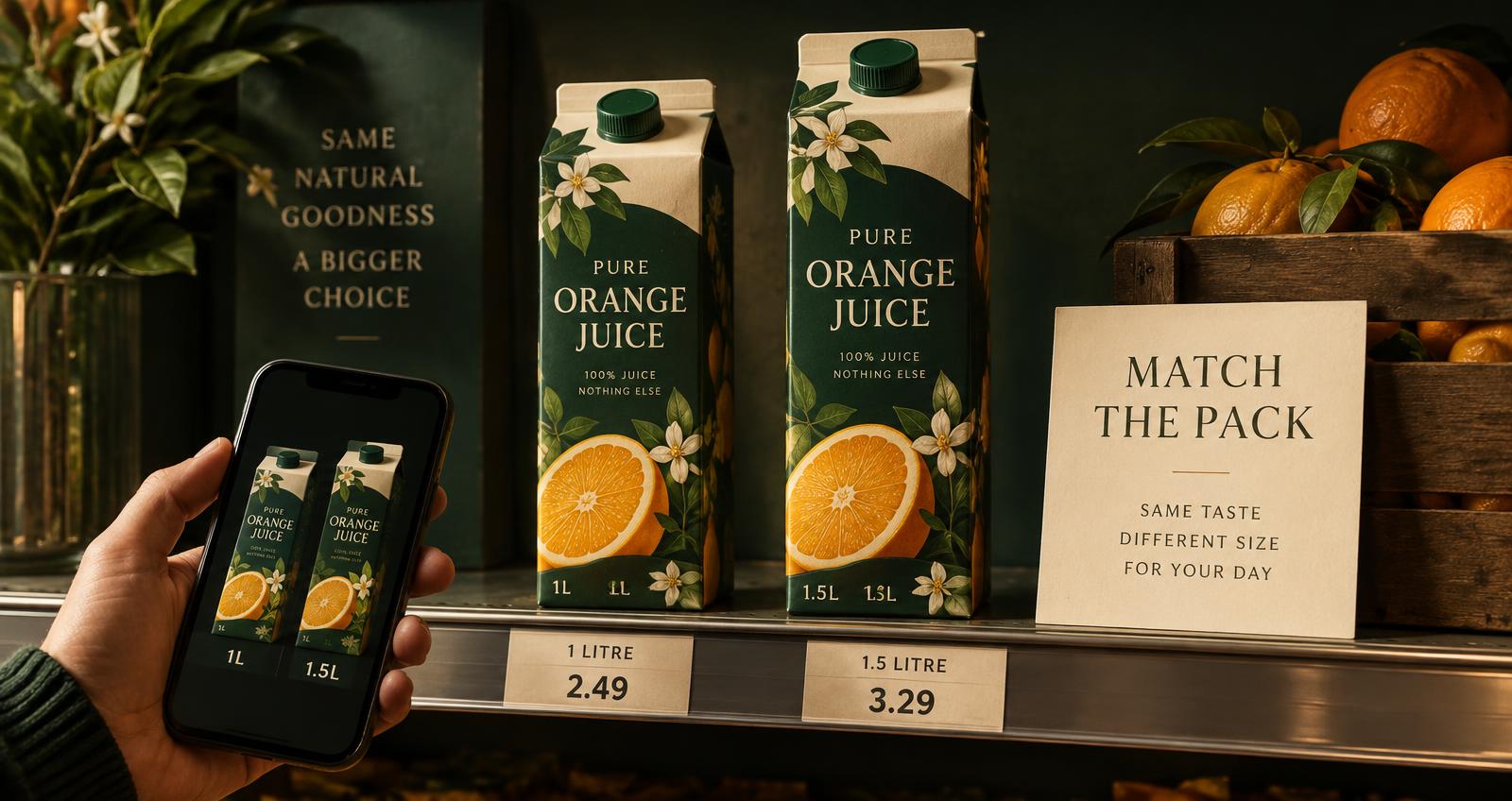
When you scan food, identity comes first.
Check:
A 1.2kg cereal pack and a 500g version might share a recipe. They still need to be identified correctly.
Tesco operates across markets.
Do not automatically use Tesco UK data for a product bought in Ireland simply because it appears first in search.
Compare the actual ingredients and nutrition.
If they match, record that evidence. If they do not, use the Irish product.
A retailer can assign its own internal product identifier.
That does not establish that the number displayed in a webpage URL is the consumer EAN/GTIN printed on the pack.
Keep those fields separate.
A common per-100g basis makes it easier to compare two foods without letting different manufacturer serving sizes distort the comparison.
That does not mean portions are irrelevant.
It means the two questions are separate:
What is the product composition?
and:
How much do I actually eat?
The checked Tesco Ireland listings provide useful examples.
For Flahavan’s Irish Porridge 1.5kg, the listing gave, per 100g:
For Kellogg’s Corn Flakes 1.2kg, the listing gave, per 100g:
This example does not prove that oats beat every cereal. It shows how much more useful a complete comparison can be than looking at calories alone.
Dry nutrition is not the finished breakfast.
Milk, yoghurt, fruit, honey or sugar can all change the meal.
Keep the base product record separate from the meal you create with it.
For the product you are consuming, the current pack is important evidence.
Retailer pages can become outdated.
Report or correct the database record rather than silently averaging conflicting values.
Only after confirming it matches the Irish product.
Because a serving is a smaller or larger amount of food.
Do not assume so.
Use the current label and update the record.
Do not claim complete coverage without testing.
Last reviewed: 5 October 2026