
Is brown bread always wholemeal?
No.
Published · Updated · Sláinte Editorial
Bread looks like a simple product to scan.
The label shows why it is not always simple.
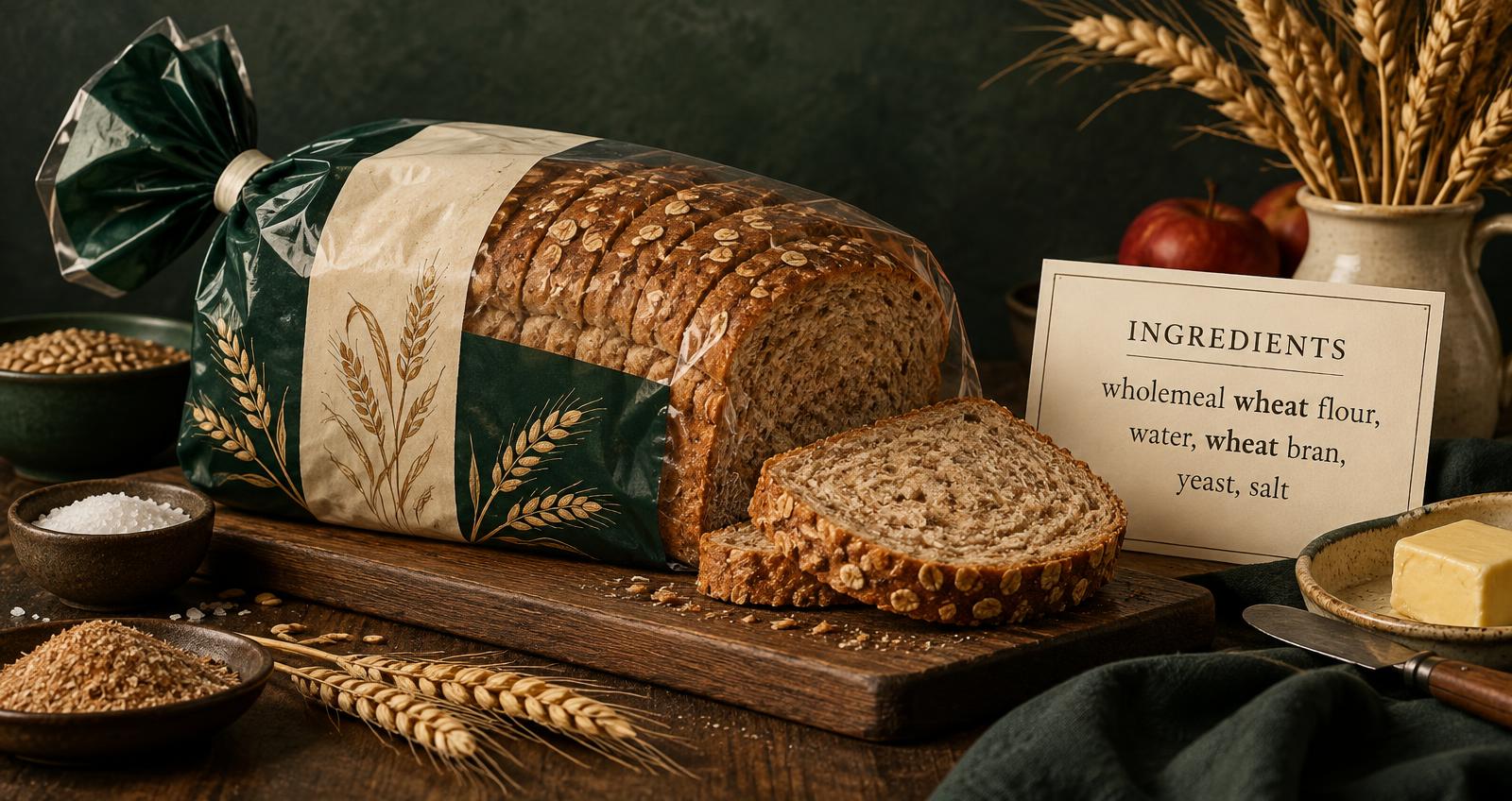
A loaf can give you information about wholemeal flour, fibre, salt, serving size and ingredients.
And sometimes the available product sources can disagree.
That is exactly when a scanner needs to be cautious.
The example is Brennans Wholemeal Premium 800g from a Dunnes Stores grocery listing.
Do not generalise this one branded loaf to Dunnes’ entire bread range.
Colour alone cannot tell you the flour composition.
The ingredients list is more useful.
For the Brennans product, the listing declared 64% wholemeal wheat flour.
That is more informative than deciding from the colour of the bread.
The listing declared 8g fibre per 100g.
Fibre is particularly worth checking because it is not always part of the mandatory basic nutrition declaration for every food.
“Not declared” should never silently become zero in a database.
The product listed 1.1g salt per 100g.
The point of the number is not to label the loaf good or bad from one nutrient. It lets you compare similar breads on a common basis.
The listing used a 40g slice basis.
A slice value is useful because that is closer to how bread is eaten.
Per 100g is useful because it standardises the comparison.
Both can be useful at the same time.
This is where an important issue showed up.
One extracted per-slice saturated-fat value did not appear to scale consistently from the per-100g figure.
The correct response is:
Never silently change the source to make the numbers fit.
A database can only be as useful as the information underneath it.
When the evidence conflicts, pretending to know the answer can create false precision.
Sometimes the correct product decision is We need to verify this field first.
Use the label to answer specific questions.
Is it genuinely wholemeal? How much fibre is declared? How much salt? How large is the slice?
Those questions are more useful than deciding that every brown loaf belongs in one health category.
No.
No. Slice weights vary between loaves and cuts.
Yes, depending on the product and naturally occurring ingredients.
Sources can be outdated, extracted incorrectly or contain different product versions.
A responsible system should account for uncertainty rather than hiding it.